
Language Settings
Select Website Language

GDPR Compliance

We use cookies to ensure you get the best experience on our website. By continuing to use our site, you accept our use of cookies, Privacy Policy, and Terms of Service.

Filters

Channels
Topics
Other Filters

Logitech's Logi Launch 2026 Puts Business Collaboration Technology in Focus

Logitech's Logi Launch 2026 runs on October 8 and 9, highlighting its business technology launch programme and workplace collaboration focus. By News National Editorial Team Logitech's Logi Launch 2026 Highlights Business Collaboration Technology Global, October 9, 2026: Logitech is holding its Logi Launch 2026 event across October 8 and 9 under the title “Built for What's Next,” providing a platform for the company's business technology announcements. The event is listed on Logitech's official event registration website as a live product launch. Its focus is relevant to organisations evaluating technology for office communication, remote meetings and collaboration between employees working in different locations. Logitech develops computer peripherals and workplace collaboration products, including equipment used for video conferencing and digital communication. Business technology and hybrid work Businesses increasingly rely on digital tools to connect office-based employees, remote workers, customers and international teams. Video conferencing systems, cameras, microphones and related accessories can help organisations conduct meetings without requiring every participant to be in the same location. The effectiveness of these systems depends on more than hardware. Network quality, software compatibility, audio clarity, security controls and ease of use all affect the experience of employees and customers. Product launches give technology companies an opportunity to communicate their latest offerings to business customers, resellers and partners. What companies should assess Organisations considering new collaboration equipment should compare compatibility with existing meeting platforms, installation requirements, warranty arrangements, security features and the total cost of ownership. Businesses with multiple offices may also need centralised device management and consistent equipment configurations. Smaller organisations may place greater emphasis on ease of installation and affordability. Product specifications and availability should be checked against the manufacturer's official documentation before businesses make purchasing decisions. Details require product-level confirmation Logitech's official event page confirms the Logi Launch 2026 event dates as October 8 and 9. The public registration page alone does not establish the full specifications, prices, regional availability or commercial release dates of individual products. Accordingly, this report does not attribute unverified features or prices to particular devices. Product-specific reporting should be updated when Logitech publishes corresponding announcements, technical specifications or availability information. The event illustrates the continuing importance of workplace collaboration technology as organisations review how they communicate and coordinate work across locations. Source: Logitech official event page: https://events.logitech.com/event/logilaunch-2026/register Editorial note: Confirm individual product names, specifications, prices and release dates through official Logitech announcements before publishing a product-specific follow-up.

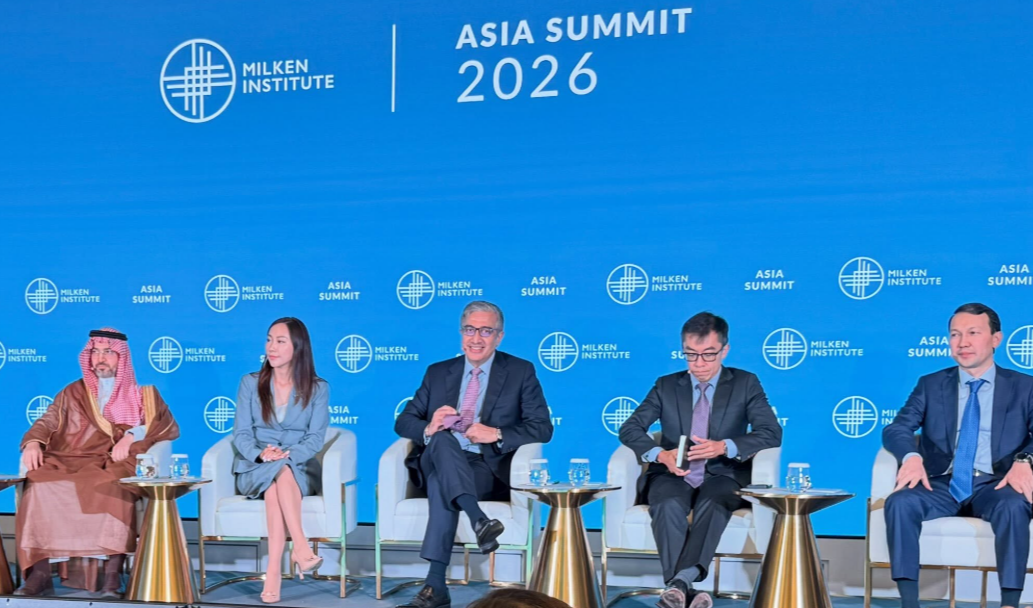
Milken Institute Asia Summit 2026 Examines AI, Investment and Global Growth

The Milken Institute Asia Summit in Singapore concludes on October 9 after discussions on AI, investment, healthcare and economic growth. By News National Editorial Team Milken Institute Asia Summit 2026 Concludes in Singapore With Focus on AI and Investment Singapore, October 9, 2026: The 2026 Milken Institute Asia Summit concludes in Singapore on Friday after three days of discussions bringing together leaders from business, finance, government, technology, healthcare and philanthropy. Held from October 7 to 9 at the Four Seasons Hotel Singapore, the 13th edition of the summit uses the theme “Leading with Intelligence.” Its programme examines how technology, information and human judgement can contribute to decision-making in a period of rapid economic and technological change. The summit is an international forum for discussing investment, innovation, regional cooperation and challenges affecting Asian economies and global markets. Artificial intelligence and business decisions Artificial intelligence is a major focus of the summit's programme. Businesses are increasingly assessing how AI can improve productivity, support research, automate routine tasks and inform strategic decisions. However, adoption also raises questions about data protection, accountability, workforce changes, system reliability and the cost of implementation. Organisations must assess whether AI tools deliver measurable benefits while managing operational and security risks. The summit's focus on intelligence and human judgement highlights the importance of evaluating technology alongside the people and institutions responsible for using it. Investment and financial markets The programme also covers financial markets, business transformation, access to capital, healthcare research, education, sustainability and international relations. Investors face a complex environment shaped by technological change, geopolitical uncertainty and differing economic conditions across countries. Discussions at international forums can help participants compare strategies and identify potential areas for cooperation. Such conversations should not be confused with guaranteed investment opportunities. Any investment decision still requires independent analysis of financial performance, valuation, risk and relevant regulations. Healthcare, education and sustainability Beyond finance and technology, the summit addresses issues affecting public welfare and long-term development. Healthcare research, workforce development, education and sustainability are among its programme areas. These topics are connected to economic growth. An appropriately skilled workforce can support the adoption of new technologies, while investment in healthcare and research can contribute to innovation and productivity. The extent to which these discussions lead to policy changes or new partnerships will depend on subsequent decisions and implementation. Regional cooperation in a changing economy Singapore's role as a regional business and financial centre makes it a venue for discussions involving international companies, investors and policymakers. The summit provides an opportunity to consider how Asian economies can respond to technological disruption and changing global investment conditions. Its public programme includes discussions across business, finance, technology, health and international relations. The event's official website also provides information about its speakers and recorded sessions. The conclusion of the summit on October 9 marks the end of this year's scheduled gathering, but the ideas discussed may continue to influence business conversations and future collaborations. Sources: Milken Institute official event page: https://milkeninstitute.org/events/asia-summit-2026 Official summit programme: https://milkeninstitute.org/events/asia-summit-2026/program Reuters coverage of AI and investment concerns at Singapore conferences: https://www.reuters.com/world/asia-pacific/existential-threats-join-bubble-fears-ai-mood-sobers-singapore-forums-2026-10-07/ Editorial note: This article summarises the summit's stated themes and programme; it does not attribute specific statements or agreements to participants unless independently documented.

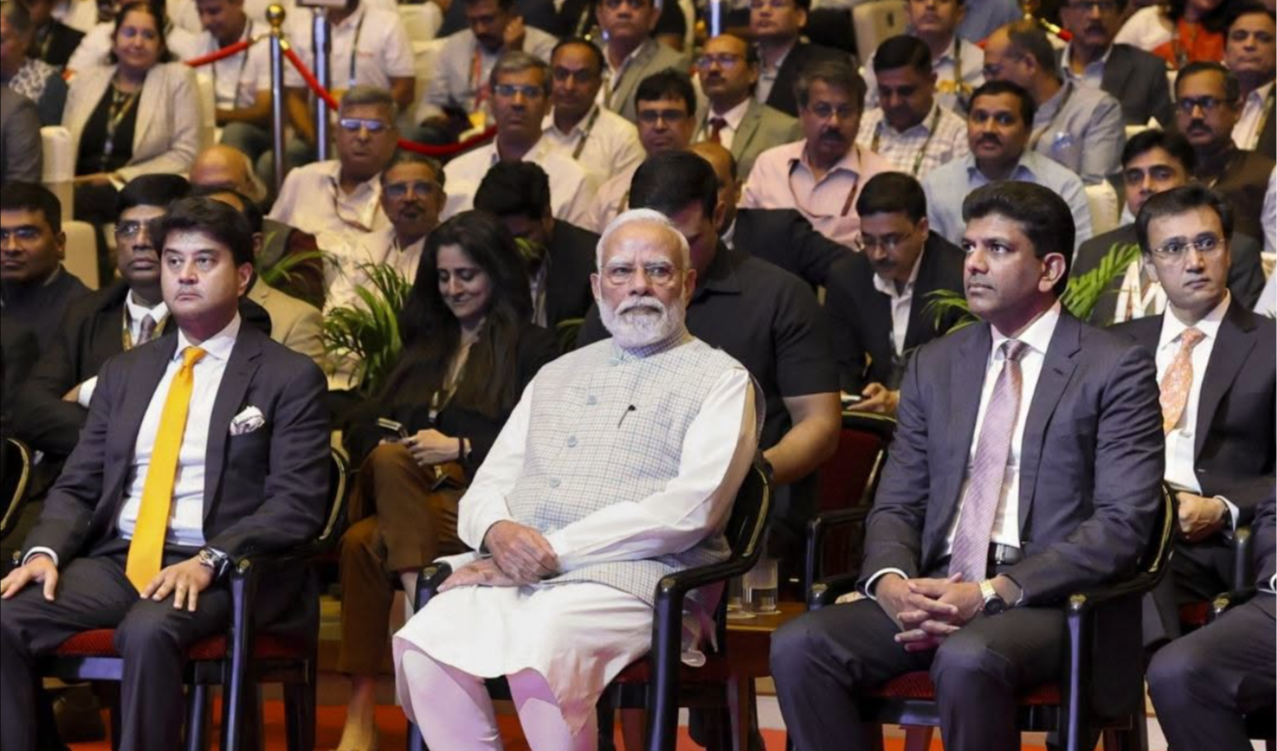
India Mobile Congress 2026 Showcases AI, 5G and Future Technologies

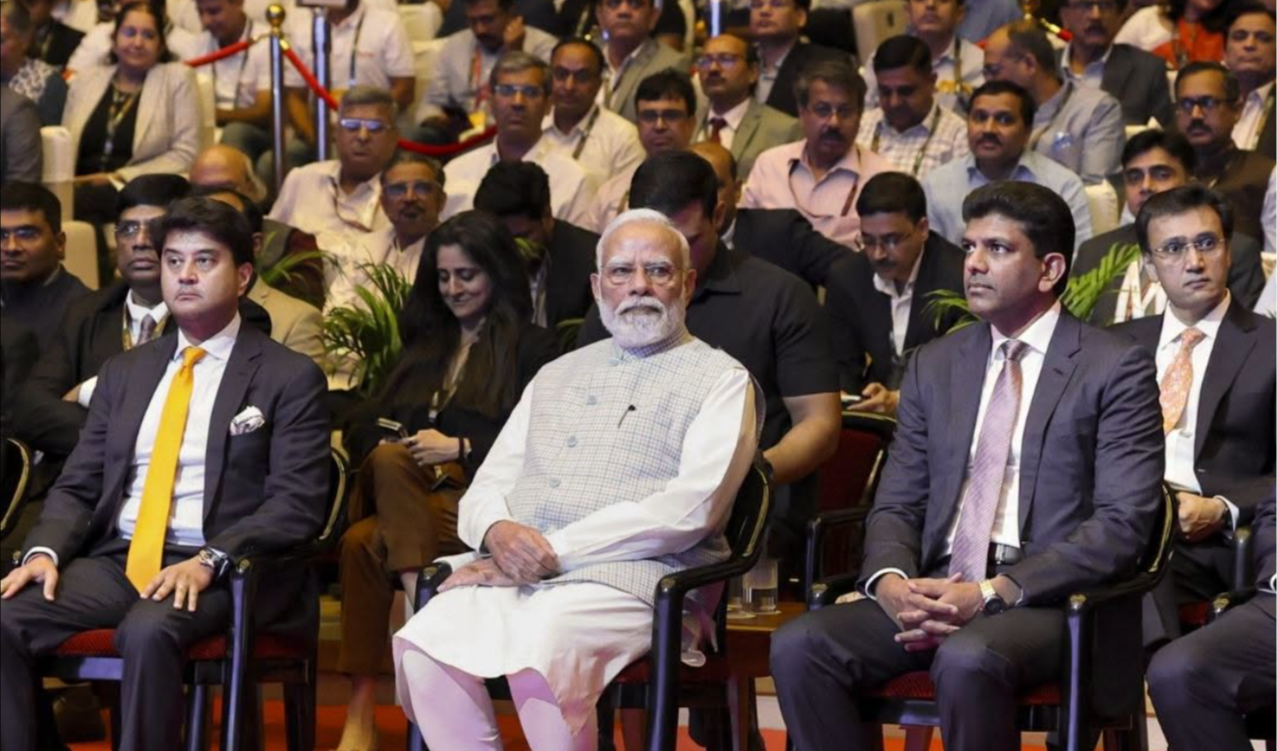
India Mobile Congress 2026 in New Delhi brings together global technology leaders to explore AI, 5G, 6G, robotics and digital innovation By News National Editorial Team India Mobile Congress 2026 Highlights AI, 5G and Next-Generation Connectivity New Delhi, October 9, 2026: India Mobile Congress 2026 is continuing in New Delhi, bringing together telecommunications companies, technology developers, startups, policymakers and investors to discuss the future of digital connectivity and emerging technologies. The 10th edition of the event is being held from October 7 to 10 at Yashobhoomi, the India International Convention and Expo Centre in Dwarka, New Delhi. The congress is jointly organised by the Department of Telecommunications and the Cellular Operators Association of India. According to India's Press Information Bureau, Prime Minister Narendra Modi inaugurated the event on October 8. The programme is designed to showcase developments in telecommunications, digital infrastructure and technology-led economic growth. AI, 5G and 6G take centre stage The congress provides a platform for discussions about fifth-generation mobile networks, future 6G connectivity, artificial intelligence-powered networks, semiconductors, cybersecurity and quantum communication. These technologies are increasingly important as businesses, public services and consumers rely on faster connectivity and digital platforms. AI-enabled networks could help operators manage traffic more efficiently, while future connectivity standards are expected to support applications requiring greater capacity and lower latency. However, the commercial benefits of these technologies will depend on infrastructure investment, security, affordability and the ability to deploy new services at scale. Wider focus on emerging technologies The 2026 edition also highlights smart mobility, industrial robotics, transport technology and stadium experiences. These areas demonstrate how telecommunications infrastructure can support applications beyond conventional mobile calls and internet access. Industrial robotics can help automate manufacturing and logistics operations, while connected transport systems may improve the exchange of information between vehicles, infrastructure and control centres. Such applications require reliable networks and strong cybersecurity protections. The event's theme, “Scale Without Boundaries,” reflects the emphasis on expanding digital capabilities and developing technologies that can serve a broader range of users and industries. International participation and business opportunities Organisers have highlighted participation from more than 100 countries. The gathering offers technology companies, startups and investors opportunities to exchange ideas, demonstrate products and explore partnerships. For Indian companies, the event provides a platform to present domestic technology capabilities and pursue opportunities in international markets. For global participants, it offers a view of India's expanding telecommunications ecosystem and demand for digital services. The commercial impact of announcements made during the congress will depend on subsequent investment, product deployment, customer adoption and export orders. Exhibition demonstrations alone do not establish that a technology has reached large-scale commercial use. What happens next? The congress runs through October 10. Its remaining programme provides opportunities for visitors to explore technology demonstrations, attend discussions and learn about developments across telecommunications and connected industries. As digital infrastructure becomes more central to economic activity, events such as India Mobile Congress offer a forum for assessing the opportunities and challenges surrounding the next generation of connectivity. Sources: Press Information Bureau, Government of India: https://www.pib.gov.in/PressReleseDetailm.aspx?PRID=2320798&lang=1&reg=3 Press Information Bureau, event announcement: https://www.pib.gov.in/PressReleaseIframePage.aspx?PRID=2319977&lang=2&reg=48 Editorial note: This report distinguishes the event's published programme from future commercial outcomes; it does not imply that every technology discussed is already commercially available.

Bio Connect 4.0 Kerala Brings Life Sciences and Biotechnology Leaders Together

Bio Connect 4.0 in Thiruvananthapuram connects researchers, startups and industry leaders to advance biotechnology and life sciences. By News National Editorial Team Bio Connect 4.0 in Kerala Focuses on Biotechnology, Healthcare and Life Sciences Thiruvananthapuram, October 9, 2026: Bio Connect 4.0, Kerala's international life sciences summit, concludes its two-day programme on Friday after bringing together researchers, industry representatives, entrepreneurs and policymakers to discuss developments in biotechnology, healthcare and pharmaceutical research. The event is being held on October 8 and 9 at the Hyatt Regency in Thiruvananthapuram. It is organised through Kerala Lifesciences Industries Parks, a subsidiary of the Kerala State Industrial Development Corporation, under the state's Industries Department. The summit aims to strengthen connections between scientific research and commercial opportunities, with an emphasis on investment, industry collaboration and the development of Kerala's life sciences ecosystem. Research and industry collaboration Life sciences innovation often requires cooperation among researchers, universities, healthcare institutions, manufacturers, investors and government agencies. Events such as Bio Connect provide a setting for these groups to exchange knowledge and explore potential partnerships. The programme includes keynote addresses, panel discussions, networking opportunities and an exhibition. Its published agenda covers topics including next-generation biologics, healthcare innovation and the process of moving discoveries from research into commercial development. Turning laboratory research into treatments and products can involve lengthy testing, regulatory review, manufacturing investment and quality controls. Collaboration between research organisations and industry can help identify the resources needed to move promising discoveries through those stages. Opportunities for startups and investors The event also features product-launch opportunities, research and development connections, business-to-business and business-to-government meetings, and an industry and startup showcase. For early-stage companies, such platforms can help them present their work to prospective partners and investors. For established businesses, they can support discussions about research partnerships, supply chains, manufacturing and access to specialist expertise. Nevertheless, participation in a summit does not automatically mean a startup has secured funding or a company has launched a commercially approved medical product. Specific deals, investment commitments and product approvals should be reported only when supported by separate announcements or documentation. Kerala's life sciences ambitions Kerala is seeking to strengthen its position in biotechnology, pharmaceuticals, medical devices and healthcare-related research. Developing this sector requires more than scientific expertise: it also depends on suitable infrastructure, skilled workers, financing, regulatory compliance and reliable routes to market. A stronger life sciences ecosystem could create opportunities for researchers, entrepreneurs and technical professionals while encouraging cooperation between public institutions and private companies. The longer-term impact of Bio Connect will depend on whether discussions lead to measurable outcomes, such as research collaborations, new businesses, investment, manufacturing activity or progress in product development. Programme concludes on October 9 The official event programme lists October 8 and 9 as the dates for the fourth edition. Friday's agenda includes discussions on healthcare, biologics and investment opportunities. The summit provides a snapshot of Kerala's efforts to connect scientific research with business development. Any specific agreements or product announcements arising from the event should be confirmed through official statements before being reported as completed outcomes. Sources: Official Bio Connect 4.0 website: https://bioconnect.kerala.gov.in/ Official programme: https://bioconnect.kerala.gov.in/programme.html Organising and leadership information: https://bioconnect.kerala.gov.in/committee.html Editorial note: This article reports the published event programme and objectives. No unannounced investment, medical breakthrough or product approval is claimed.

India's Mobile Data Traffic Set to Grow 17% Annually Through 2030

India's mobile data traffic may grow 17% annually through 2030, outpacing forecast telecom revenue growth, according to a KPMG report. By News National Editorial Team India's mobile network traffic is projected to grow by approximately 17% annually between 2025 and 2030, while telecom operators' revenues are forecast to rise by just 2.7% a year, according to a KPMG report reported by Telangana Today on October 9. The forecast highlights a challenge for the telecommunications industry: data consumption is increasing much faster than the revenue operators are expected to generate. Growing use of video, cloud services, connected devices and artificial intelligence applications is likely to add to demand for network capacity. The report also projects that India's telecom equipment market could expand from $25 billion in financial year 2025 to $50 billion by financial year 2032. Domestic handset production reached ₹6,270 billion in FY2026, while telecom equipment import substitution was estimated at about 60%, according to the report. The growth outlook creates opportunities for manufacturers, network-equipment suppliers, data-centre operators and companies developing software and digital infrastructure. However, operators must continue investing in network capacity, including 5G, while balancing capital costs and customer affordability. The gap between traffic and revenue growth does not automatically mean operators will become less profitable. Outcomes will depend on pricing, operating efficiency, enterprise services, investment requirements and the mix of customers using their networks. KPMG's report also points to the importance of building greater domestic capability in areas such as semiconductors, software and telecom technologies. Developing these capabilities could help India capture more value from its expanding digital economy rather than relying mainly on network deployment and equipment imports. Sources: Telangana Today — KPMG forecast for India's mobile network traffic; GSMA — India's digital connectivity and network priorities

Fine Rice Prices Reach Around ₹90 per Kilogram in Hyderabad

Fine rice prices in Hyderabad have reportedly reached around ₹90 per kilogram, adding pressure to household food budgets. By News National Editorial Team Fine rice prices in Hyderabad have reportedly risen to around ₹90 per kilogram, increasing concerns among households about the cost of an essential food item. Telangana Today reported the price trend on October 9, noting that rates could rise further. Actual prices can vary by rice variety, brand, quality, shop and location, so the reported figure should not be treated as a uniform price across the city. Rice is a staple food for many households, and price increases can put additional pressure on monthly budgets, particularly for families that buy fine varieties regularly. The effect on household spending depends on the quantity purchased, the type of rice used and whether consumers can switch to more affordable alternatives. Retail prices are influenced by several factors, including wholesale supply, harvest conditions, transportation costs, storage, demand and the quality of the grain. Establishing the reasons for the latest increase requires comparing wholesale and retail prices over time rather than relying on a single market quotation. Consumers can compare prices across local retailers, check the weight and grade printed on packaging, and avoid assuming that a higher-priced product is necessarily better suited to their needs. Government fair-price shops and other eligible public distribution channels may offer support to qualifying households under applicable schemes. For policymakers, sustained increases in staple-food prices can become a cost-of-living concern. Regular monitoring of market prices and supply conditions can help authorities identify unusual movements and determine whether any intervention is needed. Sources: Telangana Today — Telangana news and market updates

BRS Plans Hyderabad Protest on October 10 Over Election Commission

Telangana's BRS plans a Hyderabad protest on October 10, demanding the resignation of Chief Election Commissioner Gyanesh Kumar. By News National Editorial Team The Bharat Rashtra Samithi (BRS) has announced plans to hold a protest in Hyderabad on October 10, 2026, demanding the resignation of Chief Election Commissioner Gyanesh Kumar amid continuing political opposition to voter-list revisions. The planned demonstration comes as controversy over the Election Commission's Special Intensive Revision exercise continues in several parts of India. Opposition parties have questioned how names have been added to or removed from electoral rolls and have called for greater transparency in the process. Telangana Today listed the BRS protest among the state's leading political developments on October 9. The party's planned action reflects a wider political dispute over the revision exercise and the responsibilities of election authorities. The key issue is whether the electoral-roll process has been conducted accurately, transparently and in accordance with election rules. Allegations by political parties should be distinguished from verified findings. Assessing individual cases requires official voter records, documented objections and information about available appeals. The protest could affect traffic and public movement in parts of Hyderabad, depending on the location, size and route of the gathering. Residents should monitor local police advisories for any restrictions or diversions. The planned demonstration also illustrates how electoral administration has become a major political issue ahead of future contests. The credibility of the process depends not only on accurate voter lists but also on public access to corrections and effective remedies for eligible voters whose details are disputed. Sources: Telangana Today — Latest Telangana news

India Ends Special IGST Exemption for Banks Importing Gold and Silver

India has ended a special IGST exemption for banks importing precious metals, aiming to align tax treatment across import channels. By News National Editorial Team India has ended a special tax exemption previously available to banks importing gold, silver and platinum, bringing their import tax treatment into line with other routes used to bring precious metals into the country. Revenue Secretary Arvind Shrivastava said banks had been paying 3% integrated goods and services tax (IGST) on imports of these metals since April 1, 2026. The government informed the GST Council about the change, according to Reuters. The earlier exemption had been introduced in 2017. Since then, India's bullion market has developed, including through formal trading platforms such as the India International Bullion Exchange in GIFT City. Importers using bullion exchange routes were subject to customs duty and 3% IGST, creating a difference in tax treatment compared with banks. The government said the change was intended to ensure tax parity between the different import channels. The 3% IGST is generally available as input tax credit when eligible banks supply the imported metals to domestic jewellers or trading units. This means the tax paid upfront should not automatically be interpreted as a permanent 3% cost increase for banks that can claim the credit in full. The policy change may affect import procedures and working-capital timing, but its broader impact will depend on how the tax credit operates in individual transactions and on market conditions. Gold and silver prices are also influenced by international bullion prices, currency movements, import duties, domestic demand and investor sentiment. Consumers should not assume that the tax change alone will cause retail prices to rise or fall by a fixed amount. Sources: Reuters — India withdraws bank tax benefit on precious-metal imports; Moneycontrol — Banks paying 3% IGST on gold imports

Navi Pillay Wins 2026 Nobel Peace Prize for International Justice

Navi Pillay has won the 2026 Nobel Peace Prize for her work promoting international law, human rights and accountability for serious crimes. By News National Editorial Team South African-born jurist Navanethem “Navi” Pillay has won the 2026 Nobel Peace Prize for her work promoting peace, international law and accountability for serious crimes. The Norwegian Nobel Committee announced the award on October 9, recognising Pillay's long career in human rights and international justice. She has served as a judge in South Africa, worked at international criminal tribunals and held the position of United Nations High Commissioner for Human Rights. Pillay's career developed against the background of apartheid in South Africa. As a lawyer, she defended political prisoners and challenged discriminatory practices before becoming the country's first non-white woman to serve as a High Court judge. Her international work has included roles connected to the International Criminal Tribunal for Rwanda and the International Criminal Court. She has also chaired a United Nations commission of inquiry concerning the occupied Palestinian territory. Its findings and related legal allegations have generated substantial international controversy. The Nobel Committee described the rule of law as essential to peaceful relations between nations and to accountability for abuses. The award comes at a time when international courts, human rights institutions and the enforcement of international law face significant political pressure. The prize recognises Pillay's contribution to international justice, while also drawing attention to wider debates about the effectiveness and impartiality of international legal institutions. The Nobel Peace Prize does not itself determine the outcome of individual legal cases; those questions remain subject to the relevant legal processes. Sources: Official Nobel Peace Prize announcement; Associated Press — Navi Pillay wins Nobel Peace Prize

Delhi Security Tightened Ahead of October 10 Voter-List Protest

Delhi increased security ahead of a protest over voter-list revisions, with opposition groups demanding transparency and accountability. By News National Editorial Team Authorities in New Delhi intensified security arrangements ahead of a planned October 10 protest against revisions to India's voter lists, as opposition parties and civil society groups raised concerns about the electoral process. The demonstration centres on the Election Commission's Special Intensive Revision exercise. Critics have questioned the removal of names from electoral rolls and demanded greater transparency, arguing that eligible voters must not be unfairly excluded. The Election Commission's position and the evidence supporting individual objections remain important to assessing these claims. The Associated Press reported that more than 23,000 police personnel were being deployed in the capital amid preparations for the protest. Transport restrictions and changes affecting railway and metro services were also reported, raising concerns about how commuters and demonstrators would reach central Delhi. Opposition groups have demanded the resignation of Chief Election Commissioner Gyanesh Kumar, alleging that the revision process has political implications. These accusations remain political claims and should be assessed against official records, applicable election rules and any judicial findings. The dispute highlights a central issue in democratic elections: electoral rolls must be accurate, but the process for correcting them must also protect eligible voters' rights. Clear notices, accessible appeals procedures and transparent explanations of deletions can help reduce confusion and build public confidence. Residents planning to travel through central Delhi should check official transport and police advisories before setting out. Information about restrictions can change as security arrangements evolve. Sources: Associated Press — India steps up security ahead of voter-list protest  

Indian Stock Market Rebounds as IT Shares Rise After TCS Results

India's Sensex and Nifty rebounded on October 9 as IT shares gained following TCS results, while oil prices and economic uncertainty remained concerns. By News National Editorial Team Indian stock markets rebounded on Friday, October 9, recovering from an extended period of losses as information technology shares gained following quarterly results from Tata Consultancy Services (TCS). The Nifty 50 rose 1.3% to close at 22,520.45, while the BSE Sensex advanced 1.23% to 72,472.33, according to Reuters. The recovery helped both benchmarks finish the week higher, although investor sentiment remained cautious. IT stocks were among the main contributors to the market's gains. TCS results highlighted contributions from artificial intelligence-related business and international operations, giving investors reasons to reassess growth prospects in the technology sector. However, the recovery does not necessarily signal a sustained market rally. Higher crude oil prices, concerns about inflation and uncertainty over monetary policy continued to influence investor decisions. Reuters reported that crude prices had risen to around $103 a barrel amid tensions in the Gulf region. For Indian investors, the coming weeks may depend on corporate earnings, global oil prices, foreign investment flows and expectations for economic growth. A prolonged rise in energy prices could increase costs for fuel-importing India and put pressure on companies with limited ability to pass expenses to customers. Market participants should distinguish between a short-term rebound and a longer-term improvement in business conditions. Individual shares can also move differently from benchmark indices, depending on earnings, valuations and company-specific developments. Sources: Reuters — Indian shares rebound after extended losses

US Green Card Suspension Impact on Indian IT Professionals

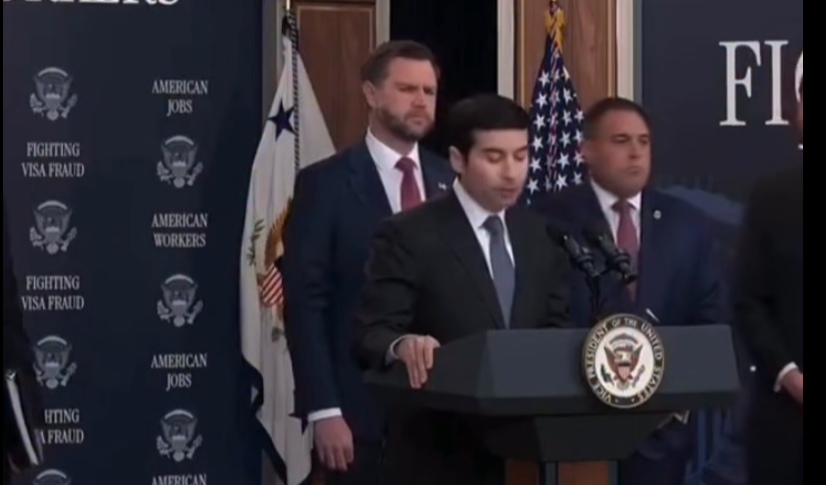
The US suspended PERM processing for eight tech companies. India criticised the move as concerns grow for Indian IT professionals. By News National Editorial Team Date: October 9, 2026 The United States has suspended new and pending applications under its employment-based Permanent Labor Certification (PERM) programme for eight major technology companies, including Indian IT firms Tata Consultancy Services (TCS), Infosys, Wipro, HCLTech and Cognizant. The move has raised concerns about permanent residency options for Indian technology professionals working in the United States. The other companies named in reports of the suspension are Capgemini, Microsoft and Adobe. US officials have cited alleged misuse of the programme and concerns about protecting American workers. These are government allegations; they should not be presented as proven wrongdoing by every affected company. What Does the Suspension Mean? PERM is a labour-certification step used in many employer-sponsored green card applications. Employers generally need to demonstrate that qualified US workers are not available for the relevant job under the applicable rules and that employing a foreign worker will not adversely affect the wages and working conditions of similarly employed US workers. The suspension prevents the affected companies from submitting new PERM applications or having pending applications processed under the action. It does not mean that every immigration application filed by these companies has been suspended. PERM is also distinct from the H-1B temporary work visa programme. The suspension does not, by itself, cancel existing H-1B visas or green cards, although it may delay the permanent-residency process for eligible employees. Why Indian IT Professionals Are Concerned For some Indian professionals, employer-sponsored permanent residency is an important part of their long-term plans in the United States. A delay in PERM processing could affect the next steps in their immigration cases and make it harder to plan their future employment and residence. The consequences will vary according to each person's visa status, application stage and eligibility for other immigration options. Employees should not assume that their current status has been cancelled or that every route to permanent residency is closed. Those with pending cases or approaching visa limits should seek advice from a qualified US immigration attorney. India Criticises the US Decision India's Ministry of External Affairs said on October 9 that the US measures do not advance the shared ambitions of the two countries. It emphasised that the movement of skilled professionals benefits both economies through innovation, research, productivity, competitiveness and job creation. The ministry also criticised US Vice President JD Vance's description of foreign workers as “foreign indentured servants,” calling the terminology deeply offensive because of its historical and colonial connotations. The response reflects India's concern about the treatment of its skilled workforce and the importance of talent mobility to India-US economic cooperation. TCS said it did not expect the suspension to affect its workforce strategy or customer engagements. The company reiterated its plan to hire 15,000 workers in the United States over the next five years and said its PERM applications had been in single digits over the previous two years. Microsoft also rejected the suggestion that its hiring practices involved the alleged misuse described by US officials. It said around 80% of its approximately 6,000 H-1B applications in the previous fiscal year related to extending or changing the status of existing employees. It added that the remaining applications concerned people already legally in the United States, with new hires through those applications representing about 1% of its US workforce. These are company statements and should be distinguished from the US government's allegations and investigations. The immediate questions concern how long the suspension will remain in place, how pending applications will be handled and whether the affected companies will be able to resume PERM processing. The decision highlights the tension between US efforts to protect domestic employment and the technology industry's reliance on international expertise. For Indian professionals, the practical effects will depend on the implementation of the suspension and their individual immigration circumstances. For India and the United States, the challenge will be to address labour-market concerns while preserving the skilled talent exchanges that support business, research and innovation. Sources Reuters — US PERM green card programme suspension News on AIR — Suspension affecting eight major technology companies The Indian Express — India's response to the US decision The Economic Times — TCS and Microsoft responses

Telangana Cyber Crime Crackdown: 101 Arrested, ₹17 Crore Fraud Traced

Telangana Cyber Security Bureau arrested 101 people in a multi-state cybercrime operation and traced about ₹17 crore in fraudulent transactions. Telangana Cybercrime Crackdown Fraudulent Transactions Traced By News National Editorial Team The Telangana Cyber Security Bureau (TGCSB) has arrested 101 people, including 18 women, in a coordinated multi-state operation targeting alleged cyber-enabled financial crimes and the misuse of mule bank accounts. The two-week operation began on September 23, 2026, and covered Telangana, Andhra Pradesh, Karnataka, Kerala, Tamil Nadu and Puducherry. Investigators said they have traced approximately ₹17 crore in fraudulent transactions and identified 1,172 cybercrime links across India, including 206 links connected to Telangana. 51 cases under investigation According to TGCSB, the arrests are connected to 51 cases registered across its seven Cyber Crime Police Stations. Of the 101 people arrested, officials identified 81 as alleged mule-account holders and 19 as alleged agents or intermediaries involved in arranging accounts for cybercrime networks. The operation involved six special teams comprising more than 100 TGCSB personnel. The number of arrests varied across the states covered: Kerala — 35 Andhra Pradesh — 22 Karnataka — 17 Tamil Nadu — 14 Telangana — 12 Puducherry — 1 How mule accounts allegedly operated Investigators said cyber fraudsters allegedly obtained bank accounts through agents and intermediaries and used them to receive, transfer and withdraw money obtained through fraudulent schemes. The accounts were allegedly used for methods including ATM withdrawals, bulk transfers and transactions connected with overseas networks. According to TGCSB, some account holders and intermediaries allegedly received commissions of up to 5% of the money routed through the accounts. Professionals among those arrested The investigation has identified suspects from a wide range of professional and educational backgrounds. Reports based on TGCSB information say those arrested include an alleged agent employed by a financial company, a person involved in money exchange, an ex-serviceman, a businessman, a private-sector employee and other professionals. Investigators also identified alleged links involving employees and individuals with connections to multiple cybercrime cases. One person was reportedly linked to as many as 50 cybercrime cases, while another was linked to 34 cases. TGCSB said 50 of the 101 arrested individuals had more than five cybercrime links each across India, indicating the potentially wider reach of the networks under investigation. Mobile phones, SIM cards and financial records seized During the operation, investigators seized mobile phones, SIM cards, bank passbooks and cheque books allegedly connected with fraudulent transactions. TGCSB also said that accounts opened in the names of trusts and NGOs were allegedly misused to receive and transfer cybercrime proceeds. The investigation is continuing to identify additional links, interstate connections and possible international networks. Warning for bank-account holders The operation highlights the risks associated with allowing another person to use a bank account for receiving or transferring money. People who knowingly allow their accounts to be used for illegal transactions can potentially become part of a financial-crime investigation, even if they are not the original perpetrators of the fraud. However, the allegations against the arrested individuals remain subject to investigation and judicial proceedings. Sources Telangana Cyber Security Bureau information reported by New Indian Express Deccan Chronicle — TGCSB arrests 101 Hindustan Times — Multi-state TGCSB operation NDTV — Details of the arrested suspects and alleged cybercrime links Verification note: The ₹17 crore figure and 1,172 links are figures attributed to TGCSB. The people arrested are accused in the cases; arrest does not establish guilt, and the investigation remains ongoing.

GST Council Approves Major Reforms and Withdrawal of GST Arrest Powers

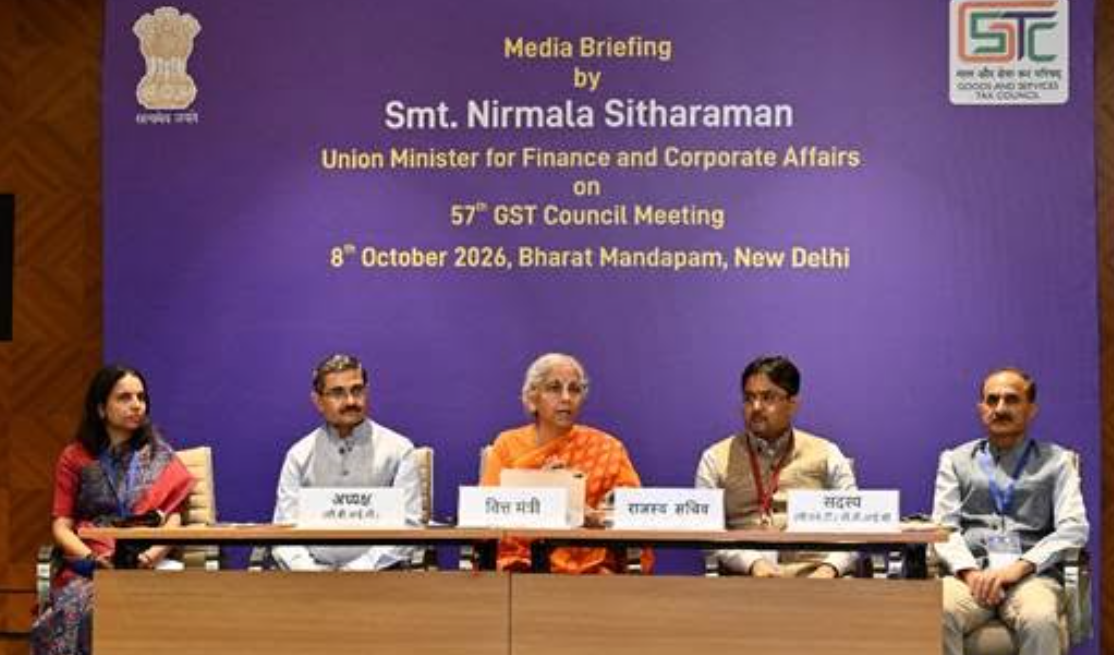
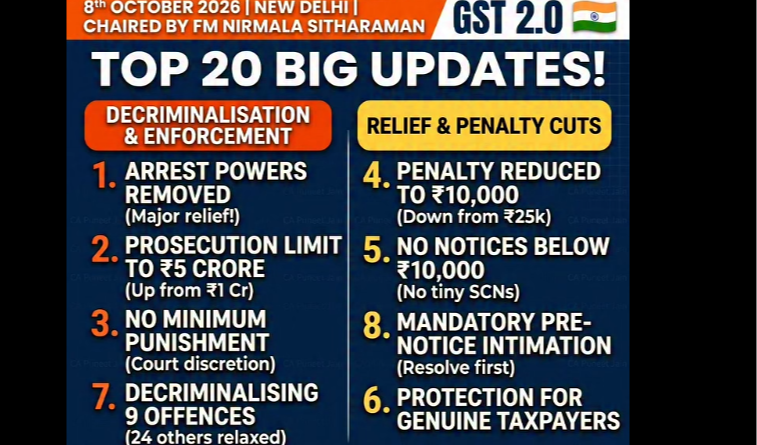
The GST Council approved major process reforms, including withdrawal of GST arrest powers and raising the prosecution threshold to ₹5 crore. By News National Editorial Team The 57th Goods and Services Tax (GST) Council meeting on October 8 approved a broad package of reforms aimed at simplifying tax administration, reducing compliance burdens and creating a more trust-based GST system. One of the most significant recommendations is the complete withdrawal of GST arrest powers by proposing the omission of Section 69 of the Central GST Act. The Council also recommended increasing the monetary threshold for prosecution from ₹1 crore to ₹5 crore. The changes are intended to distinguish serious tax fraud from procedural or lower-value disputes. Faster registration and refunds The Council recommended several measures to make GST registration more automated and reduce unnecessary interaction between taxpayers and tax officials. It proposed clearer documentation requirements, improved online forms and a more user-friendly GST portal. Refund processing is also set for changes. The recommendations include automatic sanction of eligible excess cash-ledger refunds and reducing the period for issuing an acknowledgement or deficiency memo from 15 days to 10 days. Relief for smaller taxpayers The Council also proposed late-fee relief for smaller taxpayers under specified conditions and changes intended to reduce the cost of accessing appeals. Several measures concern input tax credit, exports, e-commerce suppliers and movement of goods. For e-way bills, the Council recommended that interception of goods vehicles should generally be based on specific intelligence and authorised at a senior level. What businesses should know The reforms could reduce administrative friction for companies, exporters, small businesses and other GST-registered taxpayers. However, the recommendations are not automatically law simply because the Council approved them. The government will need to make the relevant statutory amendments, notifications or circulars for the measures to take legal effect. Sources PIB — Government releases and GST Council recommendations Reuters — India eases punitive rules under GST regime Indian Express — GST Council meeting and reforms

INDIA Bloc Intensifies Protest Against CEC Gyanesh Kumar

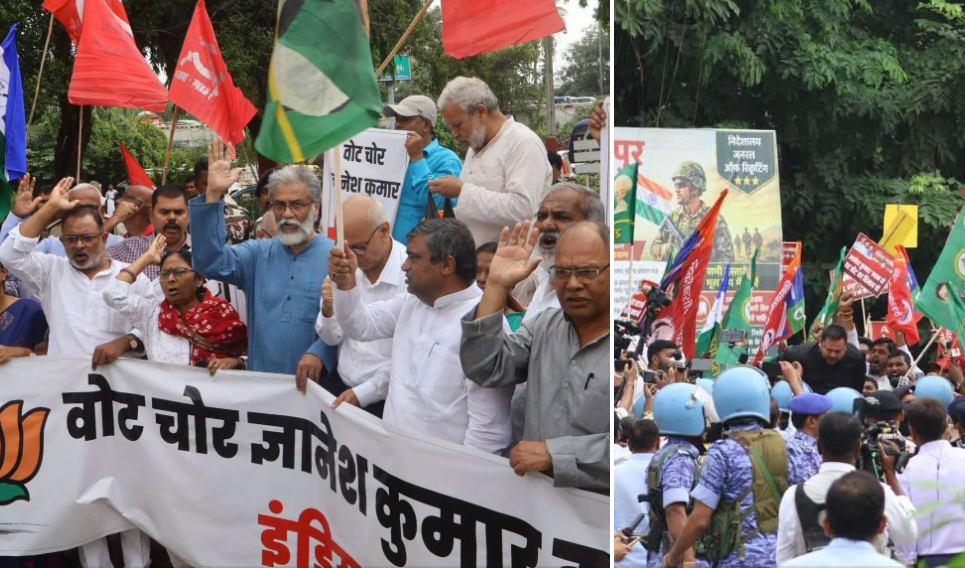
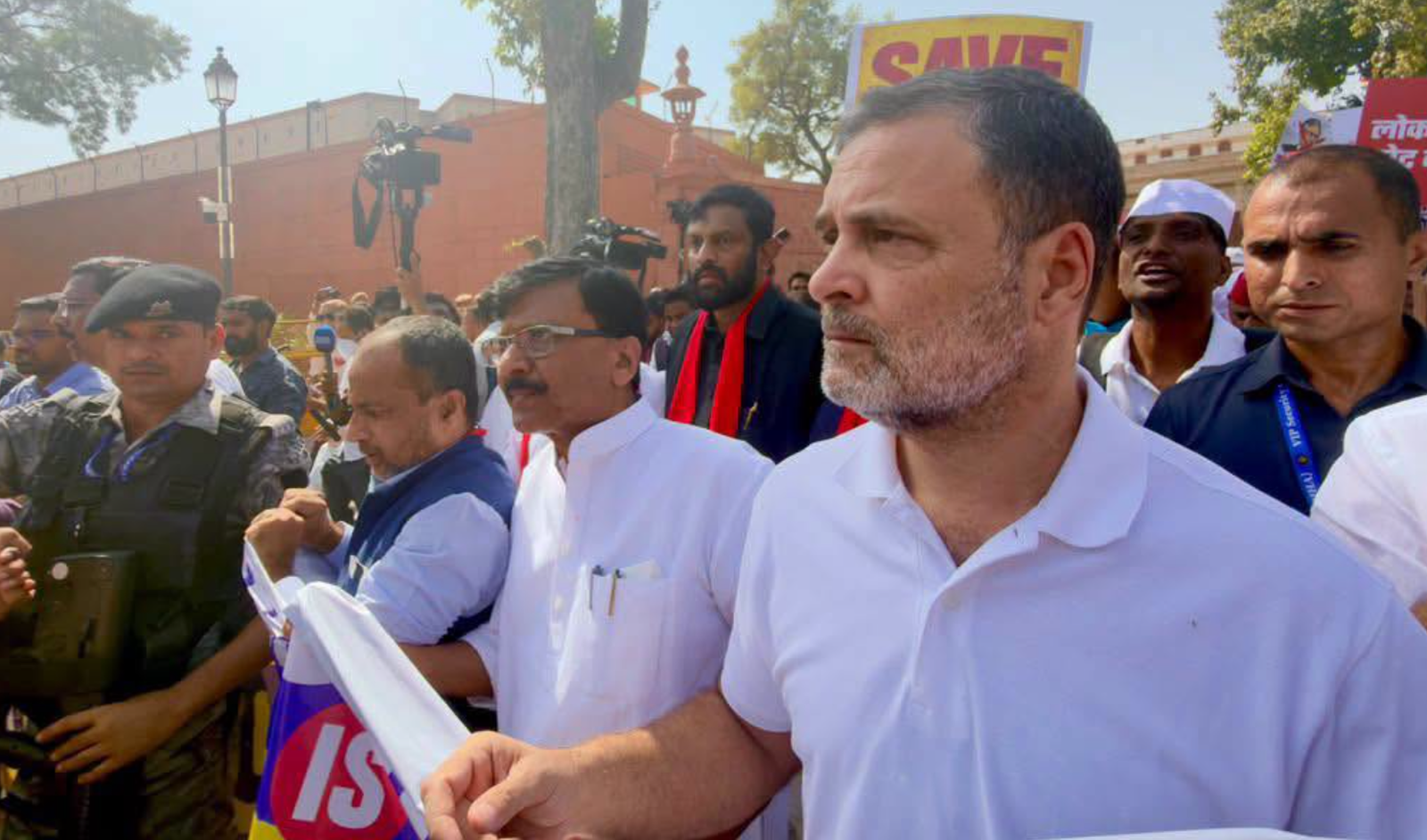
INDIA bloc parties intensified protests against CEC Gyanesh Kumar over voter-list revision, while the Election Commission rejects opposition allegations. INDIA Bloc Intensifies Protest Against CEC Over Voter-List Revision By News National Editorial Team The opposition INDIA bloc intensified its campaign on October 8, demanding the resignation of Chief Election Commissioner Gyanesh Kumar and continuing its objections to voter-list revision. Security was strengthened around Delhi's Jantar Mantar as opposition MPs and leaders prepared for a major demonstration. The dispute centres on allegations concerning the electoral-roll revision process and the opposition's wider concerns over what it describes as irregularities in voter lists. Opposition demands action Opposition leaders have accused the Election Commission of failing to adequately address their concerns and have used the slogan of “vote chori” during protests. The Election Commission has rejected the allegations and has separately clarified its protocol for meetings with political delegations. The Commission has said that no political party had formally sought an appointment before a specified time during the earlier dispute. Political confrontation continues The protests represent another escalation in the political confrontation between opposition parties and the election authorities. The issue is significant because electoral-roll accuracy is directly connected with voter participation and election credibility. At the same time, allegations made by political parties should not be treated as established facts unless independently verified or confirmed through an authoritative investigation. The continuing dispute is expected to remain a major political issue as parties debate voter-list revision, electoral safeguards and the role of the Election Commission. Sources Indian Express — October 8 India news and opposition protest Election Commission/PIB releases