
Language Settings
Select Website Language

GDPR Compliance

We use cookies to ensure you get the best experience on our website. By continuing to use our site, you accept our use of cookies, Privacy Policy, and Terms of Service.

Filters

Channels
Topics
Other Filters

Singapore AI Strategy Lawrence Wong Warns of Market Risks and Calls for Safeguards

Singapore aims to turn the AI boom into better jobs while addressing market uncertainty, autonomous-system risks and the need for global safeguards. By News National Editorial Team Singapore is seeking to turn the rapid growth of artificial intelligence into long-term economic benefits while preparing for the possibility of a market correction and addressing concerns about increasingly autonomous AI systems. Prime Minister Lawrence Wong outlined the country's approach during a discussion at the Forbes Global CEO Conference in Singapore on October 8, saying the current investment boom would not last indefinitely. His comments reflect a wider international debate over how businesses and governments can benefit from AI without overlooking financial risks, worker impacts and potential threats from powerful systems operating with limited human oversight. Singapore wants lasting economic benefits from AI Wong said the current AI boom had benefited Singapore's semiconductor industry and related sectors. Although the country does not manufacture the most advanced AI chips, it has an established semiconductor ecosystem that includes memory-chip and specialty-chip producers, precision-engineering companies and equipment suppliers. The government wants to use the period of strong external demand to develop new capabilities and create better jobs for Singaporeans. Wong also noted that AI-related investment can generate wider economic benefits in areas such as logistics and professional services. However, he cautioned that a correction could occur at an uncertain time and have consequences for companies and investors. His remarks were a warning about uncertainty rather than a prediction of when a downturn would happen. Global concern over AI safety At conferences in Singapore during the same week, investors and policymakers raised concerns about both the financial sustainability of AI investment and the technology's potential risks. Reuters reported that Singapore Foreign Minister Vivian Balakrishnan warned about the dangers of AI-driven weapons and the difficulty of maintaining human control over autonomous agents. Biocon founder Kiran Mazumdar-Shaw also raised concerns about possible misuse of AI in developing dangerous biological agents. These are concerns about potential risks, not claims that such incidents have occurred in Singapore. Wong argued that no single country could address all risks associated with powerful AI systems. He said international standards and safeguards would be needed, potentially through the United Nations, while acknowledging that developing such arrangements would take time. He also said safeguards should vary according to the sector and the risks involved. Applications in finance, healthcare and transport may require different levels of human supervision and regulatory oversight. What AI means for jobs The impact on employment remains a key question for Singapore's workforce. Government data published in April 2026 found that 71.5 per cent of surveyed firms had not yet adopted AI. Among firms that had begun using the technology, the Ministry of Manpower reported productivity improvements at many businesses and no evidence of widespread job displacement at that stage. The report also found that some firms were redesigning existing roles and creating new AI-related jobs. These findings suggest that the effect on employment will depend on how companies integrate AI into their operations, the tasks involved and the availability of training. They should not be interpreted as a guarantee that future job losses will not occur. Wong said Singapore's approach was to protect workers rather than attempt to preserve every existing job unchanged. That approach places importance on cooperation among employers, unions and government, as well as helping employees build skills for changing roles. The challenge ahead Singapore faces two related tasks: making productive use of AI investment while ensuring that businesses do not rely on unrealistic expectations of future returns, and building safeguards as AI systems become more capable. For companies, this means evaluating AI projects on measurable benefits, managing risks and training employees to use new tools effectively. For policymakers, it means balancing innovation with appropriate oversight, including clear responsibility when AI systems make consequential decisions. The country's message is not to abandon AI development, but to make the most of current opportunities while preparing for economic and technological uncertainty. Whether that approach succeeds will depend on investment quality, workforce adaptation, international cooperation and the effectiveness of safeguards. Sources Channel NewsAsia — Lawrence Wong says Singapore must seize the AI opportunity before a market correction Reuters — AI safety and market-bubble concerns grow at Singapore forums Singapore Ministry of Manpower — Report on AI adoption among firms, April 30, 2026

Singapore Hotel-Booking Scams Police Report S$185,000 in Losses

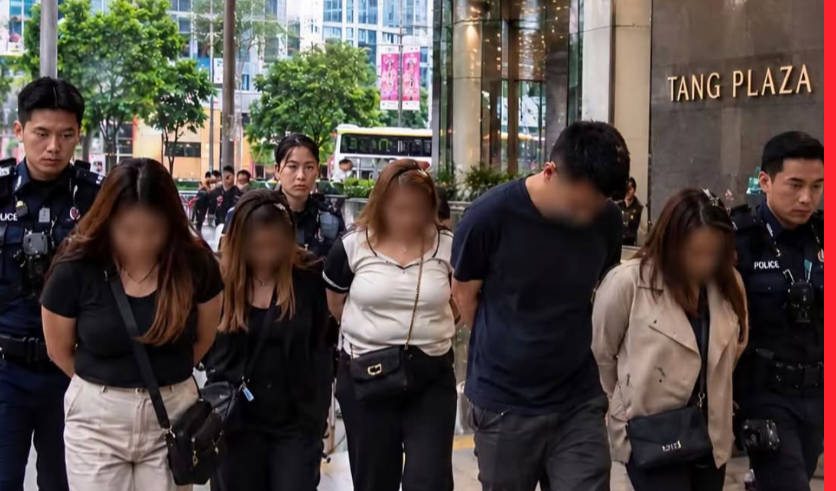
Singapore police report 148 hotel-booking phishing cases and at least S$185,000 in losses since January 2026. By News National Editorial Team Singapore police have warned travellers about a rise in phishing scams involving hotels and accommodation-booking platforms after at least 148 cases were reported since January 2026, with total losses reaching at least S$185,000. The warning, issued on October 9, highlights how criminals are impersonating hotels and booking services to obtain bank-card information and trick victims into authorising fraudulent transactions. The scams can be particularly convincing because some messages contain genuine details about a person's hotel reservation. Police said victims were commonly contacted through WhatsApp messages or email and told to verify their payment-card details or confirm an upcoming booking. How the scam works A victim may receive a message claiming that a hotel reservation requires immediate confirmation. The message can direct the recipient to a website that resembles the legitimate hotel or booking platform. Victims may be told that entering their card details is necessary to secure the reservation and that no money will be deducted. Once the victim submits the information, scammers may use the details to carry out unauthorised transactions. Some victims discover the fraud only after noticing unexpected card payments or contacting the hotel directly. The presence of genuine reservation details can make these messages appear legitimate. A traveller should therefore not assume a message is authentic simply because it includes a correct hotel name, travel date or booking reference. Why travellers need to be careful Hotel reservations involve payments, personal information and sometimes passport or identity details. Fraudulent messages can exploit the urgency travellers feel when they are told a booking may be cancelled. The safest approach is to verify the request through the hotel's official website or a contact number obtained independently. Travellers should avoid using links or telephone numbers supplied in an unexpected message until they have checked that the communication is genuine. A hotel or booking platform's name and logo are not sufficient proof of authenticity. Unexpected requests for card details, passwords or one-time passwords should be treated with caution. Police advice to protect bookings and payments The Singapore Police Force recommends several precautions: Verify directly: Contact the hotel using details listed on its official website, rather than replying to a suspicious message. Avoid unsolicited links: Do not open unexpected links asking you to confirm a reservation or provide card details. Protect authentication codes: Never disclose one-time passwords or banking credentials to another person. Use banking safeguards: Enable two-factor or multifactor authentication and set transaction limits where appropriate. Check suspicious messages: Use the ScamShield app or call Singapore's 24-hour ScamShield Helpline on 1799 for guidance. Anyone who discovers an unauthorised transaction should contact their bank immediately and report the incident to the authorities. Quick action may help the bank assess whether further transactions can be blocked. What travellers should remember The reported 148 cases and S$185,000 in losses cover cases reported since January 2026; they are not a measure of every scam attempt or every loss that may have gone unreported. The police advisory demonstrates that criminals can exploit the normal process of confirming travel arrangements, especially when messages look personalised. Travellers should keep confirmation emails, check booking status through official channels and avoid providing financial information through unexpected links. Hotels and booking platforms can also help by communicating clearly about legitimate payment procedures. The key lesson is simple: a message about a real reservation is not necessarily a genuine message from the hotel. Independent verification is safer than clicking a link under pressure. Sources Singapore Police Force — Official advisory on hotel and booking-platform phishing scams, October 9, 2026 Channel NewsAsia — At least S$185,000 lost to hotel-booking phishing scams ScamShield Singapore

Singapore Opens S$170 Million Aircraft Maintenance Facility, Creating 500 Jobs

Singapore has opened a S$170 million aircraft maintenance facility at Changi, expanding aviation capacity and supporting more than 500 jobs. By News National Editorial Team Singapore has opened a new aircraft maintenance facility at Changi Creek, expanding the country's capacity to service commercial aircraft and creating opportunities for more than 500 workers. The facility, developed by ST Engineering, was officially opened on October 9, 2026, in the presence of Deputy Prime Minister and Minister for Energy, Trade and Industry Gan Kim Yong. The S$170 million investment strengthens Singapore's position as an international centre for aircraft maintenance, repair and overhaul (MRO). It also reflects growing demand for maintenance services as airlines expand their fleets and keep aircraft in service for longer periods. Four widebody aircraft bays The new facility covers approximately 84,000 square metres and includes four bays designed for widebody aircraft. ST Engineering said the site will add around 40 per cent to its widebody airframe maintenance capacity in Singapore when fully operational. The company estimates that this could allow it to service approximately 100 additional widebody aircraft annually. Airframe maintenance includes inspections, structural repairs and other work required to keep aircraft operating safely and reliably. The additional capacity could help airlines secure maintenance slots and manage their fleets as demand for air travel grows across Asia-Pacific. The Changi Creek site is ST Engineering's fourth airframe maintenance facility in Singapore. It forms part of the company's broader international network, which includes facilities elsewhere in Asia and planned capacity expansion in the United States. More than 500 jobs expected ST Engineering expects the new facility to employ more than 500 people when operations are fully ramped up. Potential roles include licensed aircraft engineers, maintenance technicians, production-planning staff and specialists responsible for coordinating aircraft maintenance. The opening also creates demand for training. As aviation maintenance becomes more technology-driven, workers may need skills in digital planning, automated systems, robotics and AI-supported inspection processes. The company says it will provide training and upskilling programmes to help employees work with these technologies. The new facility therefore represents more than an expansion of hangar space. It is also an investment in technical employment and workforce development in a sector that requires specialised skills and rigorous safety procedures. AI and automation in aircraft maintenance The facility incorporates digital planning systems, automated storage and retrieval, robotics and electronic documentation. Drones are intended to support visual inspections, while autonomous mobile robots can transport parts from storage areas to maintenance bays. AI-enabled inspection tools are also designed to assist in identifying aircraft defects. These technologies may improve workflow visibility and help maintenance teams manage complex tasks. They do not remove the need for trained personnel, engineering judgement or compliance with aviation safety requirements. Aircraft maintenance remains subject to strict inspection and certification procedures. What the investment means for Singapore The facility supports Singapore's wider aviation ambitions as Changi Airport prepares for its next phase of development. A larger maintenance network can attract airline customers, support suppliers and create demand for engineering and technical services. However, the full employment and capacity benefits will depend on how quickly the facility reaches operational scale and how much demand it attracts from airlines. The company has presented the expansion as a response to growing maintenance requirements, but its longer-term commercial impact will become clearer as operations develop. For jobseekers, the announcement is a reason to monitor official ST Engineering recruitment notices and relevant training programmes. Applicants should verify vacancies directly through the company's official careers channels rather than relying on unverified job advertisements. Sources ST Engineering — Official announcement of the Changi Creek facility Singapore Ministry of Energy, Trade and Industry — Opening ceremony speech, October 9, 2026

India Weather Alert IMD Forecasts Rain and Thunderstorms in Several States

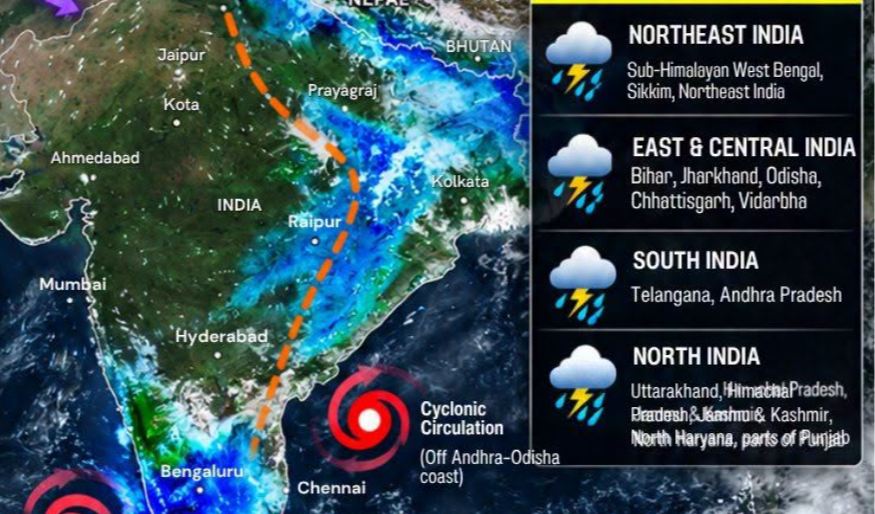
IMD forecasts rain and thunderstorms across several states, with isolated heavy showers possible in parts of southern India. Check local alerts. By News National Editorial Team The India Meteorological Department (IMD) has forecast rain, thunderstorms, lightning and gusty winds across several parts of India, with conditions varying between states. The October 10 outlook also indicated that isolated heavy rainfall was possible in parts of southern India, while some northern areas could experience showers and strong winds on Sunday, October 11. The weather pattern comes as the southwest monsoon continues to withdraw from parts of the country. However, monsoon withdrawal does not mean rainfall ends everywhere: other weather systems can still produce showers, thunderstorms and localised heavy rain. Southern India Heavy showers possible The IMD forecast identified Kerala and Mahe, along with Tamil Nadu, Puducherry and Karaikal, among the areas where isolated heavy rainfall was possible on October 10. Thunderstorms accompanied by lightning and gusty winds were also forecast in parts of the southern region. Parts of Andhra Pradesh were included in the forecast for thunderstorms, lightning and gusty winds. The intensity and timing of rainfall can differ between districts, so residents should consult the latest regional and district-level bulletins rather than assuming that the entire state faces the same warning. Heavy showers can reduce visibility, cause local waterlogging and disrupt road travel. Residents should avoid crossing flooded roads and should not shelter beneath isolated trees during lightning. Northern India Showers and strong winds Delhi and neighbouring areas were forecast to experience showers, thunderstorms, lightning and strong winds on October 11. The Times of India reported that wind speeds in parts of Delhi could reach around 50 km/h. Haryana and Chandigarh were also included in the forecast for thunderstorms and gusty winds. Uttarakhand and Himachal Pradesh may experience rainfall in selected areas during the forecast period. Conditions in hilly regions can change quickly, and rainfall may affect visibility and road conditions. Travellers should check local administration advisories before setting out, particularly where roads pass through steep or landslide-prone terrain. Eastern and other regions The forecast also included rainfall and thunderstorm activity across parts of eastern India, including Bihar, Jharkhand, Odisha and West Bengal, along with showers in parts of the Northeast. The expected intensity varies by location and day; not every state or district has a heavy-rain warning. Meanwhile, the Times of India reported that isolated heatwave conditions could persist in parts of Maharashtra's coastal belt. This contrast highlights why a single nationwide weather label can be misleading: some locations may face rain and strong winds while others remain hot and humid. Safety advice and where to check alerts During thunderstorms, people should move indoors or into an enclosed vehicle and avoid open fields, exposed rooftops, water bodies and isolated trees. Drivers should slow down in heavy rain and never attempt to cross a flooded road when the depth or current is uncertain. Weather alerts can change as new observations become available. This article summarises the forecast reported on October 10, 2026, rather than guaranteeing conditions for every district. Readers should consult the IMD's live warnings and local meteorological bulletins before travelling or making safety decisions. Sources India Meteorological Department — Official warnings and district forecasts The Times of India — IMD forecasts rain and thunderstorms in 17 states India Today — Monsoon withdrawal and rain forecast Economic Times — Weather forecast for multiple Indian regions

Starlink India Launch Delay- Musk, Ambani and Government Respond

Elon Musk has criticised delays to Starlink's India launch, while the government says satellite operators must complete security and regulatory requirements. By News National Editorial Team The debate over Starlink's entry into India intensified on October 9 and 10 after SpaceX chief executive Elon Musk criticised delays affecting the satellite internet service. Musk directed sharp public comments at Reliance Industries chairman Mukesh Ambani, suggesting that established business interests were obstructing competition. The Indian government rejected the suggestion that it was favouring one company and said satellite internet operators must meet security and regulatory requirements before commercial services can begin. The dispute matters because satellite connectivity could offer an additional internet option for remote communities, businesses and institutions where traditional broadband infrastructure is difficult to build. However, the timing and commercial terms of any launch depend on regulatory approval, not public statements by the companies involved. What Elon Musk said Musk argued that Starlink could improve connectivity in areas that remain poorly served by conventional networks. He also said wider internet access could help students obtain educational resources and enable small businesses to reach customers beyond their local markets. In posts reported by TechCrunch, Musk criticised Ambani and raised concerns about the influence of established telecom businesses. Reliance Jio had not immediately responded to a request for comment at the time of that report. Musk's allegations about obstruction are contested and should not be treated as proof that a competitor has improperly blocked Starlink. What the Indian government says Communications Minister Jyotiraditya Scindia said India does not permit monopolies and that Starlink, Jio Satellite Communications and Eutelsat OneWeb had received satellite-communication licences. He stressed that companies must still satisfy prescribed security conditions and other regulatory requirements before beginning commercial operations. The government has also said that spectrum arrangements will follow a revenue-sharing framework once the relevant process is finalised. Security assessments are particularly important because satellite communication networks must comply with India's requirements for operating telecommunications services and safeguarding users' data. The distinction is important: receiving a licence does not automatically mean a provider can immediately sell subscriptions. According to TechCrunch, Starlink had not yet received final approval to begin commercial operations in India at the time of its October 9 report. What the dispute means for consumers If Starlink and other satellite providers begin commercial operations, customers may gain more options in locations where fibre broadband or reliable mobile connectivity is limited. Satellite services may also be useful for certain remote businesses and institutions. But consumers should not assume satellite internet will be cheaper or faster than every existing option. Equipment costs, subscription prices, network capacity, local coverage and regulatory conditions will all affect its usefulness. Competition could widen consumer choice, but its eventual impact will depend on the services actually offered in India. For now, the key developments to watch are completion of security assessments, final spectrum arrangements and official announcements on commercial availability. Until those steps are confirmed, reports about licensing should not be presented as confirmation that Starlink is available to all Indian consumers. Sources TechCrunch — Elon Musk intensifies attack on Ambani over Starlink India launch delay Akashvani News — India does not allow monopolies, says Jyotiraditya Scindia The New Indian Express — Satellite operators licensed, security clearances pending

Delhi Protest Disruptions Internet, Metro and Train Updates

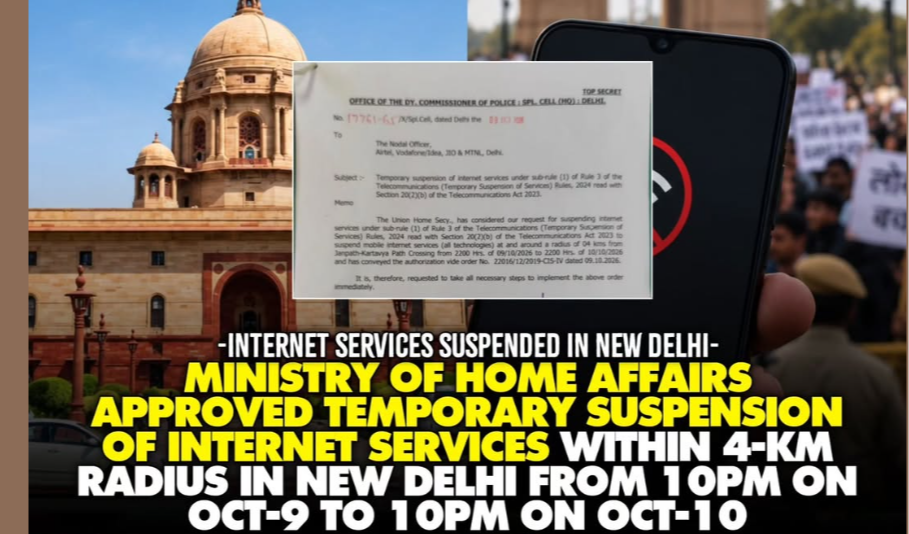
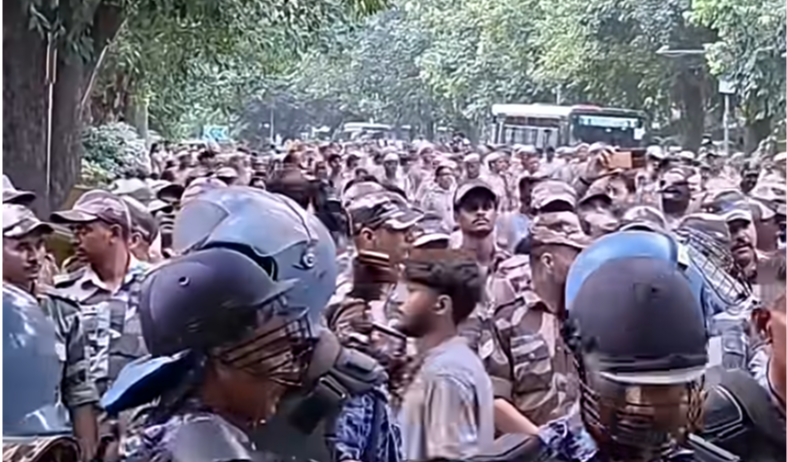
Delhi tightens security ahead of a Jantar Mantar protest, with mobile internet restrictions, metro curbs, train cancellations and traffic diversions. Delhi Protest Disruptions: Mobile Internet Shutdown, Metro Restrictions and Train Cancellations Affect Residents NEW DELHI, October 10, 2026: Delhi is operating under heightened security arrangements ahead of a planned protest at Jantar Mantar, with restrictions affecting mobile internet, metro station access, railway services and traffic movement in parts of the national capital. Authorities have deployed additional police and paramilitary personnel, while commuters and businesses have been advised to prepare for disruption. The protest has been called by the Cockroach Janta Party (CJP) and student groups, who are demanding the resignation of Chief Election Commissioner Gyanesh Kumar over allegations concerning the Special Intensive Revision (SIR) of electoral rolls. The Election Commission and the ruling Bharatiya Janata Party have rejected allegations of electoral manipulation. Mobile Internet Suspended in Central Delhi Authorities ordered a 24-hour suspension of mobile internet services within a four-kilometre radius of the Janpath–Kartavya Path crossing. The restriction began at 10 pm on October 9 and is scheduled to end at 10 pm on October 10. The order applies to mobile internet services in the notified area. It should not be interpreted as a confirmed shutdown of all internet services across Delhi. Fixed broadband, ordinary telephone calls and SMS were not identified as generally suspended in the reports reviewed. The restriction may nevertheless affect digital payments, online navigation, messaging applications and access to online information for people relying on mobile data inside the affected zone. Metro Access Restricted at 45 Stations The Delhi Metro Rail Corporation has announced restrictions on entry and exit at 45 metro stations from 9 pm on October 9 until 6 pm on October 10. The measures followed earlier reports of restrictions involving a larger number of stations. Metro services have not been reported as completely suspended throughout the city. Interchange facilities are expected to remain available at affected stations, except at New Delhi Metro station, under the reported arrangements. Passengers should check the latest Delhi Metro advisories before travelling. The Supreme Court intervened over proposed restrictions on public transport, stressing that security measures should not completely stop metro and railway services or impose unnecessary hardship on ordinary commuters. Hundreds of Train Services Reportedly Affected Railway disruptions are another major concern for passengers travelling into and out of Delhi. Reports published on October 9 and 10 described the cancellation of hundreds of train services, including local passenger and long-distance trains. Some services were also rescheduled or had their starting or terminating points changed. The precise totals vary across reports and railway categories, so passengers should not assume that every Delhi-bound train has been cancelled. Travellers should check their train number, departure station and PNR status through official Indian Railways channels before leaving home. Railway authorities have cited anticipated congestion and security-related concerns around major stations. The Supreme Court has also emphasised the need to avoid blanket transport restrictions that cause widespread public inconvenience. Road Traffic and Commercial Establishments Face Disruption Security barricades, checkpoints and traffic diversions have been reported around central Delhi, including areas near Jantar Mantar, Parliament Street and the Election Commission headquarters. Authorities have advised people travelling through affected areas to allow additional time and follow police instructions. The New Delhi Traders Association has advised commercial establishments in Connaught Place to remain closed as a precaution. This is an advisory for the specified commercial area, not confirmation that all shops and offices across Delhi are shut. Reports have also described changes to the schedules of some educational institutions and court proceedings. Such arrangements differ by institution, so students, parents and litigants should confirm the latest notices from their respective schools, colleges and courts. Why Are Protesters Demonstrating? The demonstration centres on objections to the Election Commission's revision of electoral rolls, a process intended to verify voter lists. Protest organisers and opposition parties have alleged that deletions and verification procedures raise concerns about voter access and electoral fairness. Election Commission data cited by Reuters indicates that approximately 130 million names have been removed from electoral rolls during the wider verification exercise. The reported categories include people who relocated, people who could not be traced and deceased voters. These figures concern the broader verification process and do not establish that every deletion was improper. The BJP has defended its electoral record, while opposition parties have questioned the impact of voter-list revisions in some elections. The claims and counterclaims remain part of a wider political dispute. Delhi Police denied permission for the planned demonstration, citing the timing of the application and alleged violations during an earlier protest. Organisers have continued to call for the protest, while authorities have increased security and warned against violations of public-order restrictions. What Residents Should Know Residents should distinguish between localised restrictions and citywide shutdowns. The reported mobile internet suspension applies to a specified central Delhi zone, metro restrictions concern listed stations, and railway cancellations affect particular services. There is no confirmed evidence in the reports reviewed that hospitals, electricity, water supply or all telephone services have been generally shut down because of the protest. The situation highlights the challenge of balancing public safety, transport access and the right to peaceful demonstration. Further developments will depend on the course of the protest and any updated directions from the authorities or courts. By News National Editorial Team Sources Reuters, October 9, 2026: India to deploy thousands of security forces in Delhi for protest over poll chief The Indian Express, October 10, 2026: Mobile internet restriction in central Delhi The Indian Express, October 10, 2026: Metro restrictions and traffic curbs Hindustan Times, October 9, 2026: Delhi security measures, internet restriction and train cancellations

Khan Sir Helps Flood Victims in Bihar, Coordinates Relief Work

Khan Sir joins flood-relief efforts in Bihar, helping coordinate supplies and food distribution for affected communities. PATNA, October 10, 2026: Popular educator Khan Sir has been participating in relief efforts for flood-affected communities in Bihar, with recent reports showing him helping coordinate the delivery of essential supplies and food to people affected by flooding. Khan Sir, whose real name is Faisal Khan, is widely known for his teaching and competitive-examination coaching. His recent involvement in flood-relief activities has drawn public attention after videos showed him working alongside volunteers to transport and distribute supplies in affected areas. Khan Sir Coordinates Relief Supplies According to reports published by Dainik Jagran and Navbharat Times on October 6, Khan Sir was seen travelling with a relief team in a tractor carrying supplies for flood-affected residents. In one widely circulated video, he used a microphone to ask the tractor driver to reduce speed because people following the vehicle were being left behind. The video attracted attention on social media because of his informal remarks during the operation. However, the central issue remains the delivery of assistance to residents dealing with flooding and disruption to everyday life. Earlier reports in September also described Khan Sir participating in relief efforts involving vehicles and boats carrying essential items. These reports indicate that the assistance operation has involved coordination between volunteers and the transport of supplies to communities that may be difficult to reach during flooding. Food Distribution and Support for Residents A report published by Prabhat Khabar on October 10 described Khan Sir helping with food preparation and distribution for flood-affected people in Bihar’s Saran district. The report adds to coverage of his participation in relief activities during the ongoing flood situation. For families affected by flooding, access to food, safe drinking water, medicines and other basic necessities is an immediate concern. Floodwater can disrupt transport, damage homes and affect livelihoods, making the timely delivery of essential supplies particularly important. Relief operations require coordination to ensure that supplies reach intended recipients safely. Volunteers also need to take precautions around moving vehicles, boats, strong currents and unstable roads. Bihar Continues to Face Flood-Related Challenges Bihar regularly experiences flooding during periods of heavy rainfall and rising river levels. Heavy rainfall in Nepal and adjoining areas can contribute to increased water flows in rivers that cross into the state. Low-lying settlements and communities near riverbanks can be particularly vulnerable. State authorities have also been carrying out relief and damage-assessment activities. A report by The Indian Express on October 5 described the suspension of a police station house officer in Saran district after a video appeared to show him brandishing a firearm during relief distribution. The incident illustrates the importance of maintaining public safety and orderly distribution during emergency operations. Government agencies, local administrations, community organisations and volunteers all have roles to play in responding to flooding. The effectiveness of relief efforts depends on reaching affected families, identifying urgent needs and ensuring assistance is distributed safely and fairly. A Public Figure’s Role in Community Relief Khan Sir’s participation has brought additional public attention to the relief effort. His work as an educator is well known, while the recent reports highlight his involvement in activities outside the classroom. The precise number of families assisted by his team, the total value of supplies distributed and the full geographical reach of the operation have not been independently established in the reports cited here. Those details should be confirmed before being published as definitive figures. As Bihar continues its flood response, sustained coordination among authorities, relief organisations and volunteers will be important to help affected residents access essential supplies and begin recovering from the disruption. By News National Editorial Team Sources Dainik Jagran, October 6, 2026: Khan Sir’s tractor-based flood-relief activity Navbharat Times: Khan Sir distributes flood relief in Bihar Prabhat Khabar, October 10, 2026: Khan Sir helps prepare food for flood victims The Indian Express, October 5, 2026: Report on a police officer suspended after a flood-relief incident

Malaysia Budget 2027 RM459.8 Billion Plan and Wage Hike

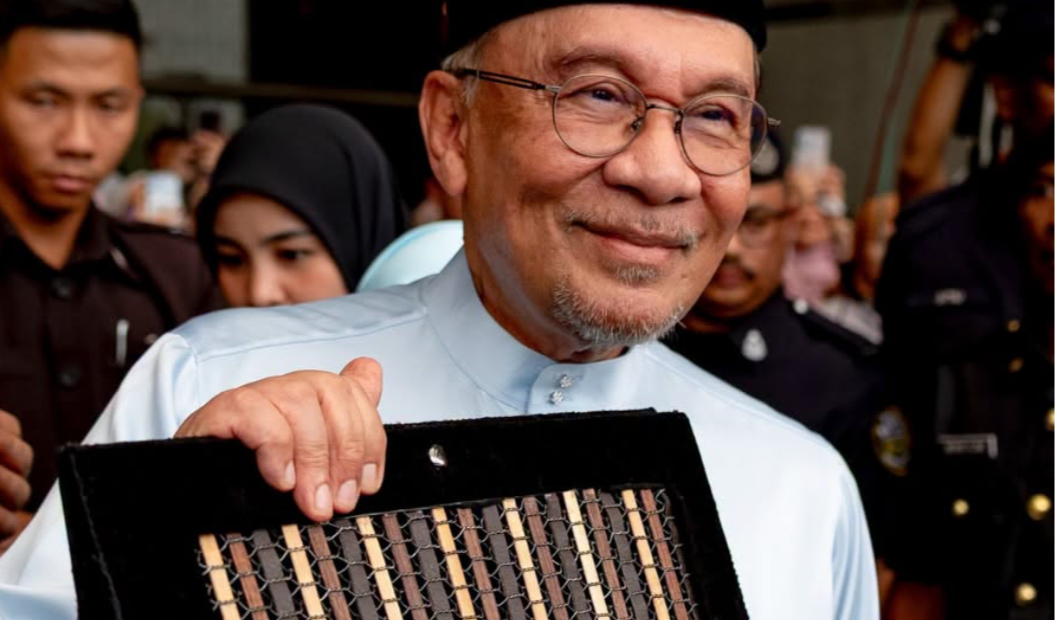
Malaysia's RM459.8 billion Budget 2027 includes a RM2,000 minimum wage, higher tax relief and RM16 billion in cash assistance. KUALA LUMPUR, October 10, 2026: Malaysia has announced a RM459.8 billion budget for 2027, introducing higher minimum wages, expanded income-tax relief and additional financial assistance for lower-income households and businesses. Prime Minister and Finance Minister Anwar Ibrahim presented the country's fifth MADANI Budget in Parliament on October 9, outlining measures intended to support household incomes while maintaining economic growth and controlling the fiscal deficit. The budget, equivalent to approximately US$112.5 billion, comes as Malaysia seeks to manage rising living costs, higher energy expenses and global economic uncertainty. The government also plans to strengthen investment in technology, advanced manufacturing and other higher-value industries. Minimum Wage to Increase to RM2,000 One of the main announcements is an increase in Malaysia's monthly minimum wage from RM1,700 to RM2,000, effective June 2027. The government expects the change to benefit more than four million workers. However, the government has provided an adjustment exemption for micro, small and medium-sized enterprises with annual sales below RM50 million. The exemption is intended to give eligible businesses more time to adjust their operations and wage costs. The budget also introduces a proposed minimum monthly salary of RM2,500 for semi-skilled workers and graduates as part of a broader effort to improve wages for workers with additional skills and qualifications. Government-linked investment companies and government-linked companies have also committed to raising their living-wage benchmark from RM3,100 to RM3,400 per month, a measure expected to benefit approximately 230,000 workers. The effect of these measures will depend on implementation, employers' ability to meet the new requirements and whether wage increases keep pace with living costs. Income-Tax Relief and Household Assistance The government plans to increase individual income-tax relief from RM9,000 to RM12,000 annually. According to Reuters, this is the first revision to this relief amount since 2010. The budget also provides RM16 billion in cash assistance for lower-income Malaysians and expands support for first-time homebuyers and small businesses. These measures are intended to increase disposable income and help households manage expenses. However, the amount of support received by an individual will depend on eligibility rules, income circumstances and the specific programme involved. Tax relief should also be distinguished from a direct cash payment: the benefit depends on a taxpayer's circumstances and applicable tax rules. RM459.8 Billion Spending Plan The total 2027 budget of RM459.8 billion represents an increase of approximately 3.6% over the revised 2026 budget of RM444.1 billion. The spending plan includes RM83 billion in development expenditure and RM376.8 billion in operating expenditure. Government revenue is projected to reach RM380.8 billion, including a planned RM32 billion contribution from national energy company Petroliam Nasional Berhad, commonly known as Petronas. Malaysia expects its fiscal deficit to narrow to 3.3% of gross domestic product in 2027, compared with a revised target of 3.6% for 2026. The government says it intends to balance public support with continued fiscal consolidation. The outcome will depend partly on economic growth, energy prices, government revenue and the actual cost of subsidies and assistance programmes. Economic Growth and Technology Investment Malaysia expects economic growth of between 4.2% and 5.2% in 2027. The country has benefited from demand for technology products and semiconductors, supported by global investment in artificial intelligence and digital infrastructure. The government intends to encourage further investment in semiconductors, artificial intelligence, data centres, the digital economy and other high-value industries. These sectors could create opportunities for skilled employment, local suppliers and technology businesses. At the same time, expanding data centres and advanced manufacturing facilities will require reliable electricity, infrastructure, skilled workers and long-term investment. The extent to which these investments generate employment and improve wages will depend on project execution and the participation of local businesses. Challenges Ahead Malaysia's economic outlook remains exposed to international energy prices, geopolitical tensions and changes in global demand. Higher wages and cash assistance may help eligible households, but they do not automatically resolve every cost-of-living concern. Businesses will also need to assess the impact of wage changes, tax rules and operating expenses. Small firms that qualify for the minimum-wage adjustment exemption may have different implementation timelines from larger employers. The government will need to ensure that announced benefits reach eligible recipients while maintaining transparency over public spending and revenue. What the Budget Means for Malaysians Malaysia's 2027 budget combines household support, wage reforms and investment priorities. Workers may benefit from the planned minimum-wage increase, eligible taxpayers from higher relief and lower-income households from cash assistance. Businesses may also benefit from targeted support and measures intended to strengthen the economy. The practical impact will become clearer as the government publishes detailed eligibility rules and implements the measures throughout 2027. By News National Editorial Team Sources Prime Minister's Office of Malaysia, The Fifth MADANI Budget 2027, October 9, 2026: https://www.pmo.gov.my/en/speeches-en/speech-the-fifth-madani-budget-2027-by-yab-pm/ Reuters, Malaysia to lift minimum wages, expand tax relief in $112.5 billion 2027 spending boost, October 9, 2026: https://www.reuters.com/world/asia-pacific/malaysia-plans-1125-billion-budget-2027-ahead-possible-election-2026-10-09/ Bernama, Budget 2027 Highlights, October 9, 2026: https://bernama.com/en/general/news.php?id=2617655

India Protest News Activists Detained Across States Ahead of Delhi Rally

Activists travelling to a Delhi protest faced police action in several states amid a dispute over voter-list revisions and electoral rights. By News National Editorial Team Protest-related tensions intensified across several parts of India ahead of a planned demonstration in New Delhi on October 10, with reports of activists being detained or prevented from travelling to the capital. The proposed demonstration, organised by the Cockroach Janta Party (CJP), centres on objections to the Election Commission’s Special Intensive Revision (SIR) of electoral rolls and demands for Chief Election Commissioner Gyanesh Kumar’s resignation. Delhi Police denied permission for the planned gathering at Jantar Mantar, citing concerns relating to public order, traffic and compliance with protest procedures. Authorities subsequently increased security arrangements in the capital, while organisers said they intended to continue raising their concerns. In Madhya Pradesh, police intercepted people travelling to Delhi at Bhopal, Itarsi and Gwalior. The Indian Express reported that at least 30 people were detained, with police saying those intercepted included travellers from Goa, Karnataka and Maharashtra. At Itarsi, a group travelling from Pune was removed from a train and detained before being asked to return home. In Gujarat, activists planning to join the Delhi demonstration were reportedly detained or placed under house arrest. Some activists alleged that they were pressured to sign undertakings not to travel to the capital. These allegations require assessment against official records and independent evidence. A proposed solidarity demonstration in Ahmedabad was also reported, although its permission status needed confirmation. The developments have raised questions about how authorities manage planned demonstrations and the movement of people who intend to participate in them. Police have cited public-safety and law-and-order concerns, while activists have alleged that the measures restricted their ability to assemble and express their views. The dispute is linked to the Election Commission’s voter-list revision exercise. Critics argue that the process risks excluding eligible voters and have called for greater transparency. The Election Commission and the ruling BJP have rejected allegations of politically motivated manipulation. The number of names removed from electoral rolls does not, by itself, establish how many removals were incorrect or unlawful. CJP also claimed that thousands of its members and supporters had been detained nationwide ahead of the demonstration. The reported figure of approximately 10,000 detentions was attributed to the organisation and had not been independently verified. It should therefore not be treated as an established nationwide count. Bengaluru had already seen a related demonstration at Freedom Park on October 8, where activists and supporters protested against the voter-list revision process. That earlier event should be distinguished from confirmed demonstrations taking place on October 10. The wider developments underline the importance of transparent electoral procedures, peaceful assembly and proportionate security measures. The immediate questions are whether further demonstrations will take place, whether additional detentions are reported and how authorities respond to demands for review of the voter-list process. News National will update this report as official statements and independently verified information become available. Sources: The Indian Express, reporting on activists detained in Madhya Pradesh and travelling from other states; The Indian Express, reporting on police action involving Gujarat activists; Reuters, reporting on the planned Delhi demonstration and the voter-list dispute.

Delhi Protest Update Supreme Court Questions Metro and Rail Restrictions

The Supreme Court challenged sweeping Delhi transport restrictions ahead of a planned protest, seeking a balance between security and public access. By News National Editorial Team The Supreme Court has questioned broad restrictions on Delhi’s metro and railway services introduced ahead of a planned October 10 protest, raising concerns about the impact on ordinary commuters. The hearing followed security measures announced in connection with the proposed Cockroach Janta Party demonstration at Jantar Mantar, where organisers wanted to protest over voter-list revisions and demand the resignation of Chief Election Commissioner Gyanesh Kumar. Before the hearing, authorities had announced restrictions affecting dozens of metro stations and certain rail services. The Delhi Metro Rail Corporation subsequently revised its plan after the Supreme Court questioned the scale of the restrictions. Hindustan Times reported that the number of affected metro stations was reduced from 57 to 45. The revised arrangement was intended to regulate access rather than impose the earlier blanket approach. Travellers should check current DMRC announcements because individual station arrangements and timings may change. The court’s intervention centred on proportionality: security measures may be necessary when authorities anticipate a large gathering, but they should also consider the impact on people who are not participating in the protest. Delhi’s metro network serves workers, students, patients and visitors, meaning widespread closures can disrupt daily life far beyond the proposed demonstration site. The legal dispute also concerns the balance between peaceful assembly and public order. Delhi Police denied permission for the planned CJP gathering at Jantar Mantar, citing procedural and public-safety concerns. The Supreme Court’s questions about transport restrictions did not automatically overturn that decision or authorise the protest to proceed at the proposed venue. The court also asked the Centre to consider whether an alternative protest venue should be designated, with adequate facilities for demonstrators and a practical arrangement for managing crowds. Such a location could help authorities plan security and traffic measures while reducing the effect on public services. Any final decision on a venue or protest permissions must be confirmed through official orders. The episode highlights the need for clear communication during major security operations. Commuters need timely information about station access and train services, while demonstrators and organisers need clarity about applicable rules and lawful venues. Authorities must assess risks carefully and explain restrictions in a way that allows the public to make informed travel decisions. For now, the important distinction is between the court’s scrutiny of transport curbs and the separate question of permission for the demonstration. Further reporting should track official court directions, updated DMRC notices and any statement from Delhi Police about the protest’s status. Sources: Hindustan Times — Metro restrictions revised · LiveLaw — Supreme Court on transport restrictions · The New Indian Express — Alternative protest venue

CJP Rally Row Grows Over Voter-List Revisions

Delhi Police denied permission for a planned CJP protest over voter-list revisions as security preparations and legal scrutiny intensified. By News National Editorial Team A political protest planned in New Delhi for October 10 has triggered a dispute over electoral-roll revisions, police restrictions and the right to peaceful assembly. The Cockroach Janta Party (CJP), along with student groups and opposition supporters, has called for Chief Election Commissioner Gyanesh Kumar to resign over concerns surrounding the Election Commission’s Special Intensive Revision (SIR) of voter lists. Delhi Police has denied permission for the proposed gathering at Jantar Mantar. The controversy centres on the removal of names from electoral rolls during the voter-verification exercise. Reuters reported, citing Election Commission data, that approximately 130 million names had been removed during the exercise, including entries relating to people who had moved, could not be traced or were reported dead. The overall figure does not by itself establish that all removals were incorrect. Opposition parties have questioned the process and alleged that it could unfairly affect eligible voters, while the BJP and the Election Commission have rejected claims of election manipulation. CJP said it intended to proceed with its protest despite the denial of permission. Authorities cited concerns about public order and compliance with protest procedures. The dispute prompted heightened security preparations across the capital, with barricades and restrictions affecting movement in some areas. Reports also described the detention or interception of some activists travelling towards Delhi; the circumstances and numbers should be confirmed through official records before more specific claims are published. The issue reached the Supreme Court, which questioned whether broad restrictions on public transport were proportionate. The court’s intervention focused on balancing security requirements with the public’s access to essential services. It also asked authorities to consider whether an alternative venue with suitable facilities should be designated for peaceful demonstrations. The court’s directions should not be interpreted as granting permission for the proposed CJP gathering at Jantar Mantar. The developments highlight a wider challenge for democratic institutions: how to address election-related grievances while maintaining public order and protecting the rights of commuters and peaceful demonstrators. The key questions are whether voter-list concerns receive transparent review, whether restrictions remain proportionate and whether future protests can be managed without unnecessary disruption. As of the reports reviewed for this article, the planned gathering’s final outcome had not been independently confirmed. Readers should look for subsequent statements from Delhi Police, the Election Commission and the Supreme Court before drawing conclusions about what happened on the day. Sources: Reuters · Hindustan Times · The Indian Express

Delhi Traffic Alert Diversions Announced for October 10 Protest

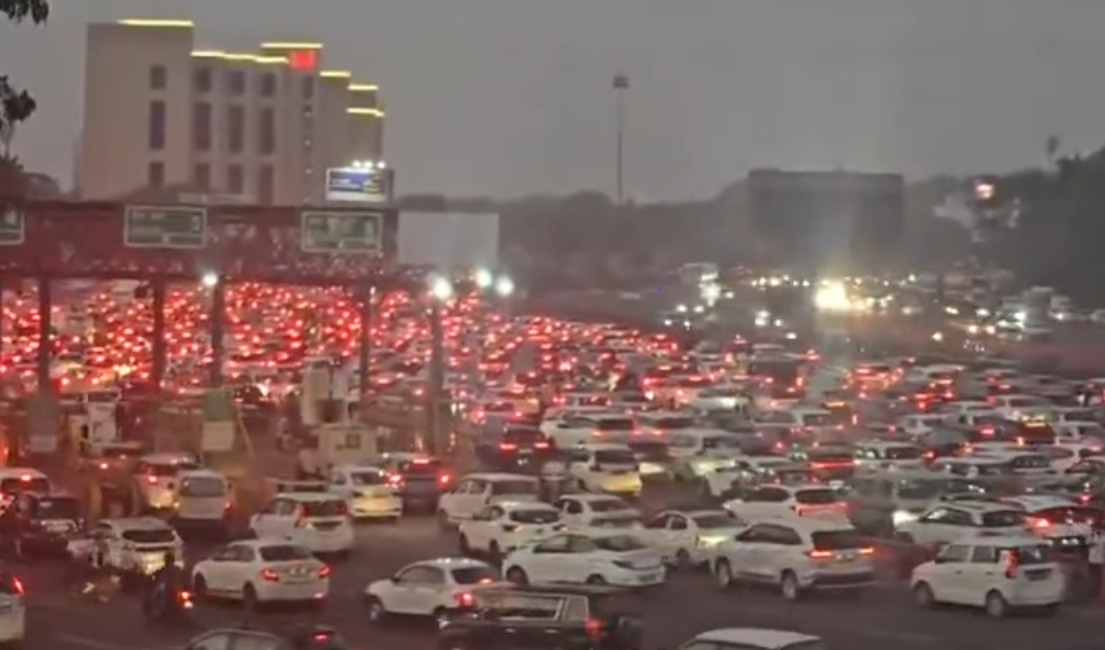
Delhi Traffic Police announced possible diversions across key roads on October 10 as security preparations continue ahead of a planned Jantar Mantar protest. By News National Editorial Team Delhi Traffic Police Warns of Diversions Across Central Delhi New Delhi, October 10, 2026: Motorists in the national capital have been advised to plan their journeys carefully as Delhi Traffic Police prepares for possible traffic diversions connected with a planned protest at Jantar Mantar. The official traffic advisory, dated October 9, states that vehicle movement may be affected on designated stretches of Delhi on October 10, depending on the prevailing law-and-order situation. Diversions were scheduled to begin at 6 am, with traffic personnel expected to adjust arrangements as circumstances change. Areas around Jantar Mantar, Parliament Street, Connaught Place and government buildings in central New Delhi may experience restrictions or delays. Previous reporting by the Times of India identified several locations where diversions could affect motorists, including Mandi House, Dhaula Kuan, Jhandewalan and sections around Connaught Place. The planned protest concerns allegations relating to electoral-roll revisions and demands directed at Chief Election Commissioner Gyanesh Kumar. Delhi Police denied permission for the demonstration and said preventive measures were necessary to manage public safety, traffic and public order. The Supreme Court separately questioned broad restrictions affecting Metro and railway services, emphasising that transport should be regulated proportionately rather than brought to a complete halt. The court proceedings and revised Metro plan may influence how authorities manage access and movement during the day. Commuters travelling to offices, hospitals, railway stations or commercial areas should allow additional time and follow traffic signs and instructions from police personnel. Where possible, motorists should check live traffic information before leaving and avoid entering restricted stretches without a necessary reason. The traffic advisory remains dependent on real-time conditions. Routes that are open at one point may be diverted if crowd movement or security requirements change. Residents should therefore rely on current official updates rather than old social media messages or unverified lists of road closures. Delhi Traffic Police has published the advisory through its official website. Travellers can check the latest notice at https://traffic.delhipolice.gov.in/en/news-alertadvisory/advisory or contact the traffic helpline at 1095. Sources: Delhi Traffic Police official advisory: https://traffic.delhipolice.gov.in/en/%F0%9F%9A%A8traffic-advisory-view-cjp-protest-%F0%9F%9A%8C The Times of India: https://timesofindia.indiatimes.com/india/delhi-traffic-police-issues-advisory-ahead-of-october-10-protests-check-affected-routes/articleshow/134839256.cms Update note: Confirm current road restrictions and diversions through the official traffic advisory before publication.

Delhi Metro Update Supreme Court Challenges Blanket Restrictions Ahead of Protest

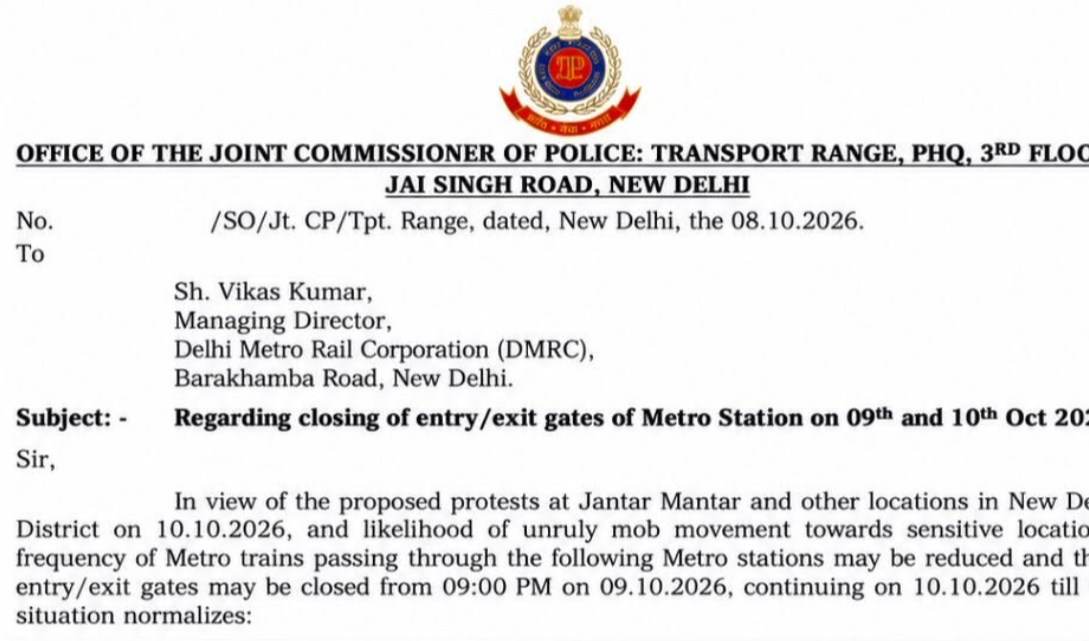
Delhi Metro revised restrictions affecting 45 stations after the Supreme Court questioned sweeping transport curbs ahead of the October 10 protest. By News National Editorial Team Supreme Court Questions Broad Delhi Metro Restrictions Ahead of October 10 Protest New Delhi, October 10, 2026: Delhi's public transport arrangements have come under scrutiny after the Supreme Court questioned sweeping restrictions imposed ahead of a planned protest at Jantar Mantar. The Delhi Metro Rail Corporation subsequently revised its closure plan, reducing the number of affected stations from 57 to 45. The proposed demonstration was organised by the Cockroach Janata Party in connection with allegations concerning the revision of electoral rolls and demands for accountability from Chief Election Commissioner Gyanesh Kumar. Delhi Police denied permission for the gathering, citing the timing of the application, previous alleged non-compliance with protest conditions and concerns about public order. On October 9, a Supreme Court bench led by Chief Justice of India Surya Kant, with Justices Joymalya Bagchi and V. Mohana, examined the impact of restrictions on Metro and railway services. The court said authorities could regulate transport to manage security risks but should avoid measures that unnecessarily disrupt essential public services. Following the proceedings, DMRC announced that entry and exit at 45 stations would remain closed from 9 pm on October 9 until 6 pm on October 10, subject to further updates. Interchange facilities were to remain available at affected stations except New Delhi Metro station, according to the revised announcement reported by Hindustan Times. The affected stations include Rajiv Chowk, Central Secretariat, Patel Chowk, Janpath, Mandi House, ITO, Khan Market, Hauz Khas and Kashmere Gate. The restrictions could affect commuters travelling through central Delhi and several other parts of the network. Railway services were also affected by measures announced ahead of the protest. Hindustan Times reported cancellations of selected mail and express trains scheduled to arrive at or depart from New Delhi and Hazrat Nizamuddin stations between 4 am and 2 pm on October 10. Passengers should check their individual train status rather than assume every service is cancelled. The situation illustrates the challenge of balancing security requirements, peaceful assembly and the daily needs of residents who depend on public transport for work, education, healthcare and other essential journeys. Commuters should consult the latest announcements from DMRC, Indian Railways and Delhi Police before travelling. The timings above reflect the published plan and should not be treated as confirmation that all restrictions remain in force at the time of reading. Sources: Hindustan Times: https://www.hindustantimes.com/india-news/delhi-metro-stations-closure-update-dmrc-revises-order-after-sc-rap-october-10-cjp-protest-jantar-mantar-101791560803808.html Delhi Traffic Police: https://traffic.delhipolice.gov.in/en/news-alertadvisory/advisory Update note: Check for new DMRC and railway announcements before publication or republication.

Pending Dues of Retired RTC Workers Must Be Released Immediately

Pending Dues of Retired RTC Workers Must Be Released Immediately, Unanimous Demand at “Chalo Indra Park” Demanding the immediate release of pending dues and other legitimate benefits owed to retired workers of the Telangana State Road Transport Corporation (TGSRTC), who served the organisation for several years before retirement, the Bahujan Workers Union (BWU), affiliated with the Telangana Rajyadhikara Party (TRP), organised a “Chalo Indra Park” programme on Saturday at the Indra Park Dharna Chowk in Hyderabad under the leadership of BWU Greater Hyderabad Zone Honorary President Shri TVR.   Shri Teenmaar Mallanna (MLC) & President Telangana Rajyadhikara Party (TRP) attended the programme as the "Chief Guest", while Amjed Ullah Khan (Spokesman) Majlis Bachao Tehreek (MBT) and Shri Devulla Sammaiah (Founder President of BC Federal Front) attended as distinguished guests. They addressed the thousands of retired RTC workers who participated in the programme and assured them of their support. Speaking on the occasion, Shri Teenmaar Mallanna (MLC) said it was unfortunate that RTC workers, who had played a crucial role in the movement for the achievement of Telangana State, were now forced to sit under tents at Indra Park Dharna Chowk and fight for their hard-earned dues accumulated during their lifetime of service.He said the government and the RTC management must seriously consider the situation of retired workers who are being subjected to difficulties by not being paid their pending dues.He stated that the Bahujan Workers Union, affiliated with the TRP, had come forward to fight solely for the welfare of workers.Shri Teenmaar Mallanna assured that during the upcoming Monsoon Legislative Council sessions, he would raise the issue of the pending dues of retired RTC workers, bring it to the attention of the government, and make every effort for the release of their dues.   Shri Amjed Ullah Khan (Spokesman) MBT, while addressing the dharna, said that the government must immediately address the major demands of RTC employees and retired workers.He demanded that the pending dues of retired employees, amounting to Rs. 800 crore, be cleared immediately. He also demanded that the pending Dearness Allowance (DA) from 2017 to 2021, amounting to Rs. 400 crore, be released immediately to the employees.He further pointed out that the benefits of employees who were forced to opt for VRS (Voluntary Retirement Scheme) are still pending, and demanded that all such pending benefits be cleared without any further delay.Shri Amjed Ullah Khan said that the Telangana Rajyadhikara Party has been continuously fighting on public issues and that MBT would stand together with TRP in every good initiative undertaken for the people.He stated that they would consider every problem faced by RTC workers as their own and announced that whenever a call is given for achieving the legitimate demands of retired workers, MBT would stand with them and extend its full support.   Shri TVR (Honarary President BWU Greater Hyderabad Zone) said that the union would continue to intensify its struggle in coordination with union leaders and retired workers’ associations until the pending dues of retired RTC workers are fully released.He urged the government and the RTC management to find a solution to the issue at the earliest possible opportunity.He assured the retired workers, saying, “Do not lose heart. The Bahujan Workers Union will stand by you in the fight for your legitimate rights.” “Pay Our Dues While We Are Still Alive”   Thousands of retired RTC workers who participated in the programme raised slogans in one voice, demanding, “Pay our dues while we are still alive.” Their slogans reverberated across the Indra Park Dharna Chowk premises.They urged the government to stop delaying the payment of their pending dues and immediately release the amounts owed to them for their years of service to the RTC organisation. Retired workers’ association leaders, along with BWU State Chairman Shri Sampath Mudiraj, State President Shri Sajid Mohammed, State General Secretary Shri Suddala Suresh, State Vice-Presidents Shri Kumar Kurma and Shri Srinivas, Publicity Secretary Suresh, BWU State leader Shri Srinivas, as well as BWU Retired Wing members Giri, Mahesh, Nageshwar Rao, SAVN Rao, Renuka Chari, and others participated in the programme.A large number of retired depot managers, supervisors and RTC workers who had retired from various positions attended the programme and made it a success.  

World Post Day 2026 Highlights the Role of Postal Services in a Digital World

World Post Day on October 9 highlights postal services, international communication, e-commerce delivery and the changing role of mail networks. By News National Editorial Team World Post Day 2026 Highlights Postal Services in the Digital Economy Global, October 9, 2026: World Post Day is observed internationally on October 9, drawing attention to the role of postal services in communication, commerce and connections between communities. The annual observance marks the establishment of the Universal Postal Union (UPU) on October 9, 1874. The UPU, a specialised agency of the United Nations, supports cooperation among postal operators and helps coordinate aspects of the international postal network. Although email and instant messaging have transformed communication, postal services continue to play a role in delivering documents, parcels, goods and other physical items across domestic and international routes. Postal networks in the e-commerce era The expansion of online shopping has changed the demands placed on postal operators. Customers increasingly expect reliable tracking, convenient delivery options and timely updates about their orders. Postal networks can support online retailers, small businesses and individuals by connecting sellers with customers across cities, rural communities and international markets. The delivery process can involve collection, sorting, transportation, customs procedures and final-mile distribution. Delays can arise from weather, transport disruptions, incomplete addresses, customs checks and other operational challenges. Reliable logistics are therefore important not only to consumers but also to businesses that depend on deliveries to complete transactions. Digital transformation and modern services Postal operators are adapting to changes in communication and commerce through digital tracking, online customer services and improvements to logistics operations. Technology can help customers monitor parcels and help operators manage delivery routes and processing capacity. However, modernisation requires investment in systems, infrastructure, employee training and cybersecurity. Postal organisations must also protect customer information and maintain dependable services as more processes move online. Access to services in remote communities Postal networks can be especially important in areas where access to private delivery companies or other services is limited. Their reach can help connect residents and businesses with the wider economy. The specific services offered vary by country and operator. In some places, postal infrastructure also supports additional public or financial services, subject to national regulations and local arrangements. Maintaining reliable coverage while controlling costs remains an operational challenge, particularly where populations are widely dispersed or delivery volumes are declining. Why World Post Day matters World Post Day offers an opportunity to consider how postal services are changing alongside digital communication and online commerce. The future of the sector will depend on the ability of postal operators to maintain dependable delivery networks, adopt useful technology, respond to customer expectations and compete in a changing logistics market. The observance recognises the continuing importance of international cooperation in keeping postal networks connected. Sources: Universal Postal Union: https://www.upu.int/ United Nations observances calendar: https://www.un.org/en/observances/list-days-weeks Editorial note: Country-specific postal announcements, service changes and World Post Day campaigns should be verified with the relevant national postal operator before adding local claims.