
Language Settings
Select Website Language

GDPR Compliance

We use cookies to ensure you get the best experience on our website. By continuing to use our site, you accept our use of cookies, Privacy Policy, and Terms of Service.

Filters

Channels
Topics
Other Filters

Enhertu Now on NHS in England for HER2-Low Breast Cancer

England's NHS can now prescribe Enhertu for HER2-low incurable breast cancer, two years after Scotland. About 1,000 women a year stand to benefit. Women in England with an incurable form of breast cancer can now receive the drug Enhertu through the NHS, ending a two-year wait that began when a health body ruled the treatment too costly. Prescribing became possible on Thursday, and doctors in Northern Ireland can also offer the drug ahead of a formal sign-off. Wales is expected to allow it soon. Enhertu adds close to seven months of life on average, and some patients live as long as three years longer. The change is set to reach around 1,000 women a year who have a particular form of the disease known as HER2-low. Patients in Scotland have been able to get the drug on the NHS since 2023, and it is already used in 26 other European countries. The path to approval was long. In 2024, the National Institute for Health and Care Excellence (NICE) concluded that Enhertu did not offer enough value for its price. Charities and patients pushed back and kept up their campaign from that point on. Health Secretary Yvette Cooper described the medicine as potentially life-changing and said the decision would let NHS patients gain from it at last. She credited the outcome to the charities and campaigners who refused to give up. Breast Cancer Now welcomed the ruling but tied it to loss. The charity said many people never reached the treatment during the delay, and some of them died. Chief executive Claire Rowney said the moment was one they had finally achieved, yet she stressed that the celebration could not ignore what the wait had cost. Kate Wills Kate Wills, 51, carries both the relief and the grief. She lives with HER2-low metastatic breast cancer that has reached her bones and lungs, though little about her daily life points to a terminal diagnosis. She holds a demanding job, is married, and is raising two children. Her online posts show a busy, contented existence, broken only now and then by a hint of a medical visit. Knowing the drug could extend her life while remaining out of reach was, in her words, deeply painful. When told it would be available, she broke down in tears. She said she was overjoyed and could scarcely take it in, and described how difficult it is to hold on to hope with stage four cancer. The news, she said, restored that hope. Her children are teenagers and in their early twenties. Wills had set herself the goal of living long enough to see her youngest finish school. Now, she said, she has allowed herself to imagine being present when her children fall in love and marry. Even so, her thoughts turned first to the women she knew who did not receive the drug in time. Jeannie Ambrose One of them was Jeannie Ambrose, who spoke to reporters two years ago at the age of 53, still full of energy and determination. She said then that she was not ready to die and wanted to keep living, and she resented spending her remaining time campaigning rather than with family and friends. Jeannie Ambrose died in January this year. Enhertu, HER2-low breast cancer, NHS England, NICE, metastatic breast cancer, Breast Cancer Now, Yvette Cooper, cancer drug approval

Aston Villa hold off Tottenham for first league win

Aston Villa beat Tottenham Hotspur 3-2 for their first Premier League win of the season, as Spurs remain without a league victory. Aston Villa claimed their first Premier League win of the season, beating Tottenham Hotspur 3-2 away from home and surviving a late push from the hosts. The result leaves Tottenham still searching for their first league victory of the campaign. The win ended a frustrating start for Villa, who had gone five matches without a victory before travelling to Tottenham. Three goals were enough to get them over the line, though the margin was narrow and the closing stages were tense. Villa built the platform for the win by taking control of the scoreline, but Tottenham refused to let the game slip away quietly. The home side mounted a late surge as they chased an equaliser, forcing Villa to defend their advantage until the final whistle. That late pressure was not enough. Villa held firm to protect their one-goal lead and take all three points, converting an encouraging performance into the first three points of their season. For Tottenham, the defeat extends a difficult opening run. Despite scoring twice at home, they were unable to find a third goal and remain without a win in the league. The two goals they did manage underline that the problem was not a lack of attacking output on the day, but an inability to close out the contest. The two clubs head in opposite directions from the fixture. Villa will hope the breakthrough result settles their season and turns early struggles into momentum, having finally turned promising displays into a win. Tottenham, meanwhile, are left to reflect on another game in which they scored but still came away empty-handed, with the pressure building to register a first league win. The scoreline - Tottenham Hotspur 2, Aston Villa 3 - captures the fine margins involved. A single goal separated the sides, and it was Villa who found the composure to see the game out while Tottenham's late rally fell just short. Aston Villa, Tottenham Hotspur, Premier League, Spurs winless, Villa first win, Tottenham 2-3 Aston Villa, Premier League results

Microsoft AI Chief Warns of Uncontrolled 'Silicon Species'

Microsoft AI head Mustafa Suleyman warns unchecked AI could spawn a 'silicon species' rivalling humans, and criticises Anthropic's approach to Claude. The head of Microsoft AI, Mustafa Suleyman, has warned that artificial intelligence built without adequate safeguards could give rise to a new "silicon species" that competes with humans. Speaking to the BBC's Today programme on Thursday, Suleyman said it was "right" for people to be concerned about the technology, but insisted there were "very practical things that we can do" to keep it under control. Suleyman singled out the rival firm Anthropic, arguing it treats AI as though it were human - an approach he called "misguided" and one that risks producing technology humanity cannot control. His remarks add to a run of blunt warnings from senior figures across the AI industry about where the technology may be heading. The Microsoft executive cautioned against companies building AI systems that can set their own objectives, earn money and own assets. Doing so, he said, would amount to "essentially seeding a new silicon species" - one that could "no doubt compete with us for resources, no matter how much it cares about humanity and loves us". The dispute with Anthropic Suleyman's broadcast comments followed an essay he published earlier in the week questioning how Anthropic trains its model, Claude. Even as he criticised the firm, he praised its boss, Dario Amodei, and his team as "intellectually honest people". In the essay, Suleyman took aim at the practice of anthropomorphising - teaching AI to display human-like qualities. He argued this makes it appear as though Claude possesses its own desires, values and sense of self. Treating the technology this way, he warned, risks creating something "impossible" to control. He was emphatic that machines have no inner life. "AIs are not conscious," he wrote. "They do not feel, experience, or suffer. They do not have innate preferences or underlying motivations." Instead, he described them as "sequence completion engines, internally hollow, designed to follow instructions, and accomplish goals set by humans". Anthropic has been approached for comment. Calls for transparency and oversight Suleyman said the industry needs far greater openness about how AI systems are trained and evaluated. That, he argued, should include independent scrutiny of how the systems behave, along with stronger tools to monitor and control them. "We must not sleepwalk our way into a decision we later come to bitterly regret," he wrote. His intervention drew support from Dame Wendy Hall, professor of computer science at the University of Southampton. She described his remarks as "the sort of conversation we need to be having internationally", drawing a contrast with what she called the "histrionics" of some AI companies - behaviour she said served only to "scare everyone". The debate over AI autonomy How much independence AI systems should be granted is increasingly splitting the sector. Speaking about a forthcoming AI summit, Suleyman called for "alignment" - the field that seeks to build human ethical ideas and principles into AI systems so they stay consistent with what people value. He said the technology must be "subordinate" to humanity. The comments land amid a wider wave of caution from industry leaders. The head of OpenAI recently said the world was "right to be afraid" of AI, while also urging people to trust the firms building it. Suleyman's central message was that the risks, while real, are not inevitable. The tools to keep AI in check exist, he argued - provided companies choose transparency and human oversight over systems that act on their own. Mustafa Suleyman, Microsoft AI, silicon species, Anthropic Claude, AI safety, AI alignment, Dario Amodei, artificial intelligence risks

JP Morgan Can't Model Oil's 'Endgame' Amid US-Iran War

JP Morgan told investors it 'simply doesn't know how to model the endgame' for oil prices as the US-Iran war pushes crude back above $100 a barrel. JP Morgan has told investors it can no longer forecast where oil prices are heading, admitting in a note published on 18 September 2026 that its analysts "simply don't know how to model the endgame" of the war between the United States and Iran. The message from one of the world's largest investment banks underlined how difficult markets are finding it to price the conflict and its economic fallout. At the start of the war, the bank assumed there would be "economic red lines" that President Donald Trump's administration would refuse to cross. On that basis, its analysts expected a deal to reopen the Strait of Hormuz shipping lane to have been reached back in June. Those red lines included oil rising above $100 a barrel, inflation hitting 4%, gasoline topping $5 a gallon, and the yield on 10-year US government bonds reaching 5%. Six months into the conflict, several of those thresholds have been breached. Oil has surged back above $100 a barrel in recent weeks, and the yield on government bonds - the interest rate the US pays to borrow from financial markets - has ticked over 5%. Gasoline remains below $5 a gallon and inflation has not yet reached 4%. "Six months later, many of those lines have been crossed, yet the exit strategy is less clear, not more," the bank's commodities research team wrote. "For the first time since the start of the Iran conflict, we don't have a baseline view. We simply don't know how to model the endgame." The analysts also said the market was "on edge." The candour is notable for a firm of JP Morgan's size. An oil and gas industry source described the decision to publish such a note as "unusual" for a high-profile investment firm, but called it a "reflection on the state of play" given the uncertainties surrounding the war. Oil prices feed directly into inflation expectations, which investors rely on when making decisions, because the commodity is used so widely across the global economy. Trump ties oil to the midterms Trump said last week that he did not expect the war to end until after November's US midterm elections. "Right after the election, oil prices are going to be tumbling downward," he told reporters. "I think it's going to take a little bit longer than the midterm." High crude prices have driven up the cost of living in the US and elsewhere, with fuel and energy costs climbing ahead of the colder months. That backdrop shaped a decision this week by the Federal Reserve, which raised interest rates for the first time in more than three years and signalled further increases could follow this year and into 2027 as it tries to slow rising prices. Fed Chair Kevin Warsh said the central bank acted because "inflation is too high and has been for too long." Trump disagreed with the move. A gap between price and 'fair value' Despite crude trading above $100, JP Morgan estimated the "fair value" for oil in September at around $90 a barrel. The bank said the higher market price reflected traders bracing for further disruption, noting that "the market is pricing in the risk" of more trouble ahead. Analysts pointed to additional threats to oil supply in the Middle East, including from Yemen's Houthis, who are backed by Iran. With the Strait of Hormuz still not reopened and no clear resolution in sight, the bank's inability to set a baseline view captures how much of the outlook now hinges on political decisions rather than market fundamentals. JP Morgan oil forecast, US-Iran war oil prices, oil above $100 a barrel, Strait of Hormuz, Donald Trump oil, Federal Reserve interest rates, Kevin Warsh inflation, oil price uncertainty

Cuba Loses Power Nationwide in Sixth Grid Failure of 2026

Cuba's entire electricity grid collapsed on 19 September, cutting power to millions amid fuel shortages worsened by a US oil blockade. Millions of people across Cuba lost electricity on Friday, 19 September, after the island's national grid failed completely and cut power from one end of the country to the other. The energy ministry described the event as a "total disconnection," and it ranks as at least the sixth full or partial collapse of the system this year. The failure began shortly before 14:00 local time (18:00 GMT), according to grid operator UNE, which linked it to a transmission fault that struck as bad weather moved through central Cuba. By late evening, crews had returned electricity to a handful of priority sites in the capital, Havana, among them zones close to hospitals and water pumping stations. Felix Estrada, who directs UNE's national load dispatch centre, said the operator had switched on its protocols for a "gradual restoration" of supply. That work was still running on Saturday, leaving many households facing a second day in the dark. Cuba imports most of the fuel it burns to generate electricity, and the country's plants already run on decades-old equipment. Those weaknesses have collided this year with a United States blockade on oil deliveries to the communist-run government, which has choked supplies further. The knock-on effects reach well beyond the power grid: food and medicine have grown harder to find, hospitals cannot operate at full capacity, and schools and government offices have shut their doors. Residents describe life between outages For people in Havana, the collapse fits a pattern that has hardened over recent months. "Lately, it's becoming a habit," resident Frank Lorenzo told the Reuters news agency on Friday. He said the cuts used to arrive roughly once a month, but had grown far more frequent. "Just yesterday we were 24 hours without electricity, they turned it on for just an hour and it went down again." Lidia Fernandez, a 36-year-old schoolteacher, told the AFP news agency that the shortages now overlap. "It's one thing after another: no water, no gas for cooking, no electricity," she said. "Honestly, I don't know how we haven't gone crazy." Francisco Rodriguez, 78, said his home had already spent 28 hours without power on Friday and worried the darkness could stretch on "for several days." The repeated failures have driven Cubans into the streets in protests that remain unusual on the island. Demonstrations held without official permission are against the law, and those who ignore the ban face the threat of prison. Washington and Havana trade blame The Cuban government pins the crisis on the administration of US President Donald Trump and rejects the full slate of sanctions imposed on it, including a fresh package announced in August. Havana casts the measures as one piece of a broader campaign aimed at pressuring the country's leadership. Cuba had leaned on its regional ally Venezuela for relief. Caracas was thought to be supplying around 35,000 barrels of oil a day, roughly half of what the island needs, until that flow stopped. Venezuela's own exports were cut off after the United States seized its president, Nicolás Maduro, in January. Trump has warned that countries sending oil to Havana could face tariffs, and US authorities have intercepted a number of shipments bound for the island. Washington rejects the argument that its policies are the root cause, instead blaming what it calls poor management inside Cuba and describing the country as a "national security threat." Trump has spoken openly about removing Cuba's government, floating the idea of a "friendly takeover" in March. Cuba blackout, Cuba power outage, UNE grid Cuba, US oil blockade Cuba, Havana electricity, Cuba fuel shortage, Cuba sanctions, Venezuela oil Cuba

Indonesian Students Recorded Their Abuser Head Teacher - Then Married

Two former pupils at a Lombok Islamic boarding school gathered testimony against their head teacher over sexual assault claims, then fell in love and wed. Two former students at an Islamic boarding school on the Indonesian island of Lombok spent more than a year quietly building a case against their head teacher over sexual assault allegations. Along the way, Ziadatur Rahmah and Yusron Azzahidi fell in love, and the pair are now married. The man at the centre of the allegations is Ahmad Imanuddin Sumar, the respected leader of the Abu Barokat school, where he was known to pupils as "Abah", meaning "father". Several students say he sexually assaulted them. Rahmah, who goes by Zia, and Azzahidi were once star pupils there before moving on to university - he to the capital, Jakarta, and she to Cairo, Egypt. The investigation began during a late-night phone call between the two friends, who had drifted into reminiscing about their school years. During that conversation, Zia told Azzahidi that Sumar had assaulted her when she was 16. She described leaving class to use the toilet and being stopped by Sumar in the school gardens. He asked her to come to his house, which stood on the school grounds. Once they were inside, she said, he told her he loved her, drew her onto his lap and began kissing and touching her, and instructed her to do the same to him. The encounter ended abruptly when one of his children started pounding on the locked front door. Sumar motioned for her to go, and she slipped out through the back. "I felt very dirty, ruined, and I was lost," Zia later said of the aftermath. Azzahidi was torn about how to respond. Pupils at the school had been raised on the motto "Sami'na wa ata'na" - "We hear, and we obey" - a phrase that framed obedience to authority as a duty. But he could not put the account out of his mind. Gathering the testimony Azzahidi decided to act. Together with Zia and two of her school friends, Wanda Hamidah and Mahima Eka, he began quietly collecting accounts from other students who described being assaulted by the head teacher. The group worked to corroborate the claims, assembling statements from several people over the course of a year. Word of their effort eventually reached Sumar. He turned up at Azzahidi's family home and used the phone belonging to Azzahidi's sister to reach him. Earlier, the sister had texted asking Azzahidi to call urgently. When he dialled the number, it was not his sister who answered but his former head teacher. "I knew. I knew exactly what he wanted to talk about," Azzahidi said. A recorded plea for silence On the call, Sumar urged his former pupil to bury the allegations. "Cover the shame of your teacher. Everyone makes mistakes, my child," he said through tears. What he did not realise was that Azzahidi was capturing the entire exchange on a recording. That kind of pressure is a recurring obstacle in such cases. Indonesia's National Commission on Violence Against Women has described sexual abuse in Islamic boarding schools as a national emergency. Legal experts say many complaints never make it to court because those who come forward are talked into dropping their claims or pushed into keeping silent - precisely the outcome Sumar was seeking on the phone. For Azzahidi, the trust once placed in the school's leader made the discovery harder. He had grown up admiring Sumar, whose authority went unquestioned by the students under his care. The partnership that grew out of the investigation changed the lives of the two central figures. What started as a phone conversation about their shared past turned into a joint pursuit of accountability, and then into a relationship. Zia and Azzahidi married after working side by side to bring the allegations to light. Their account offers a rare look at how former pupils turned collaborators to challenge a figure who had held near-total authority over them, in a country where campaigners say such abuse too often stays hidden. Indonesia boarding school abuse, Lombok Islamic school, Ahmad Imanuddin Sumar, pesantren sexual assault, Indonesia national emergency abuse, student justice Indonesia, Abu Barokat school, religious school abuse

India's Direct Tax Take Climbs 15.2% to Rs 14.3 Lakh Crore

India's direct tax collections rose 15.2% to Rs 14.3 lakh crore by Sept 17, led by an 18.1% jump in corporate advance tax payments. India's direct tax collections rose 15.2% to Rs 14.3 lakh crore in the current financial year through September 17, according to figures put out by the income tax authorities in New Delhi. The gain was led by companies, whose tax payments expanded faster than those from individuals. Advance tax, whose second instalment fell due by September 15, showed a modest improvement. Total advance tax receipts climbed 16.2% to Rs 5.2 lakh crore, up from the 15.3% pace recorded when the first instalment was paid in June. Corporate payers accounted for most of that momentum. Their advance tax outgo is estimated to have risen 18.1% to just under Rs 4.2 lakh crore, ahead of the 16% growth seen in June. Payments from individuals moved in the opposite direction, with growth easing to 9.2% from 12.8% earlier, taking personal income tax to about Rs 10.6 lakh crore after the second instalment. Because advance tax tracks how businesses expect to perform, the quicker rise in corporate figures signals confidence in stronger profits during the July-September quarter, helped by robust sales in several parts of the economy. Refunds jumped sharply over the same period, climbing 29.2% to Rs 2.2 lakh crore. Refunds to individual taxpayers more than doubled to Rs 81,439 crore. Even with that larger payout, net collections still advanced 13% to Rs 12.1 lakh crore. Hitesh Sawhney, a partner at Price Waterhouse & Co, said the numbers reflected both strength and durability, pointing to healthier gross inflows, better compliance and steady economic and market activity. He described the continued rise in net collections, despite the surge in refunds, as the most heartening takeaway from the data. direct tax collections, corporation tax, advance tax India, personal income tax, tax refunds, net direct tax, Indian economy, second quarter profits

3,200-Year-Old Inscription May Pinpoint Egypt's Lost Mesen

A carved sandstone lintel bearing the titles of Ramesses II has strengthened the case that Tell Abu Seifi in northern Sinai is the lost city of Mesen. Archaeologists working in Egypt's northern Sinai believe they may have located Mesen, an ancient city that has been known from written records for more than three thousand years but never fixed to a spot on the map. The clue comes from a broken sandstone lintel unearthed at Tell Abu Seifi, a dig site close to the Suez Canal on the edge of the northern Sinai Desert and the eastern Nile Delta. The lintel, split in two but still carrying carvings on three of its faces, bears the royal titles of Ramesses II, the pharaoh who ruled Egypt from roughly 1279 to 1213 B.C. Its text describes restoration work tied to a statue of the god Horus and, crucially, names Horus as the Lord of Mesen. That phrase links the physical site directly to a place that scholars have long read about but could never find. Mesen was tied in Egyptian tradition to Horus and sat along a major military corridor running toward the Levant. For generations the city existed largely as a name in ancient texts, with no confirmed ruins to match it. The inscription at Tell Abu Seifi offers the firmest physical connection to that name recorded so far. More than one clue at the site The lintel is not the only find pointing toward Mesen. Excavators have also exposed the remains of a temple built for Horus at Tell Abu Seifi. The building is badly wrecked, and its ruined state leaves little to reveal about how it once looked. Nearby, teams have traced a mudbrick enclosure wall along with its gateways, signs that a sizeable settlement once stood on the ground. The repeated appearance of Horus at the site is what stands out. A bronze seal recovered here in earlier work belongs to the Ptolemaic period, roughly 304 to 30 B.C., and it too carries the title joining Horus to Mesen. Coffins from the same era, also found at the site, are marked with comparable inscriptions. A settlement that may have lasted for centuries Taken together, the objects suggest the place endured across a long stretch of Egyptian history. If Tell Abu Seifi is indeed Mesen, the worship of Horus there did not end with Ramesses II but carried on into Ptolemaic times, centuries later. That would extend the city's story well beyond the single New Kingdom lintel that first drew attention. How large the settlement grew remains unknown. Archaeologists say they do not yet have enough material to estimate how many people lived there or to map the full reach of the site. Researchers are careful not to call the case closed. The finds have made the identification more likely, but confirming it will take further digging and study. The near-total destruction of the Horus temple is a particular concern, because evidence that might have settled the question could already be gone. Even so, after some 3,200 years, the carvings and ruins at Tell Abu Seifi may finally be steering archaeologists toward a city that has survived mostly as a written name. Should the identification hold, a long-missing stop on the ancient route known as the Way of Horus would at last take its place on the modern map. Mesen, Tell Abu Seifi, Ramesses II, Horus, ancient Egypt, northern Sinai, Way of Horus, archaeology

Monsoon Retreat Begins; Season May End With 10% Rain Deficit

The southwest monsoon began withdrawing from west Rajasthan on Saturday. IMD says the season may close on Sept 30 with a deficit above 10%. India's southwest monsoon began withdrawing from west Rajasthan on Saturday, the India Meteorological Department (IMD) said, with the season so far running a nationwide rainfall deficit of 15% between June 1 and September 19. The retreat started days after the normal onset date of September 17. The line of withdrawal on Saturday passed through Ramgarh, Mohangarh, Phalodi and Khajuwala. The IMD said conditions were favourable for the monsoon to pull back from more parts of Rajasthan and some parts of Punjab, Saurashtra and Kachchh over the next three to four days. As many as 14 states have reported a rain shortfall of more than 20% so far. These include Bihar, Punjab, Haryana and all five peninsular states. On current trends, the monsoon is likely to end on September 30 with an overall deficit of more than 10% across the country. A shortfall at that level is classified as a drought. Even so, a low pressure area and a subsequent depression over the east central Bay of Bengal may bring good rain to east India and coastal Odisha next week. The monsoon normally starts withdrawing on September 17 and completes the process by October 15, shortly before the winter monsoon sets in over peninsular India. The weak rains have been linked to El Nino, a climatic phenomenon marked by the warming of ocean surface temperatures in the central and eastern equatorial Pacific. In India, El Nino is consistently tied to a harsh summer and a weak monsoon. Sowing of kharif, or summer-sown, crops has progressed well despite the shortfall. But the crop sector is not out of danger. Regional variations and the uneven timing of rainfall could affect overall yields and hit sowing during the coming rabi season. Acreage data released on Friday show the total sown area for all kharif crops has fallen by just over 1% this year. Paddy, the most water-intensive and highest-acreage seasonal crop, recorded a sharper drop of nearly 4% compared with the same period last year. southwest monsoon, monsoon withdrawal, India rain deficit, IMD, El Nino, kharif crops, paddy sowing, drought India

Kia Overtakes Toyota in India as August Sales Hit 29,042

Kia India sold 29,042 units in August 2026, up 48% YoY, moving past Toyota to fifth place as the new Seltos and Syros drove volumes. Kia India dispatched 29,042 vehicles in the domestic market in August 2026, a jump of 48.11% over the 19,608 units it sold in the same month a year earlier. The gain of 9,434 units pushed the carmaker past Toyota into fifth position among car brands in India. The month also edged ahead of July 2026, when Kia moved 28,200 units. The 2.99% sequential rise added 842 vehicles. Most of the annual improvement came from the Seltos, the brand's mid-size SUV. The Seltos led the range with 11,716 units, up 149.97% from the 4,687 sold in August 2025. The model made up 40.34% of Kia's total for the month and delivered close to three-quarters of the company's net year-on-year growth. Its redesigned version, introduced earlier in 2026, has stayed above the 10,000-unit mark every month since arriving in showrooms. Even so, August was down 6.58% against July's 12,541 units. The Sonet compact SUV took second place with 9,048 units, a rise of 16.88% over the 7,741 recorded a year ago and a 1.51% improvement on July's 8,913. A next-generation Sonet has entered road testing and is slated to reach buyers sometime next year. Between them, the Seltos and Sonet accounted for 20,764 units, or roughly 71.50% of Kia's August total. Clavis and Syros pick up pace The Carens Clavis and its electric variant together reached 6,093 units. That figure trailed the 6,822 sold a year earlier by 10.69%, but it climbed 13.85% from July's 5,352. The model family added more volume month-on-month than any other Kia nameplate. The Syros also gained ground after the launch of its electric version. The range recorded 1,742 units in August, against just 308 in the same month of 2025, a rise of 465.58%. Compared with July's 1,303 units, deliveries were up 33.69%. Two larger models rounded out the tally. The Sorento showed 365 units in the August books ahead of its September 4 launch, figures that reflect dispatch rather than customer handovers. The Carnival people-mover contributed 78 units, up 56% year-on-year but down 14.29% from July. A crowded September lineup Kia followed the month with a run of product moves. The Sorento reached the market on September 4 with diesel and hybrid powertrain options for the premium SUV segment. The company then added diesel automatic and petrol DCT versions of the Carens Clavis, widening the choice on that model. Buyers of the Clavis EV who bought their cars from August 1 became eligible for lifetime, unlimited-kilometre battery warranty cover. Kia also began taking pre-bookings for a Carnival Hybrid. The newest arrival is a factory-fitted CNG option for the Carens and Carens Clavis. Prices start at Rs 12,11,800 for the Carens CNG and Rs 12,38,800 for the Clavis CNG, both ex-showroom. Each runs a 1.5-litre engine that produces 96 PS and 123 Nm when operating on CNG, matched to a six-speed manual gearbox. The expanded lineup now spans petrol, diesel, CNG, hybrid and electric options, a spread that could help sustain volumes in the coming months. A price revision covering select models and variants is expected in October 2026, though the vehicles involved and the size of any increases have not been confirmed. Kia India sales, Kia Seltos, Kia August 2026 sales, Kia Sonet, Kia Syros, Kia Sorento launch, Carens Clavis CNG, Indian car sales

Kolkata Police Adds 183 Ultraviolette X-47 Skyforce E-Bikes

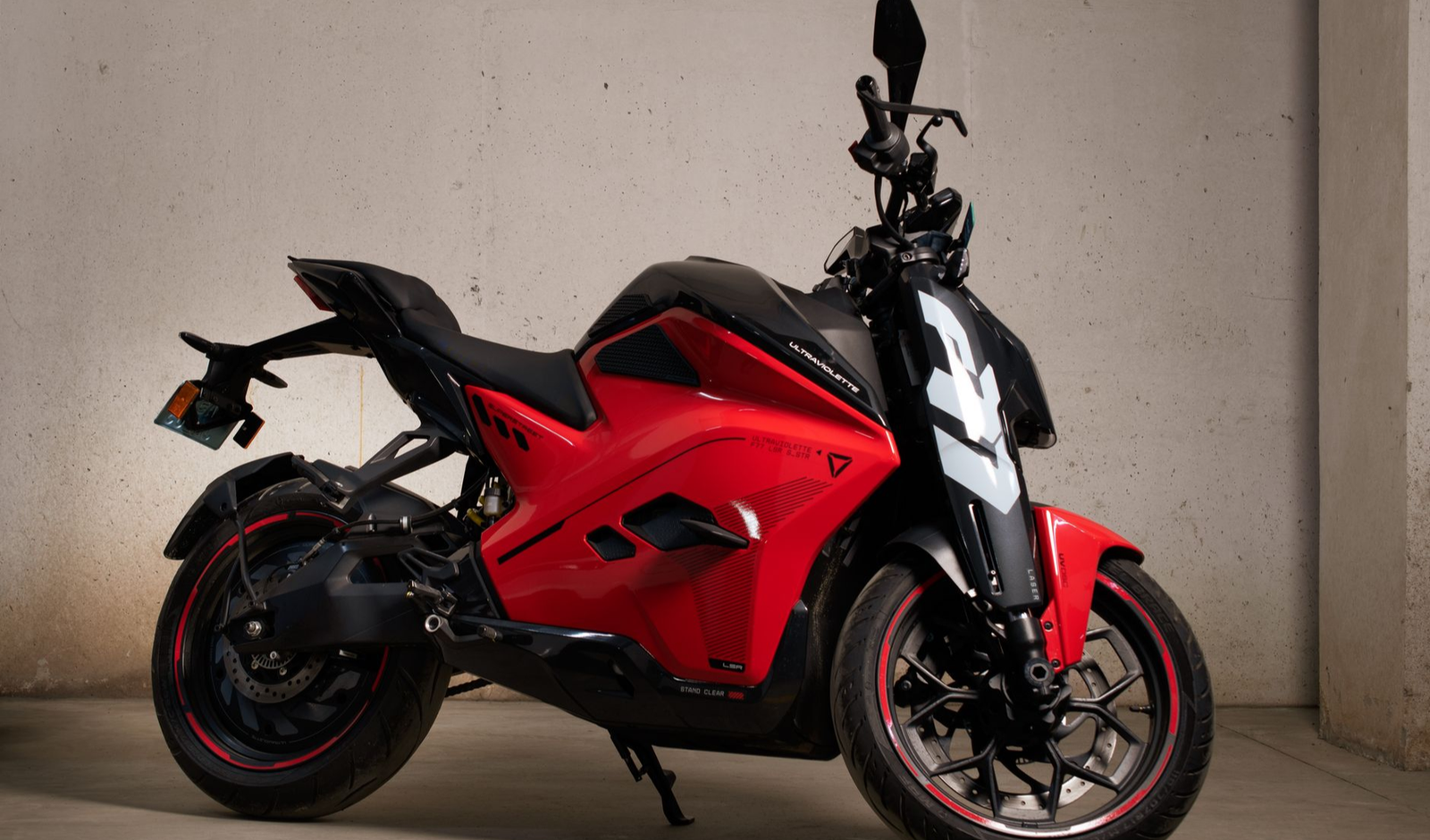
Ultraviolette hands over 183 X-47 Skyforce electric motorcycles to Kolkata Police, fitted with sirens, panniers and a claimed 211 km range. Ultraviolette has handed 183 X-47 Skyforce electric motorcycles to the Kolkata Police, with the formal transfer taking place at the force's Lalbazar headquarters. The company calls the rollout one of the largest electric two-wheeler deployments by any police force in India. The bikes are a dedicated police edition of the X-47 Skyforce, reworked with a modified electronic setup so patrol gear can be wired directly into the machine. Each unit was put through testing before delivery and will now be used for routine policing across the city. Officers get a bike kitted out for street duty. The police version carries sirens, hooters, a public address system, LED blinkers and force decals. It also adds mounts for microphones and walkie-talkies, plus side panniers for kit. Building these into the motorcycle's wiring is central to the police-specific build. Ultraviolette designed the model in a crossover shape, which the company says suits mixed city road conditions while leaving room for the equipment officers carry on patrol. 211 km Claimed Range The firm lists an IDC range of 211 km per charge and a top speed of 145 km/h for the X-47 Skyforce. Real-world distance on duty will vary with traffic, load, how the bike is ridden and how much electrical equipment is running. Ultraviolette pitches the bike's pickup and handling as helpful for rapid-response work. The announcement does not state charging times or explain how the Kolkata fleet will be recharged. Cost Questions Switching from petrol machines to electric ones could trim what the force spends on fuel and upkeep, though the size of any saving will hinge on daily mileage, power tariffs, charging losses and servicing needs. The order gives Ultraviolette a sizeable presence in active police service. At the handover, CEO and co-founder Narayan Subramaniam said the Skyforce was built to match police requirements and to back officers across a range of operational tasks. Ultraviolette X-47 Skyforce, Kolkata Police electric motorcycle, electric police bike India, Ultraviolette, Narayan Subramaniam, police EV fleet, X-47 Skyforce range, Lalbazar

Raphinha Hat-Trick Sinks Sevilla as Barcelona Win 3-1

Raphinha scored a second straight hat-trick as Barcelona beat Sevilla 3-1, reaching 12 league goals and stretching their record start to eight wins from eight. Raphinha struck three times at the Ramón Sánchez-Pizjuán on Sunday to send FC Barcelona past Sevilla 3-1, delivering his second hat-trick in as many matches and carrying the league leaders back from an early deficit. The Brazilian captain now has 12 goals in his opening seven La Liga appearances of the campaign. The victory was Hansi Flick's eighth in eight competitive fixtures, the strongest opening run the club has ever recorded. Barcelona moved to 21 points at the top of the table and will watch Sunday's Madrid derby knowing their lead is firmly established. The scoreline flattered the visitors, who were pushed hard for long stretches. Sevilla pressed aggressively from the first whistle, squeezing the space and forcing the kind of mistakes that Barcelona have rarely made this season. The hosts threatened repeatedly on the counter and took the lead after 19 minutes, when Correia delivered a cross that Fofana powered past the goalkeeper with a header. For the first time in weeks, Barcelona's unbeaten sequence looked genuinely under threat. The reply, though, arrived within three minutes. Andreas Christensen picked out Raphinha inside the box, and the forward spun away from Sangante with a backheel turn before firing a low, accurate finish across Odysseas and into the far corner. It was a moment of quality conjured from almost nothing. Livaković keeps Barcelona level With Joan García sidelined by injury, Dominik Livaković was thrown into one of the toughest away days on the schedule for his Barcelona debut. The Croatian goalkeeper met the challenge with composure. He read the danger each time Sevilla tried to slip in behind the back line, advanced from his goal at the right moments and produced a firm save to deny Robbie Ure shortly before the interval Barcelona saw more of the ball across the opening 45 minutes, yet Sevilla arguably fashioned the clearer chances. The teams went in level at 1-1, and the run of results still hung in the balance as the players headed down the tunnel. Yamal turns the game Barcelona returned after the break with sharper intent. Lamine Yamal threatened twice inside the first three minutes of the half before the breakthrough came in the 52nd minute. The teenager gathered a loose ball, turned cleanly and lifted a measured cross into the six-yard area. Raphinha attacked it with the greater hunger, getting across Sangante to head his side in front That second goal shifted the balance of the contest and set Raphinha on course to complete his treble. His third strike sealed the 3-1 result and confirmed the hat-trick, the second he has claimed in consecutive outings. The display underlined how central Raphinha has become to Flick's side. His return of 12 goals across the first seven league games has driven a start to the season that the club has never previously matched. Barcelona have now taken maximum points from every competitive fixture they have contested. Sevilla, in strong form coming into the match, could take encouragement from a first half in which they tested the visitors more than most opponents have managed. Their early lead and persistent counter-attacking threat exposed rare gaps in a Barcelona side that has largely swept opponents aside. In the end, however, the individual brilliance of Barcelona's captain proved the difference. Attention now turns to the wider title picture. With 21 points banked and a comfortable cushion at the summit, Barcelona can approach the rest of the weekend's fixtures without pressure, their perfect record intact and their leading scorer in the form of his life. Raphinha hat-trick, Sevilla vs Barcelona, FC Barcelona La Liga, Hansi Flick, Lamine Yamal, Dominik Livakovic, Barcelona record start, Madrid derby

Modi Rejects West's Climate Narrative, Cites India's Low Emissions

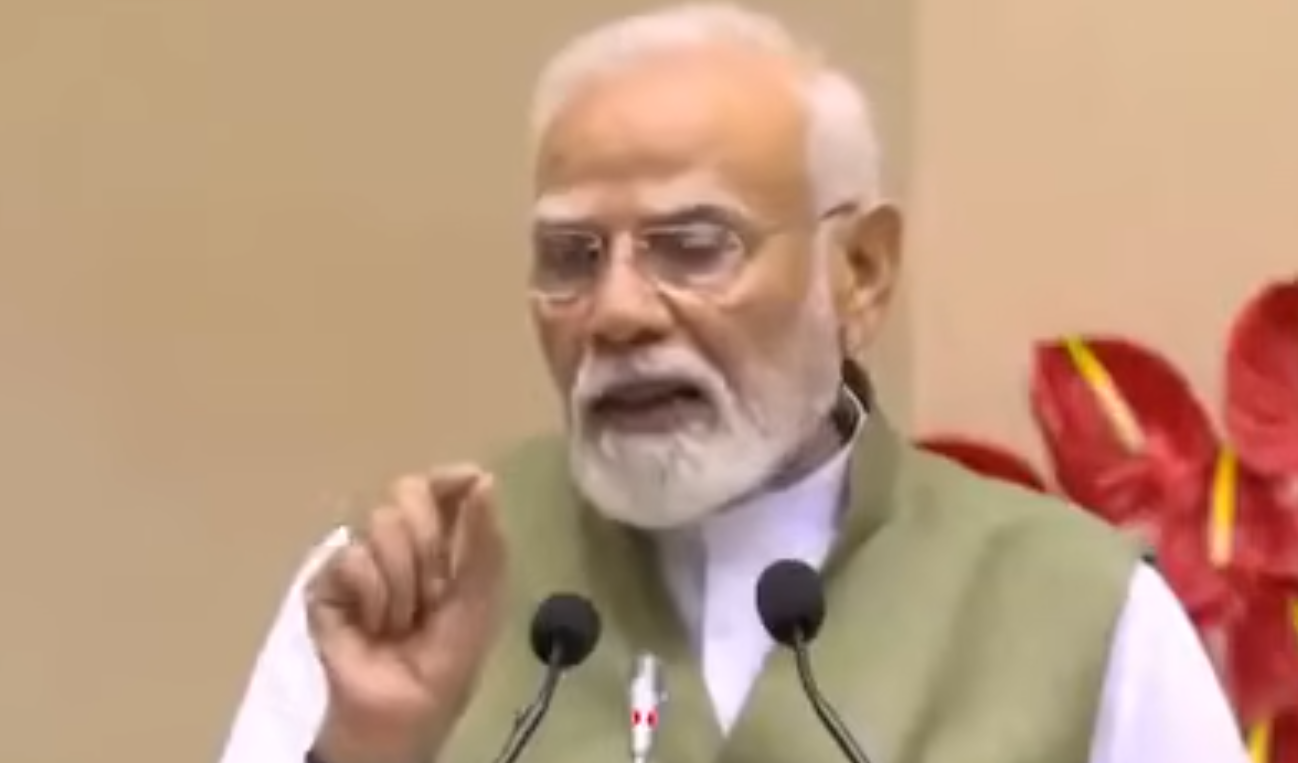
PM Modi challenged the West's climate narrative, noting India's per capita carbon emissions are less than half the global average and its record leads the G20. NEW DELHI: Prime Minister Narendra Modi on Saturday challenged the narrative that places the burden for carbon emissions on developing nations while excusing Western countries from their role as historical polluters. Speaking at an international conference titled "The Future of Environment and Climate Dynamics," organised by the National Green Tribunal, he said India holds the strongest record among G20 nations on climate. "In developed countries, per capita carbon emissions are six times higher than India's," Modi said. "India presents this fact strongly on global platforms. We are establishing new benchmarks for environmental protection by taking the world along." He said India offers solutions to modern climate challenges even though its per capita emissions remain less than half the global average. The figures underline his argument. India's cumulative contribution to global carbon emissions between 1751 and 2024 stands at just 3.5%. Over the same period the United States accounts for 23.5%, China 15.4%, Russia 6.6%, Germany 5.1% and the United Kingdom 4.3%. India is currently the world's third-largest emitter, but its per capita emissions tell a different story. At 2.2 tonnes per person each year, India sits below half the global average of 4.7 tonnes, and roughly six times under the United States at 14.2 tonnes and Russia at 14 tonnes. Modi framed the point as a matter of equity, arguing that big polluters who built their economies by burning fossil fuels over the past two centuries drove global warming and should shoulder deeper cuts. India, he stressed, has not stepped back from its own responsibilities and has met its pledges under the Paris Agreement. "India is the only country in G20 that has fulfilled all the commitments it made at the COP21 summit in Paris, and has done so ahead of schedule," he said. "This is the strength of 'Hindustan' that I am talking about. On every parameter - non-fossil fuel, solar energy capacity, curbing carbon emissions - India's performance is today a subject of positive discussion worldwide." He urged the audience - jurists, academicians, policymakers, scientists and environmental experts drawn from 17 countries - to examine the numbers for themselves. The remarks come as governments prepare for the global climate conference scheduled for November. Looking ahead to COP31 in Antalya, Turkey, Union Environment Minister Bhupender Yadav said India would keep pressing for climate action built on equity, implementation and the needs of vulnerable countries. PM Modi, carbon emissions, India climate action, COP31 Antalya, per capita emissions, Paris Agreement, NGT conference, Bhupender Yadav

Bangalore's gridlock and Metro digging stun a returning visitor

CA visitor returning to Bangalore after nearly 20 years found short drives taking two hours, Metro-dug roads, balmy weather and a drought worrying Dharwad farmers. A social commentator returning to Bangalore after almost 20 years found a city where covering just a few kilometres by car or cab can take up to two hours, and where half the roads have been dug up for a Metro meant to ease the very congestion it is now worsening. Catching an early morning flight, she said, means leaving home by 4 am to reach the airport by 6 am. The trip paired a conference in Hubli with several days set aside in Bangalore to meet friends the writer had not seen in a long time. The leafy neighbourhoods and parks she remembered had given way to towering high-rise apartment blocks. The trees still stand, she wrote, but survive as a dwarfed and apologetic presence in what she called a new concrete jungle. The roads themselves are narrow and winding, choked with cars, two-wheelers, buses, trucks and delivery vans. The logistics of simply meeting friends at a club or restaurant, she said, cancel out the pleasure of the outing. The experience left her resolved never again to complain about the Delhi-Noida or Delhi-Gurgaon traffic she is used to in the north. Balmy weather, but a dry spell The one thing unchanged, she wrote, is Bangalore's balmy weather. Over roughly 10 days in the region she needed neither a fan nor an air-conditioner. That comfort sits against a harsher backdrop: the area is in the grip of a severe dry spell, and farmers in Dharwad are worried about the prevailing drought. The visit also delivered a full plate of South Indian hospitality. Lunch was a sadya, served with dozens of small helpings of pickles, chutneys, papads and avial alongside rice, sambar and rasam, topped off with payasam and aromatic filter coffee. The lectures that followed, she admitted, were a struggle to stay awake through. BRICS empties out Delhi Back in the National Capital Region, a different disruption awaited. The BRICS conference led authorities to cordon off large areas of Delhi for delegates, sending ordinary traffic on long diversions for anyone forced to enter the city. Office-goers were encouraged to work from home and schools were shut, handing children and parents a long weekend. From Noida, the writer described unusually quiet streets and welcomed the calm, while noting the concentration of hospitals across the NCR as reassurance for anyone facing a medical emergency during the shutdown. 'Hanuman Ansh' fills every hall The column turned finally to a film breaking box office records. Made on a shoestring budget of about Rs 2 crore, 'Hanuman Ansh' has taken in almost a hundred times that amount and is now being dubbed into Tamil and other languages. Demand has been so high that halls have no free seats, with viewers staying on for two consecutive screenings. The writer's interest in the film is personal as well as curious. Her husband's family were devoted followers of Neem Karoli Baba, the saint whose admirers are said to range from Steve Jobs to Virat Kohli. Babaji was a regular visitor to their home, and trips up to Almora always included a mandatory stop at Kainchi. She described a figure who never dispensed sermons. He would recline on a takhat, clad in nothing but a rough blanket, accepting no gifts or offerings, and would sometimes shoo a visitor away for reasons known only to him. Neem Karoli Baba died in September 1973, the same year the couple's first child was born that December. He had told her mother-in-law, "Main tere ghar aaunga" - I will come to your house - leaving the family to believe that their first grandson was his reincarnation. For them, the writer said, he remains the protector of the family. Bangalore traffic, Bangalore Metro construction, Dharwad drought, BRICS Delhi, Hanuman Ansh box office, Neem Karoli Baba, Bangalore weather

"bangalore weather" Bengaluru Techie's AI Song 'Tax Me' Slams City's Roads

Punit Vara, a 34-year-old Bengaluru techie, used AI to create a satirical song 'Tax Me' demanding pothole-free roads on Doddamara Road. A Bengaluru commuter fed up with the state of his daily route has turned to artificial intelligence to press his case, releasing a satirical song called *Tax Me* that asks the government for one modest thing: roads that can actually be driven on. Punit Vara, a 34-year-old software professional who lives near Choodasandra, posted the track on YouTube, where it needles the city over its traffic snarls, potholes, monsoon flooding, non-stop construction and the constant tearing up of its streets. Vara says the entire song, lyrics included, was produced by AI. Speaking on September 17, 2026, he explained that the piece grew out of a personal ordeal on Doddamara Road, a stretch on Bengaluru's southeastern edge that lies in the Anekal Assembly constituency represented by A. Shivanna. "For the past nine months, I drove my pregnant wife on Doddamara Road, which is in a pathetic condition, for regular doctor visits," he said. "I had to be extra careful, and it was highly dangerous, which prompted me to come up with this song." He added that he travels the same road daily The creative process itself leaned entirely on generative tools. Vara said he turned his everyday encounters with the road into prompts, letting one AI system write the lyrics. He then ran those words through a second AI model to compose and produce the finished track. Vara describes *Tax Me* as a satire anthem for the techies, parents, auto drivers and ordinary commuters who, in his words, get by on Bengaluru's "moonscape streets" day after day. The song leans into the absurdity of the commute rather than anger, giving voice to a frustration many residents share. That frustration is a routine part of life in the city. For countless Bengalureans, the day starts with opening a map, reading the estimated travel time, then padding it with extra minutes for the congestion no app can fully predict. The lyrics zero in on specifics. One line, "Pothole number 27," mocks the battered surface of Doddamara Road, a condition the song suggests is barely distinguishable from roads across the rest of the city. Another passage lists the burden on taxpayers: "I pay my income tax. I pay my GST," it declares, before running through the many other levies that pile up in daily life. The song is careful to spell out what it is not demanding. It rejects any wish for "gold-plated roads" or a flawless city. Instead, it calls for the basics - surfaces free of potholes, footpaths people can actually use, buses that show up as promised, and streets that stay above water when the rains come. One verse sketches the disorienting experience of moving through a city under construction on every side: "Metro above me. Digging below, flyover beside me. Nobody knows where to go." The words capture a landscape crowded with overlapping projects, where commuters are left to figure out their own path. The complaint lands against a backdrop of official ambition. Chief Minister D.K. Shivakumar has said Bengaluru is being watched internationally, a claim the song sets against the gap between that global image and the plain reality of navigating the city's roads. For Vara, the ask is simple: a road that can simply be driven on. Having exhausted the usual avenues, Vara has effectively handed the city's everyday grievance a soundtrack - one built, fittingly for a techie's protest, entirely by machines. Bengaluru roads, Tax Me song, Punit Vara, AI-generated song, Doddamara Road, Bengaluru potholes, D.K. Shivakumar, Bengaluru infrastructure