
Language Settings
Select Website Language

GDPR Compliance

We use cookies to ensure you get the best experience on our website. By continuing to use our site, you accept our use of cookies, Privacy Policy, and Terms of Service.

Filters

Channels
Topics
Other Filters

Man, 82, Dies After Beach Brawl Over Sunlounger Near Athens

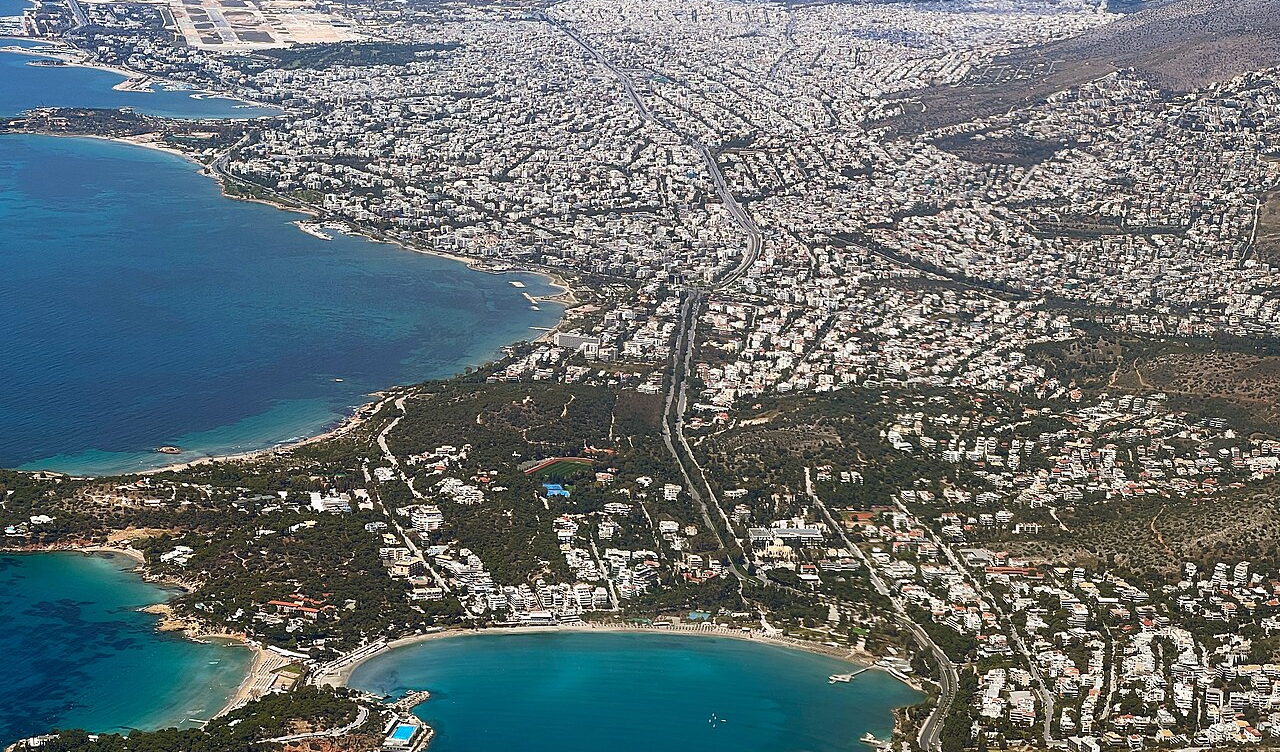
An 82-year-old man died following a violent dispute over a reserved sunlounger at Vouliagmeni beach near Athens. A 76-year-old man has been arrested. An 82-year-old man has died after a quarrel over a sunlounger at a beach near Athens turned violent, according to Greek media reports. The confrontation took place on Sunday at Vouliagmeni beach, a popular seaside spot on the coast south of the Greek capital. According to accounts from people at the scene, an argument about the use of the loungers grew heated and turned into a physical fight. The clash then widened to draw in other people on the beach. A 76-year-old man is reported to have been arrested in connection with the death. One person who witnessed the events told the newspaper Kathimerini that the disorder was so intense that the shouting carried all the way to the far side of the beach. At some point during the struggle, the older man fell to the ground. Reports say he was given CPR and treated with a defibrillator by those present before emergency services reached the scene. He was rushed to hospital but did not survive. A 21-year-old woman who had been with the younger man was also taken into custody. She was released a short time later. People at the beach told the daily newspaper Ta Nea that her face was bleeding and swollen. One witness said the man who died had appeared to be holding a sunlounger for others who had not yet arrived. That reservation seemed to be what set off the initial dispute, the witness said. Greek authorities are now looking into how the argument turned physical and what ultimately caused the man's death. Vouliagmeni beach, Athens beach death, sunlounger fight Greece, Greece beach brawl, beach dispute death, Greek police investigation, Vouliagmeni incident

Shergar's Unsolved Kidnapping Still Grips the Public

Decades after armed men seized the prized Irish racehorse Shergar, the kidnapping remains unsolved and is drawing renewed public attention. The kidnapping of Shergar, a celebrated Irish racehorse, is drawing fresh public attention decades after armed men took the animal. The case has never been solved. Shergar was seized by gunmen. Despite the years that have passed, no one has been held accountable, and the fate of the prized thoroughbred remains a mystery. Interest in the story has surged again online. "Shergar" climbed as a trending search in the United States, with more than 200 people looking up the name, a sign that the long-cold case continues to fascinate a new audience. Shergar was among the most valued racehorses of his era, which is part of why the crime drew such widespread notice at the time and why it still resonates. The horse's disappearance turned a sporting name into the subject of one of the most enduring unsolved cases tied to the racing world. What is known is stark and limited. Armed men came for the horse. The animal was taken. And in the years since, the questions surrounding who was responsible and what happened to Shergar have never been answered. The renewed search interest underscores how the episode has kept its grip on public memory. A high-profile crime involving a famous animal, left without resolution, has continued to invite speculation and retelling long after the events themselves. For now, the essential facts stand where they have for years: Shergar, a prized Irish racehorse, was kidnapped by gunmen, and the case remains open and unsolved. Shergar, Irish racehorse, horse kidnapping, unsolved case, racehorse theft, Ireland, cold case

Punjab Man Swallows Poison Over Drug Inaction, Row Erupts

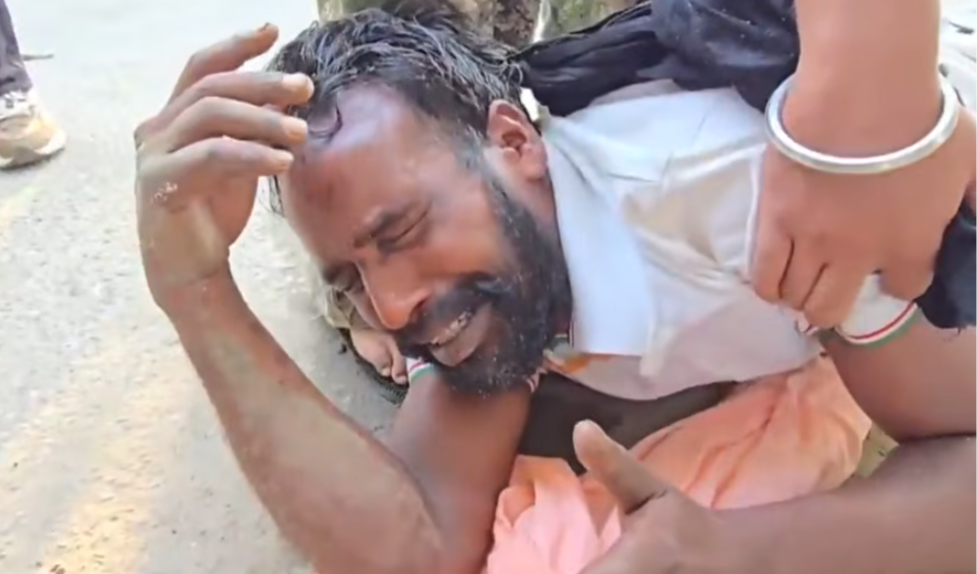
Jagseer Singh consumed poison outside the Sangrur DC office, alleging drug sales in his village went unchecked. Congress and BJP have targeted the AAP government. A man from Sangrur district in Punjab swallowed a poisonous substance outside the Deputy Commissioner's office, saying officials had ignored his complaints about drugs being sold in his village. The act, which took place at the district administration's doorstep, has set off a sharp exchange between opposition parties and the ruling Aam Aadmi Party. The man, Jagseer Singh, known locally as Jagga, is a resident of Namol village. He was first moved to the government hospital in Sangrur and then sent on to Rajindra Hospital in Patiala for continued care. According to his account, narcotics were being traded openly in Namol, and repeated appeals to the village Sarpanch and the local administration had brought no meaningful response. Manjinder Singh, a friend who went with Jagseer to the DC office, said his companion had recorded footage of people allegedly dealing in Chitta and was assaulted afterwards. He said the attack drew no action from authorities. Manjinder added that Jagseer had told him he swallowed Sulphas, a pesticide compound. Medical staff described the case differently. Dr Iqbalpreet Singh said the patient had taken a poisonous substance, was given initial treatment, and was then referred to the Patiala hospital. The doctor named the substance as "Farnel," rather than the compound Jagseer's friend had mentioned. Sangrur City Station House Officer Manpreet Singh visited the location but chose not to speak on the matter. He said the young man was still being treated and that more information would follow once his condition allowed. Congress and BJP corner the AAP government The episode quickly turned into a political flashpoint. Congress leader Sachin Pilot, who oversees the party's affairs in Punjab, said the incident laid bare the "pressure and mistreatment" that people who speak against drugs face in the state. He said Jagga had been threatened and harassed after uploading videos targeting the trade, and he demanded answers from the AAP government and the administration over their handling of such complaints. Leader of Opposition Partap Singh Bajwa also went after the state government. He noted that the man had attempted to take his own life in Sangrur, the district Chief Minister Bhagwant Mann calls home. Bajwa said Jagga had been intimidated and beaten for raising his voice, had gone to the police, and had received no help. He challenged the government's promise of a "Drug-Free Punjab" and asked how many such cases it would take before the authorities acted seriously on the drug problem and the safety of those who confront it. BJP leader Parminder Brar tied the case to two other recent episodes in Sangrur involving Gulzar Singh and Mohanjeet Singh. Former Union minister Ravneet Singh Bittu, also of the BJP, said the pattern raised doubts about whether the drug trade was being shielded while those opposing it were being pushed back. Citing the names of Mohanjeet Singh, Gulzar Singh and now Jagseer Singh, Bittu accused the government of taking the side of drug sellers and treating critics as enemies. He said that rather than pursuing traffickers, the authorities were leaving ordinary residents, village office-holders and anti-drug voices exposed to threats and, in his words, fabricated cases against them. Bittu argued that if activists were unsafe even in the Chief Minister's own district, the administration's response to the crisis was open to serious question. He said fear and intimidation could not silence people and voiced his support for Jagseer Singh and others confronting the trade. The latest case has deepened an already bitter political fight over Punjab's drug situation, with opposition figures repeatedly pressing the government on its record and on how grassroots complaints are treated. None of the claims surrounding Jagseer Singh's case - the drug sales, the assault, the threats, the alleged false cases or police inaction - have so far been verified independently. Investigators and medical records are expected to clarify what happened and the circumstances that led to it. Anyone in distress can reach the Vandrevala Foundation for Mental Health at 9999666555 or help@vandrevalafoundation.com, or TISS iCall at 022-25521111, available Monday to Saturday from 8 am to 10 pm. Jagseer Singh Jagga, Sangrur drug menace, Punjab drug crisis, AAP government Punjab, Drug-Free Punjab, Sachin Pilot, Ravneet Singh Bittu, Chitta drugs Punjab

IMD Forecasts Heavy Rain, High Winds Across 13 States

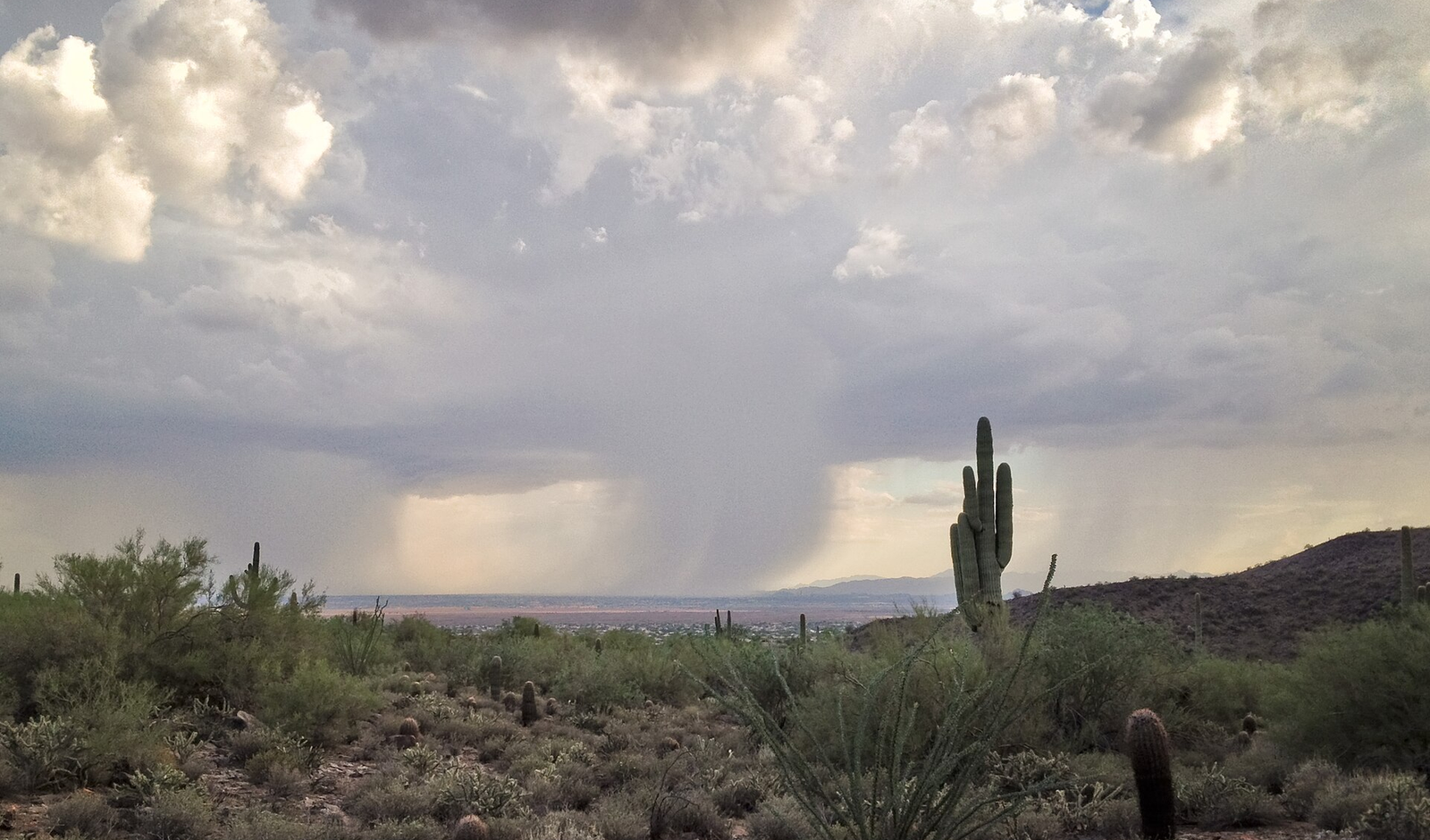
The India Meteorological Department's September 21 forecast warns of heavy rain and high-speed winds across 13 states, including Tamil Nadu and Andhra Pradesh. The India Meteorological Department (IMD) has forecast heavy rain and high-speed winds across 13 states on September 21. Tamil Nadu and Andhra Pradesh are among the states named in the outlook. The forecast covers both intense rainfall and strong winds, pointing to unsettled conditions across a wide stretch of the country on the day. IMD's mention of 13 states signals that the weather system extends well beyond the two named regions in the south. Tamil Nadu and Andhra Pradesh, both on the country's eastern and southern coast, feature prominently in the day's warning. The pairing of heavy rain with high-speed winds is the central feature of the IMD's September 21 assessment. The IMD is India's national weather agency and issues the country's official rain and wind forecasts. Its September 21 outlook places the emphasis on the combination of downpours and gusty conditions spread across the 13 states. Residents in the affected states, including Tamil Nadu and Andhra Pradesh, fall within the area flagged in the forecast for September 21. The IMD has identified heavy rain and high-speed winds as the defining conditions for the day. IMD weather forecast, September 21 weather, heavy rain India, high-speed winds, Tamil Nadu rain, Andhra Pradesh weather, India Meteorological Department, 13 states weather alert

Mahindra Grabs 71% of India's 4.5-5m SUV Sales in August 2026

India's 4.5m to 5m SUV segment sold 43,054 units in August 2026, up 65.5% YoY. Mahindra took over 71%, led by Scorpio, XUV7XO and XEV 9S. SUVs measuring between 4.5 and 5.0 metres sold 43,054 units in India in August 2026, a jump of 65.50% from the 26,014 units recorded in the same month a year earlier. The segment also grew 5.59% over July's 40,774 units. Mahindra alone accounted for more than 71% of the total, tightening its grip on one of the market's most competitive size brackets. Mahindra's dominance came from four models. The Scorpio Classic and Scorpio N together sold 15,576 units, up 58.29% from 9,840 units a year earlier, giving the Scorpio family a 36.18% share of the entire category. Even so, that figure marked a 2.70% dip from July. The XUV7XO followed with 8,541 units, a 72.34% rise on the year-earlier comparison. The electric XEV 9S took third place with 4,508 units, growing 9.13% over the previous month. Mahindra's electric pair adds 6,509 units Alongside the XEV 9S, Mahindra's XEV 9e contributed 2,001 units. That was down 13.49% year-on-year but up 11.60% month-on-month. The two dedicated electric SUVs together sold 6,509 units, with the XEV 9S taking the larger share. Across all four of its entries, Mahindra recorded 30,626 units and captured 71.13% of the tracked segment. Its volumes made up roughly 79% of the category's net year-on-year increase. Among mainstream family SUVs, Tata's Harrier and Harrier EV combined for 3,577 units, up 15.87% on the year and 8.36% on the month. The Safari sold 1,953 units, rising 31.16% annually and 34.41% over July, with a further lift expected once its electric version arrives in the coming months. MG's Hector and Hector Plus reached 1,177 units, more than triple the low base of 379 units from August 2025, and 65.08% ahead of July's 713 units. Moving against the trend, the Hyundai Alcazar fell 27.89% year-on-year to 856 units, while its monthly figure was almost flat at a 0.70% decline. Fortuner leads the ladder-frame race The Toyota Fortuner posted 3,504 units, up 39.71% on the year and 9.88% on the month. It stayed well clear of the newly launched MG Majestor, which sold 602 units and slipped 3.53% from July. Both target buyers looking for larger ladder-frame SUVs. The Majestor measures 5,046 mm, slightly beyond the bracket, but is grouped here because it competes directly with the Fortuner and recently replaced the Gloster in MG's range. At the premium end, the Kia Sorento made its debut with 365 units. These were dealer dispatches ahead of a September launch, with customer deliveries starting this month. Offered with diesel and hybrid powertrains, it joins the premium monocoque space. The Skoda Kodiaq registered 115 units, just ahead of the Jeep Compass at 114 units. Both grew year-on-year, as did the Jeep Meridian at 88 units. The Volkswagen Tayron added 42 units, the Honda ZR-V managed 33, and the Volkswagen Tiguan closed with two units. The Citroen C5 Aircross recorded no sales, down from one unit in July. Five models entered the segment without an August 2025 base: the XEV 9S, Majestor, Sorento, Tayron and ZR-V. Together they contributed 5,550 units, or 12.89% of the month's volumes, with the XEV 9S supplying most of that total. Because the Majestor replaced the Gloster, its share should not be read entirely as fresh demand. The category is set to widen further when the MG Hector Tomahawk EV and PHEV begin recording sales. For now, the numbers point to a market that is expanding quickly but leaning heavily on a single carmaker, with many premium rivals still selling in small numbers. 4.5m to 5m SUV sales, Mahindra Scorpio sales, August 2026 SUV sales India, XUV7XO sales, Mahindra XEV 9S, Toyota Fortuner sales, Kia Sorento India, MG Majestor

India to Play Japan in Cricket's First Senior T20I at Sano

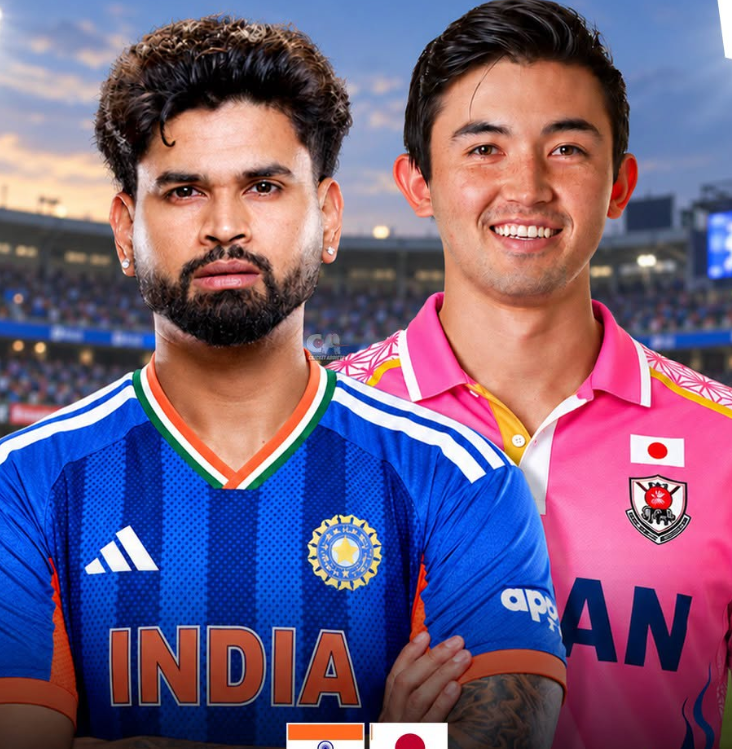
India, the reigning T20I world champions, face Japan in Sano on September 22 - the country's first men's senior international against a Full Member. India, the reigning Twenty20 world champions and the top-ranked side in the format, are scheduled to face Japan at Sano on September 22, the country's first men's senior international against a Full Member nation. The match, weather permitting, will be broadcast live on FanCode at 9:30 am IST. For the Japan Cricket Association, staging the fixture is already the achievement. "A lot of success has almost already happened," said Alan Curr, the JCA's chief operating officer, pointing to India's agreement to travel and the sudden interest from Japanese reporters covering the sport for the first time. He has spent the days before the game switching between jobs - clearing the covers off the wicket on a Sunday morning as a typhoon approached, pitching hospitality tents, reviewing security arrangements and turning a modest ground with 500 permanent seats into a venue fit for the world champions. Cricket is not new to the country. It arrived in the 1870s but never took hold against baseball, football, sumo, basketball, golf, tennis and boxing, all of which command far larger followings. Japan has appeared at Under-19 World Cups, met India and Pakistan at youth level and sent its women's team to the Asian Games, yet a senior men's game against a side of India's stature is without precedent. "It certainly helps to say that the reigning world champions, the No. 1 ranked team in the world, are coming to Japan," Curr said. "It's piquing interest, but we've still got a long way to go before cricket breaks into the mainstream sporting audience." From clay to a fixture The match was never part of any long-term blueprint. It started roughly 18 months ago, when the JCA decided to rebuild the turf square at Sano and brought in a groundsman from Sri Lanka Cricket to find the right clay. That same surface was later used to construct the Asian Games venue in Nagoya, which raised an obvious question: if Japan now had international-standard pitches, why not offer them to the best teams in the world? Once the surfaces were finished in March, the association drew up a proposal and circulated it to every Full Member before the ICC conference in Edinburgh. Talks with the BCCI opened there and, to Curr's surprise, progressed at speed. "The BCCI were really keen to have an opportunity to train," he said. "It's huge credit to them that they're excited about coming here and building this relationship with the JCA." The scheduling worked in Japan's favour. Cricket returns to the Asian Games in Aichi-Nagoya only days after the Sano game, and India's men would otherwise have faced nearly a week's wait for their knockout tie with no proper facilities to prepare on. Sano gave them both a training base and, eventually, an opponent. Steady numbers behind the scenes The headline fixture sits on top of years of slower expansion. Registered players have climbed from around 3,000 when Curr took up his post in 2014 to 8,800 today. The Japan Cup, the domestic T20 competition, has grown from little more than a dozen teams to over 80, and the 40-over league now runs across four divisions. "Kaizen is the word," Curr said, invoking the Japanese principle of continual improvement. "That's what we're trying to do for the sport. But now and again there are moments like this where you can accelerate that." He expects the return of cricket to the Asian Games to help, because it places the game inside an event Japanese audiences already recognise. "The Asian Games gives cricket legitimacy that it didn't have before," he said. "You can't be what you can't see." A cultural test, not a scoreline Curr is candid about the gulf on the field. "This India team is pretty good," he said. "It's going to be an extremely difficult challenge for players who have never played at that level before." His measure of success lies elsewhere. He cites Japan's women's team, praised for remaining on the field after their Asian Games match against India to thank the crowd and meet supporters, and wants the men to project the same character. "We want cricket to be played hard but also be accessible and friendly," he said. "We want cricket to be fun." If the first-time spectators who fill Sano leave with more than memories of India's star names, the JCA will consider the day a win - whatever the result. Japan cricket, India T20I Japan, Sano cricket ground, Japan Cricket Association, Alan Curr, Asian Games cricket, FanCode India Japan, BCCI Japan tour

NFL Week 2 Highlights Drive Search Spike in India

NFL Week 2 highlights are trending in India, with searches for "nfl" climbing past 100 as fans track the round's best places, touchdowns and moments. Interest in the NFL surged in India this week, with "nfl" ranking among the country's trending Google searches after clocking more than 100 queries. The spike lined up with the release of Week 2 highlights from the current NFL season. The round-up covers the best plays, key moments and touchdowns from the week's slate of games. It gathers the standout scoring drives and turning points into a single recap for fans following the season. The search activity points to a growing audience for American football in India, where the sport competes for attention with cricket, football and other mainstream draws. Week 2 marks one of the early markers of the NFL calendar, arriving just after the season's opening weekend. The highlights package focuses on on-field action rather than off-field news, packaging the top touchdowns and plays for viewers who missed the live broadcasts. For Indian fans, who watch across time zones that rarely match kickoff times in the United States, such recaps offer a quick way to catch up on the games. The trending status underscores how the NFL is building a following well beyond its home market. Week 2 highlights joined the list of topics drawing sustained search traffic in India during the period. NFL Week 2, NFL highlights, NFL India, best NFL plays, NFL touchdowns, Google Trends India, NFL 2025 season

Jefferies Sees India GDP Growing 6.5-7% This Fiscal Year

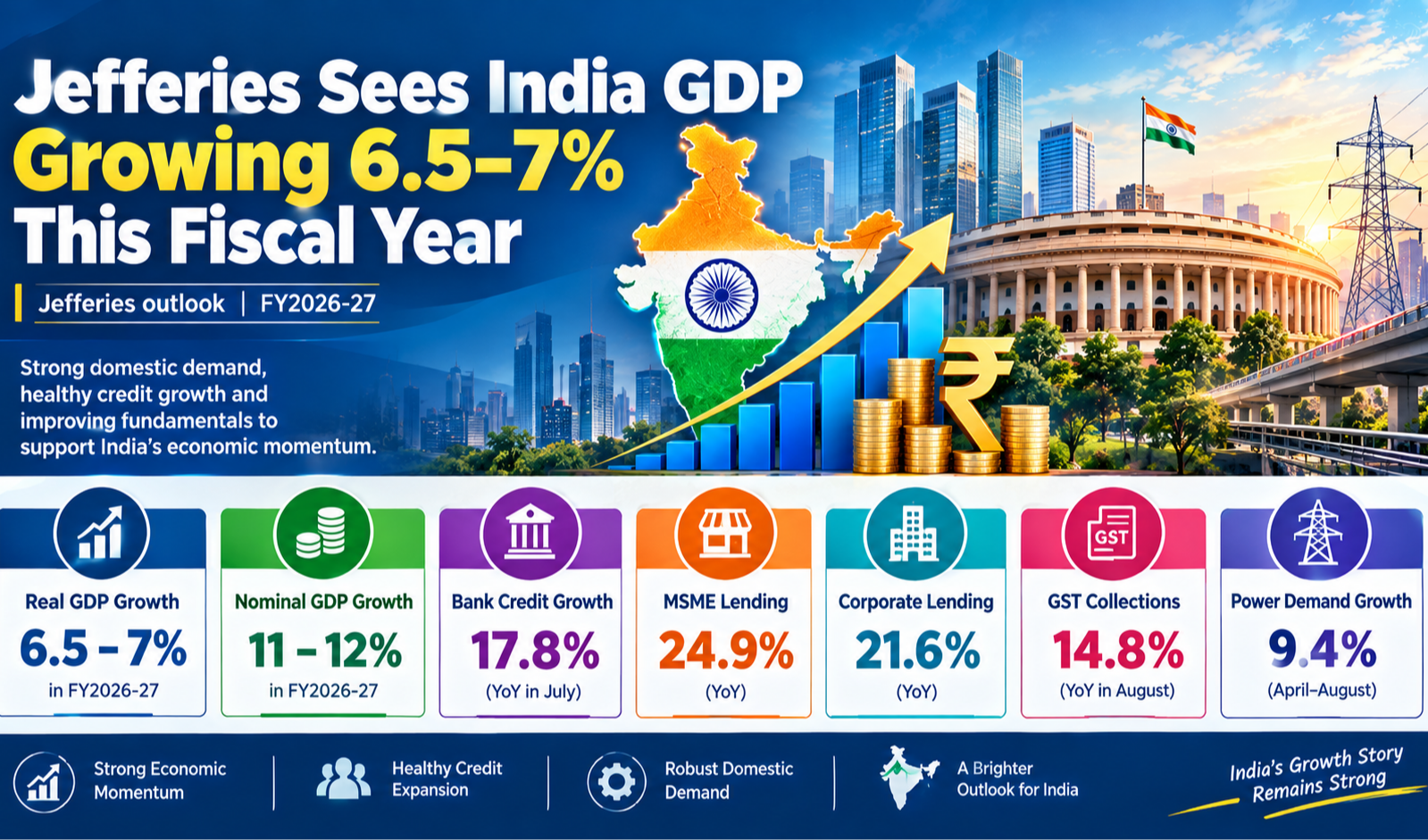
Brokerage Jefferies projects India's real GDP will grow 6.5-7% this fiscal, with corporate earnings set to climb to 17% by the year starting April 2027. India's economy is set to expand at a real rate of 6.5-7 per cent in the current fiscal year, with nominal growth reaching roughly 11-12 per cent, according to a new assessment from brokerage Jefferies. The firm said the country's underlying growth engine remains firmly in place, holding up better than many had anticipated even as geopolitical tensions and high energy costs weigh on the outlook. The brokerage also forecast that company profits will strengthen further, with corporate earnings growth quickening to 17 per cent in the financial year that starts in April 2027. That would mark a step up from an estimated 14 per cent expansion in the current year, a pickup Jefferies tied to the improving trajectory in nominal GDP. Lending figures formed a central plank of the brokerage's case. Bank credit climbed 19.1 per cent year-on-year at the close of August, while lending to companies advanced 21.6 per cent in July. Credit extended to micro, small and medium industrial enterprises jumped 24.9 per cent, backed by an 17.8 per cent rise in deposits during August. Jefferies read the acceleration in SME borrowing as an early sign that recent policy moves are starting to pay off. The firm pointed to changes in the goods and services tax regime, labour reforms and steps to make doing business easier as factors now feeding through into stronger loan demand. The rise in corporate borrowing, it added, hints that the private investment cycle businesses have long deferred may finally be turning. Power use and home sales climb Consumption at home has stayed strong, the brokerage said. GST receipts grew 14.8 per cent from a year earlier in August, a marker of steady spending across the economy. Electricity demand told a similar story, expanding 9.4 per cent between April and August against a much slower 1.8 per cent in the first three months of the calendar year. The property market added to the picture. Home sales across the seven largest cities rose 7 per cent year-on-year over the first seven months of 2026, reversing a 1 per cent slide recorded in 2025. Jefferies expects the firmer nominal growth backdrop to carry corporate earnings from 14 per cent this year up to 17 per cent in the fiscal year beginning April 2027. Oil prices the main threat The brokerage flagged energy as the clearest danger to its forecasts, warning that events in the Middle East could push fuel costs higher. Brent crude traded near $106 a barrel when the report was prepared, and problems along important shipping lanes for oil were straining supply. So far, Jefferies said, India has sidestepped serious disruption to its energy supplies. The country has kept buying Russian crude at a discount while at the same time stepping up imports of American energy, spreading its sources rather than leaning on any single supplier. On monetary policy, the brokerage expects the Reserve Bank of India to lift its benchmark repo rate by 50 basis points before the end of 2026. That would take the rate up from its current level of 5.25 per cent, a tightening the firm sees as consistent with the economy's steady momentum. India GDP growth, Jefferies India report, corporate earnings 2027, India bank credit, RBI repo rate, GST collections India, Indian economy 2026, private capex cycle

Messi Strikes as Inter Miami Draw 1-1 With San Diego at Half-Time

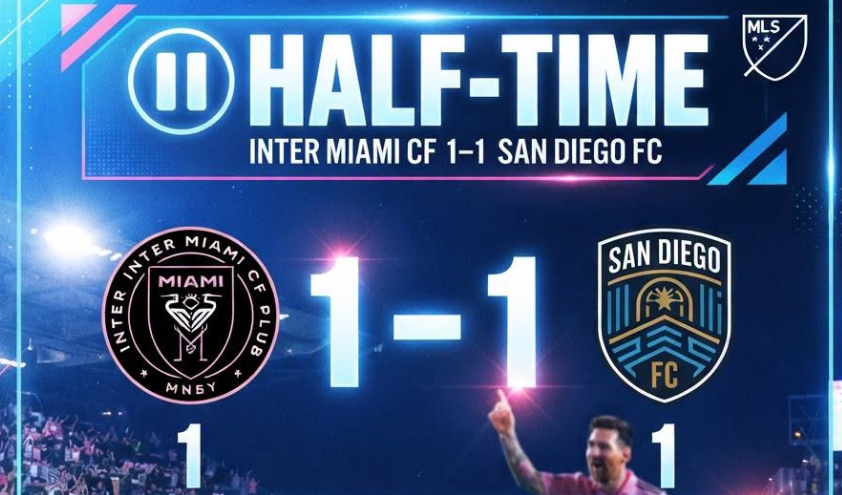
Lionel Messi's 24th-minute goal cancelled out Anders Dreyer's early strike as Inter Miami and San Diego went in level at half-time in their MLS clash. Lionel Messi scored to level the game as Inter Miami and San Diego were locked at 1-1 in their Major League Soccer fixture on Monday, 21 September. The match, played at Nu Stadium, was tied at the interval and remained in progress just past the hour mark, with the clock reading 52 minutes. San Diego struck first. Anders Dreyer put the visitors ahead in the 12th minute, finishing from a pass by Julian Tverskov. Inter Miami hit back through Messi, who scored in the 24th minute to draw the hosts level. Neither side added to the tally before the break, sending both teams into half-time at 1-1. The result-in-waiting reflected two clubs sitting in very different parts of their respective conference tables. Inter Miami went into the match third in the Eastern Conference on 46 points from 26 games, having won 12, drawn 10 and lost four. San Diego occupied 10th place in the Western Conference on 31 points. Inter Miami's league record underlines an attacking team that also concedes freely. They had scored 62 goals for the season, the highest total in the Eastern Conference, while shipping 47, leaving them with a goal difference of plus 15. Their 10 draws were the most of any side near the top of the table, a factor that had cost them ground on the leaders despite the heavy goal output. At the summit of the Eastern Conference, Nashville SC led the way with 57 points from 26 matches, having won 17 and lost only three. New England sat second on 46 points, level with Inter Miami but ahead on the standings. Charlotte followed in fourth on 43 points, with the Philadelphia Union sixth on 36 after a run of six straight wins. San Diego's position in the Western Conference placed them in mid-table. The conference was headed by the Vancouver Whitecaps on 49 points from 25 games, with the Houston Dynamo second on 44. San Diego's 31 points left them chasing the pack above them as the season entered its closing stretch. The fixture drew wide attention, ranking among the trending searches in India as fans followed Messi and Inter Miami. The Argentine forward remains the biggest draw in Major League Soccer since his move to the Florida club, and his early goal kept Inter Miami on level terms after a sluggish start that had handed San Diego the lead inside the opening quarter of an hour. With the score at 1-1 and the second half under way, the outcome still hung in the balance. A win for Inter Miami would help them press their claim near the top of the Eastern Conference, while San Diego were seeking points to climb their own table in the West. Inter Miami, San Diego, Major League Soccer, Lionel Messi, MLS standings, Anders Dreyer, MLS results

1887 Stone Winery Anchors $35M Napa Valley Estate Sale

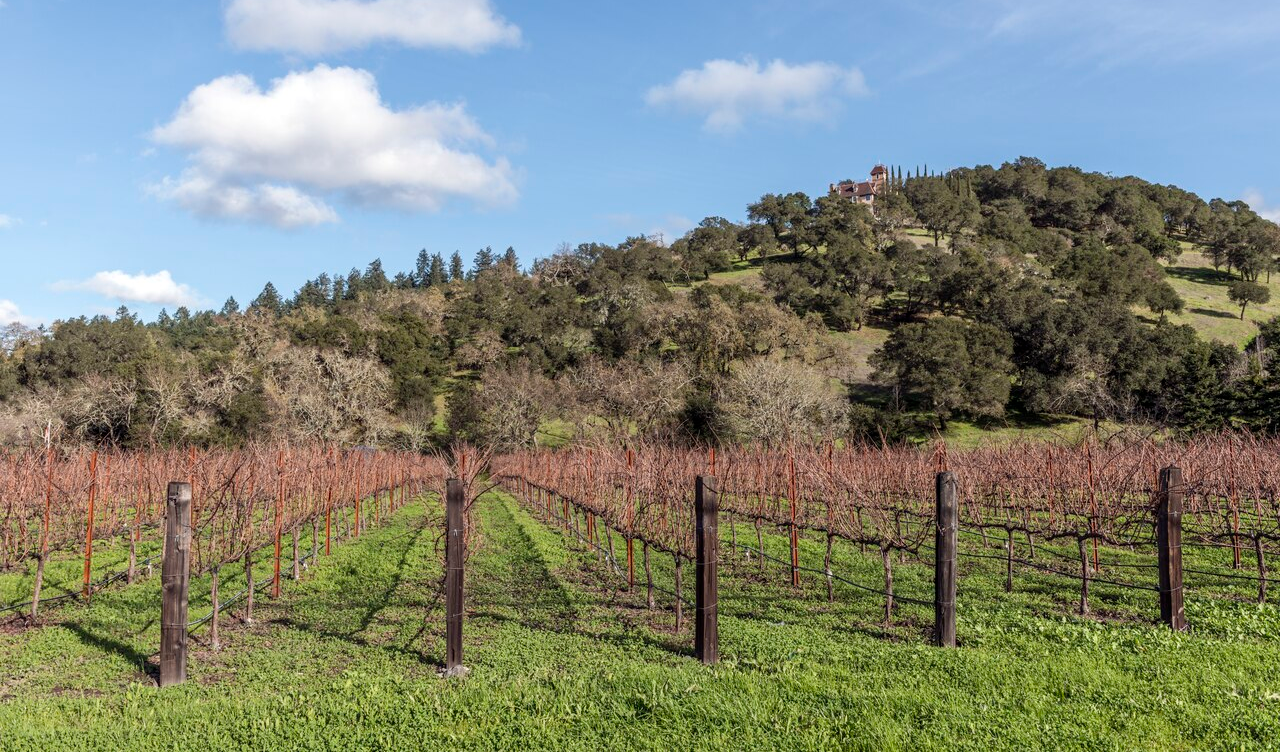
La Herradura Ranch, a 151-acre Napa Valley estate with a restored 1887 stone winery once eyed by Ellen DeGeneres, is listed for $35 million in St Helena. A 151-acre estate in St Helena, California, built around a restored stone winery dating to 1887, has been listed for $35 million. The seller is artist Matt Rogers, son of the late T. Gary Rogers, who ran Dreyer's Ice Cream as chief executive and later chaired the Federal Reserve Bank of San Francisco. Erin Lail of Coldwell Banker Brokers of the Valley brought the property to market on Friday, September 18. Known as La Herradura Ranch, the site no longer operates as a working farm but keeps its older features intact. It holds roughly 25 acres of vineyards, a private lake and a cluster of buildings, including a main house finished last year and the century-old stone winery that gives the estate its identity. Gary Rogers bought the vineyard about two decades ago. He already held the ranch next door and set out to join the two parcels into a single square mile of land, his son said. After the land was split again, the elder Rogers asked Matt, who was living on the property, to ready the leftover acreage for sale. A winery buried under a ranch house That request led to an unexpected find. Matt uncovered a stone winery from 1887 that had sat out of sight for generations, concealed behind a 1950s ranch house and an extension that stood until around 2008. Records of the building were scarce, but the family linked it to Mountain Cove Winery, a modest operation thought to have made jug wine and delivered it to nearby churches in the region's earliest winemaking years. "It's a beautiful, gorgeous firestone cathedral," Matt said of the structure. "When you open the big steel doors and play some music and have some friends over, it's just such a unique, special place. You can just feel the spirit of the valley." The 4,000-square-foot addition was demolished around 2008, exposing the rough original stonework beneath. Crews then rebuilt the interior with fresh wiring, plumbing, flooring and doors, according to the listing. The reworked hall seats close to 100 guests, and the family has staged everything from charity events to comedy performances inside its walls, using it more as a gathering place than a production facility. The visit from Ellen DeGeneres Once the restoration wrapped, the family moved toward selling, and the estate drew interest from a well-known buyer. "Our big exciting day was when Ellen DeGeneres and Portia came up to look at it," Matt said. "They didn't like the fact that there was cattle on the property." The pair followed a vegan diet at the time and passed on the purchase. The grounds have seen considerable work in recent years beyond the winery. The main house, completed in 2024, spans nearly 2,500 square feet with an open floor plan, three bedrooms and three bathrooms. A rustic cabin stands beside the lake, fitted with bunks, a fireplace, indoor plumbing and an outdoor shower, meant for anglers and swimmers who want to stay over. "You could spend the night and camp out or use it as a getaway," Matt said. "It's a very rough little fishing cabin, but it makes using the lake much more accessible." The estate also carries a two-bedroom cottage north of the main residence, alongside a second, somewhat larger two-bedroom home. Matt and his wife, Amy, overhauled the vineyard entirely. They pulled and replanted the vines in 2020 and installed a new drainage system. The rows now yield Cabernet Sauvignon and Cabernet Franc, with a half-acre set aside for Sauvignon Blanc. The decision to sell reflects a shift the family says no longer adds up. "Originally, it was the party house," Matt said. "This was supposed to be a buy-it-and-flip. If my dad were still alive and he was still promoting these events we used to do, that would probably keep it going, but it just doesn't make sense anymore." T. Gary Rogers died in 2017 at the age of 74. Keywords: La Herradura Ranch, Napa Valley vineyard, 1887 stone winery, St Helena real estate, Matt Rogers, T. Gary Rogers, Ellen DeGeneres Napa, Mountain Cove Winery

Rahul Gandhi Demands Answers From Modi on Girls' Hostels

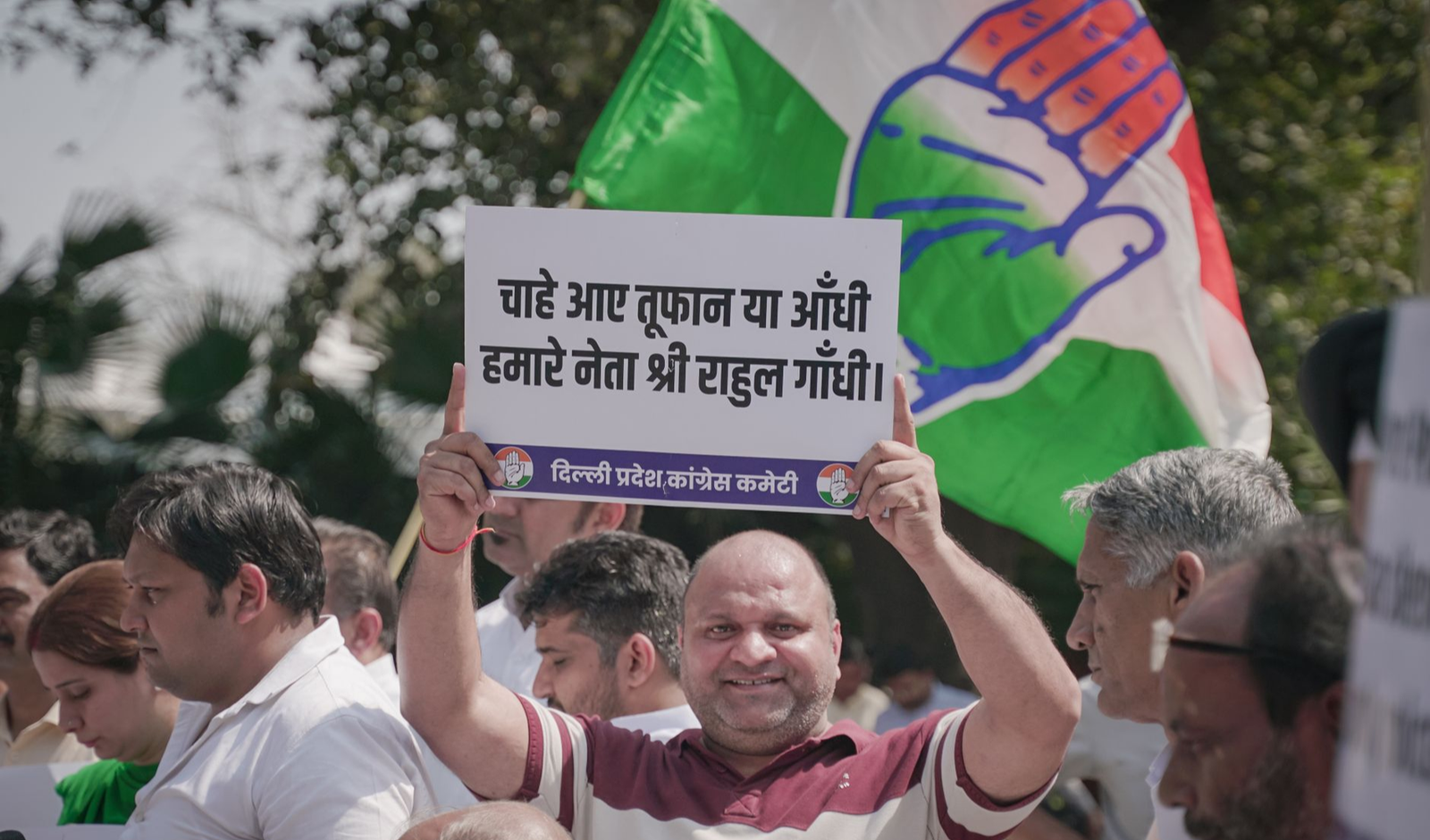
At his 'Chhatron Ki Goonj' event in Indore, Rahul Gandhi cited a female student's plea over the lack of hostels and pressed PM Modi for answers. Congress leader Rahul Gandhi on Sunday (September 20, 2026) raised the shortage of hostels for female students and demanded answers from Prime Minister Narendra Modi over the difficulties they face. The Leader of Opposition in the Lok Sabha built his case around the words of a young woman he met a day earlier in Indore. Gandhi said the student had put a pointed question to him during his 'Chhatron Ki Goonj' event on Saturday (September 19). "'The government has money to light diyas - why not for our hostels?' This question was asked of me yesterday by a female student in Indore. She came to the city from a village to study," he wrote in a post in Hindi. The student had left her village to pursue her education in the city but found no hostel to live in, forcing her into paying-guest accommodation, according to Gandhi's account. "There's no hostel, so she has to stay in a PG. Just to stay safe, lakhs are spent. The worry of monthly rent, and the fear of becoming homeless - she has to study amidst all this," he said. Gandhi argued that the problem drives young women out of education altogether. "Many girls drop out of their studies for this very reason - because there's no place to live," he said. He also targeted the housing support available to students. "And what about the housing allowance? It doesn't increase with inflation, and on top of that, it falls prey to corruption. Narendra Modi ji - Do you have any answer to that little girl's question?" Gandhi said. Khera sharpens the attack Congress' media and publicity department head Pawan Khera amplified Gandhi's message, tagging his post with a broader charge against the Prime Minister. "PR events. Designer clothes. Luxury cars. Aircraft. Skincare. Modi has money for everything except the education of India's youth," Khera wrote. Khera listed what he described as gaps in the system. "No adequate infrastructure. No quality teachers. No training. No hostels. No jobs. At this point, the authenticity of his degree is almost irrelevant. His contempt for education explains how 'educated' he is," he said. 'System versus students' in Indore The hostel remarks followed comments Gandhi made a day earlier at the same programme. On Saturday (September 19), he alleged that a rotten "system," particularly in education, had taken hold of the country and was working to keep students from asking questions. Gandhi said the system instead sought "andhbhakts" - a term critics of the Prime Minister use for his supporters - to spread its narrative and hatred. "The system is afraid of students because students ask questions. The system does not want students; it wants 'andhbhakts'," he said. The event was the fifth edition of Gandhi's youth outreach programme 'Chhatron Ki Goonj', held in Indore, a stronghold of the ruling Bharatiya Janata Party. The theme was 'system versus students'. Gandhi interacted with Gen Z and other young participants, discussing education, recruitment and employment issues. Rahul Gandhi, Chhatron Ki Goonj, female students hostels, Narendra Modi, Congress, Indore, student housing India, education infrastructure

Taiwan Cracks Down on Drug Driving With Fines Up to NT$270,000

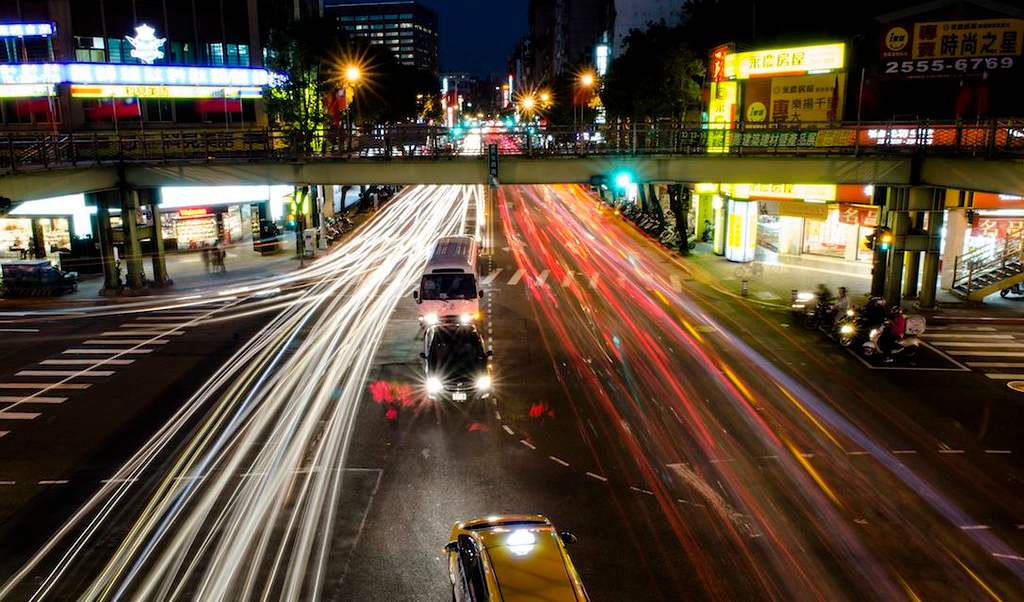
Taiwan will confiscate vehicles and fine drivers up to NT$270,000 for refusing drug tests, after 23 people died in drug-driving incidents in early 2025. Taiwan is preparing sharply higher penalties for driving under the influence of drugs, including on-the-spot vehicle confiscation and fines reaching NT$270,000 for motorists who refuse a drug test. The Ministry of Transportation and Communications announced the plans after 23 people died in drug-driving incidents during the first half of this year. The move follows amendments to the Road Traffic Management and Penalty Act that President William Lai (賴清德) signed into law on Aug. 17. Hu Ti-chi (胡迪琦), director of the ministry's Public Transportation and Supervision Division, said the revised law raises fines, adds license revocation, holds passengers liable, imposes mandatory addiction treatment and allows authorities to seize vehicles. To put the law into effect, the ministry has released previewed changes to four related regulations that spell out how the penalties will work in practice. Fines That Rise With Each Offense Under the previewed rules, drivers caught operating a vehicle while on drugs will be fined according to the type of vehicle. A motorcycle rider faces NT$120,000 for a first offense, while a car driver faces NT$150,000. The amounts climb steeply for repeat offenders. A second violation within 10 years would cost NT$210,000 for a motorcycle rider and NT$240,000 for a car driver. From the third offense onward, an extra NT$90,000 would be tacked onto each penalty, with no ceiling on the total. Refusing to cooperate carries the heaviest cost. A driver who declines a rapid saliva test would be fined NT$270,000 on a first refusal, whether riding a motorcycle or driving a car. A second refusal within a decade would push the fine to NT$450,000, and every further refusal would add another NT$180,000, again with no upper limit. Seized Vehicles and Published Names The new measures give officers the power to confiscate a vehicle at the roadside the moment a driver is caught under the influence of drugs or refuses to be tested. When a drug-driving case or a related offense leads to a driver losing their license, authorities could make the person's name and photograph public and suspend the vehicle's license plates for two years. Drivers who continue to get behind the wheel after their license has been revoked face additional consequences. That would bring an extra NT$80,000 fine, and the vehicle would be impounded. The ministry said it is now working to implement the revised rules. Keywords: Taiwan drug driving, Road Traffic Management and Penalty Act, drug driving fines, vehicle confiscation Taiwan, William Lai, Ministry of Transportation and Communications, saliva test refusal, Taiwan traffic law

Iran Sends US War-Ending Conditions Through Qatar

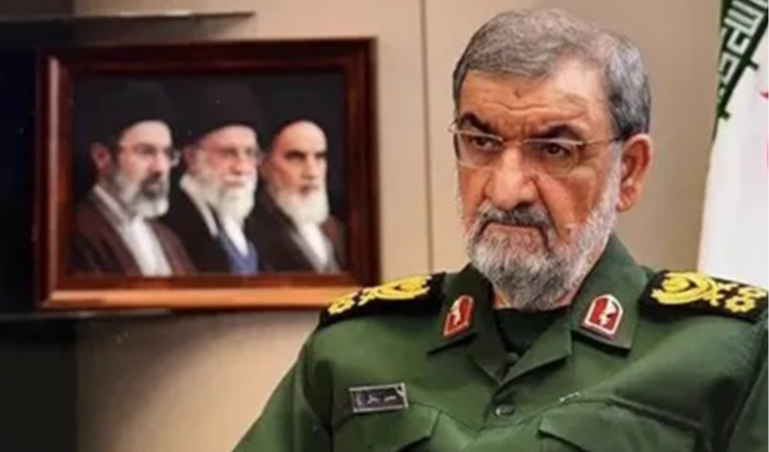
Iran's security chief Mohsen Rezaei says Tehran has passed conditions to end its war with the US through Qatari mediators and awaits a response from Trump. Iran has handed the United States a formal list of demands to end their war, passing the terms through Qatari intermediaries, the secretary of Iran's Supreme National Security Council said on Saturday. Mohsen Rezaei, who assumed the post roughly a month ago, said Tehran was now waiting to hear back from President Donald Trump. Rezaei laid out three requirements in an interview with a Tehran-based bureau chief: a halt to fighting across every front, the return of Iran's frozen assets, and the lifting of a naval blockade. He said Qatar remained in touch with both governments and had relayed the conditions to Washington with the goal of stopping the conflict. "It is in Washington's interest to accept these conditions," Rezaei said. He added that pressure from Trump would produce nothing and that Iran was ready for what he called a decisive war. The fighting began in late February, when the United States and Israel struck Iran in an assault that killed Supreme Leader Ayatollah Ali Khamenei. Two mediating governments, Qatar and Pakistan, have been trying to restart negotiations since a memorandum of understanding between the two sides lapsed last month. Other governments in the region are also pushing for a resolution. No ceasefire yet Asked whether the conflict was close to ending, Rezaei said that for all practical purposes it continued. He described Iran as operating under a fresh strategy aimed at closing out the war as quickly as it could, while making clear that combat had not stopped. He did not dismiss the prospect of another American strike. Based on his country's military evaluations, he said, such an attack was a real possibility, though he maintained that Iran was prepared for it. Rezaei said Iran's war planning had changed since two previous rounds of fighting. The country is now concentrating on American naval forces spread across the Gulf, the Gulf of Oman and the Arabian Sea. Vessels positioned farther out, toward the Indian Ocean, sit beyond what Iranian forces can strike, he acknowledged. A new antiship missile Rezaei said Iran had recently carried out a test of a multi-warhead antiship missile close to an American ship or aircraft carrier. The warheads, he indicated, could see further development. He warned that any Iranian retaliation would be forceful. It would take in American military bases across the region, as in earlier exchanges, and would also reach US business interests and companies with operations in the area. A correspondent reporting from Tehran characterized Rezaei's comments as the kind of dual-track messaging Iran has kept up throughout the war: signaling willingness to talk while continuing to gear up for battle. On one side, he noted, sat an openness to diplomacy; on the other, talk of readiness for a decisive fight. The reporter said mediated discussions involving Qatar and Pakistan were in progress and offered a modest, if slim, reason for hope that engagement could resume. Washington, however, may not read the demands as a genuine overture. David Des Roches, who previously ran Arabian Peninsula affairs at the Pentagon, said the United States was unlikely to treat the terms as a serious opening. "At first glance, probably not," he said. Iran US war, Mohsen Rezaei, Qatar mediation, Iran frozen funds, naval blockade, Supreme National Security Council, Iran ceasefire conditions, Donald Trump Iran

Houthis Claim Missile, Drone Strikes on Riyadh; Saudis Down One

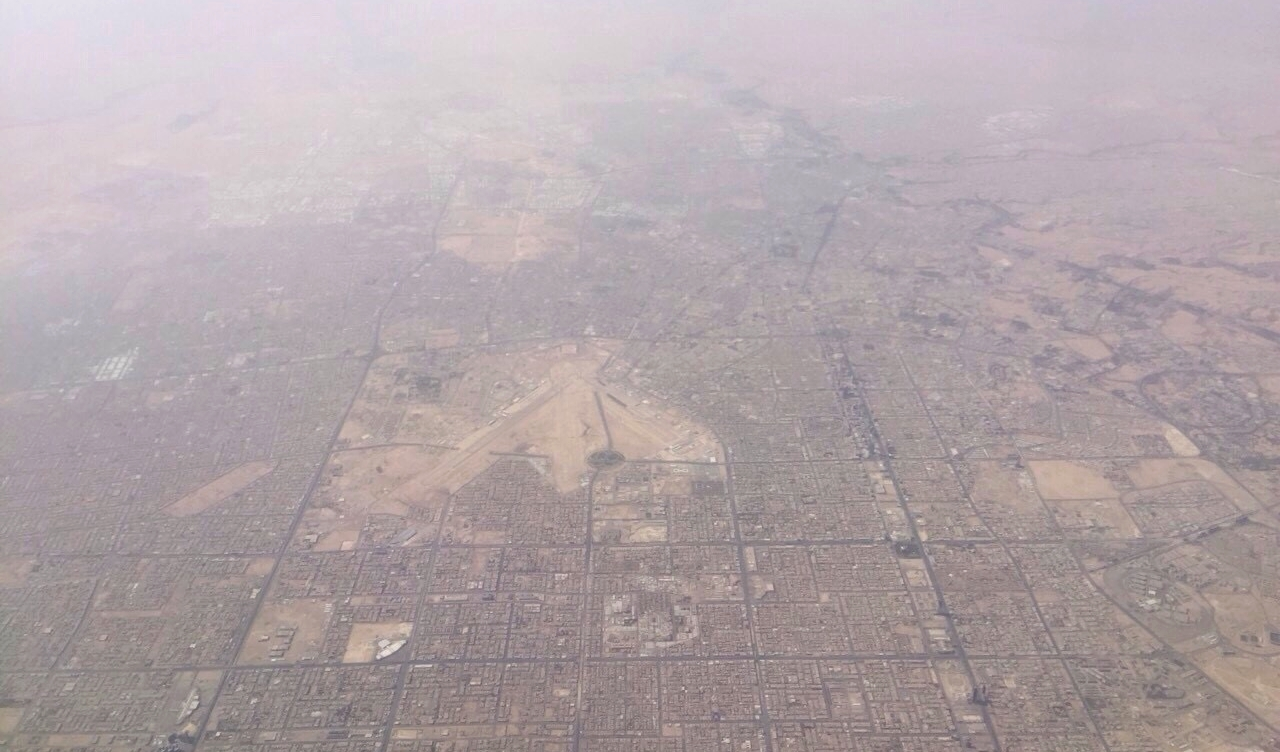
Iran-backed Houthis say they hit Riyadh and Yanbu with missiles and drones. Saudi Arabia intercepted a ballistic missile as fuel tanks burned near the airport. Iran-backed Houthi fighters in Yemen said on Saturday that they launched a wave of drones and ballistic missiles at the Saudi capital, Riyadh, along with energy installations on the kingdom's Red Sea coast. Saudi authorities confirmed that their forces shot down one ballistic missile fired toward Riyadh, but did not acknowledge any other hits or report casualties. Before that confirmation, a thick pillar of black smoke was seen climbing from fuel tanks close to Riyadh's international airport, where flights were briefly thrown into disorder. It marked the first time sirens warning of an air attack had rung out across the capital since the Houthis stepped up their campaign against Saudi Arabia in July. Several loud blasts were reported in Riyadh, and King Khalid International Airport ran into serious disruption. The tracking service FlightRadar24 logged delays and cancellations at the hub. An AFP journalist on the scene described firefighters working to put out a blaze in a gutted fuel tank owned by the state oil producer Aramco. Overnight, the Saudi Civil Defence had already pushed phone alerts to residents, warning of a possible threat over the capital. Houthi military spokesman Yahya al-Sarea said in an online post that his forces had fired a heavy volley of ballistic and cruise missiles together with drones at what he called sensitive locations in Riyadh, as well as Aramco sites in the coastal city of Yanbu. He framed the operation as retaliation for what he termed criminal Saudi efforts to strike Sanaa, the Yemeni capital now under Houthi control. Days earlier, Sarea had said Saudi Arabia carried out 300 strikes across Yemen over the previous week. A spokesperson for the Saudi-led military coalition said air defences had also blocked what were described as hostile attempts to hit civilians in the cities of Bish, Taif, Farasan and Yanbu. Washington warns travellers The US State Department told Americans across the Middle East to stay alert and to brace for possible flight cancellations and other travel troubles. Its statement said Iranian-supported Houthis had opened hostilities against Saudi Arabia, including against civilian airports, and warned that the confrontation could spiral quickly. It advised US citizens to seriously reconsider any travel to or through the region. Deadly ground fighting The Houthis remain at war with Yemen's internationally recognised government, which draws support from Saudi Arabia. They have reached across the border to strike Saudi targets repeatedly in recent months, and this week they claimed to have brought down a Saudi fighter jet over Yemeni territory. The ground war also turned bloody on Saturday. Citing military sources on both sides of Yemen's conflict, AFP reported - in an account that could not be independently verified - that clashes between Houthi forces and government troops left 48 people dead in a single day. The Houthis put their own losses at 31 fighters, while government sources said 17 of their soldiers had been killed, according to the agency. The human toll of the latest round of combat continues to climb. On Friday, the International Organization for Migration, a United Nations agency, said the number of people forced from their homes by recent fighting had risen above 104,796. Saudi Arabia has not released details on damage at the airport fuel facility or at the Yanbu sites named by the Houthis, and it has not spoken publicly about the wider claims made by Sarea beyond confirming the single intercepted missile aimed at Riyadh. Houthi Riyadh attack, Saudi Arabia ballistic missile, King Khalid International Airport, Aramco Yanbu, Yemen civil war, Yahya al-Sarea, Houthi drone strike, Saudi air defences

ESPN Host Misses College Football Coverage After Car Accident

An ESPN host was involved in a car accident and missed college football coverage, drawing wide search interest. Here is what is known so far. An ESPN host was involved in a car accident and missed the network's college football coverage, according to reports circulating widely online. The absence prompted a surge of searches, with "ESPN" trending on Google Trends in the United States and drawing more than 5,000 searches. The host, whose name has not been confirmed in the available reporting, was not present for the college football broadcast that viewers had expected. The gap in the lineup fueled speculation among fans and drove the topic up the trending charts. At this stage, the confirmed facts are limited. It is known that a car accident kept the host away from the college football desk. Details about when and where the crash happened, the severity of any injuries, and the identity of the host have not been established in the material available. ESPN carries a heavy college football schedule across its channels, and any change to its on-air roster tends to be noticed quickly by regular viewers. The reported accident and the resulting absence were enough to push interest sharply higher. No timeline for the host's return has been reported. Further details are expected as more information becomes available. Until then, the essential facts remain narrow: an ESPN host was in a car accident and did not appear for scheduled college football coverage. ESPN, ESPN host, car accident, college football coverage, ESPN college football, sports broadcasting