
Language Settings
Select Website Language

GDPR Compliance

We use cookies to ensure you get the best experience on our website. By continuing to use our site, you accept our use of cookies, Privacy Policy, and Terms of Service.

Filters

Channels
Topics
Other Filters

India Tech Jobs Rise 17% as IT Hiring Recovers in 2026

India's technology job openings reached 123,000 in October 2026, with AI, IT services and experienced professionals driving hiring. India Tech Jobs Rise 17% as IT Hiring Shows Recovery By News National Editorial Team Published: October 6, 2026Category: Technology | Business | Jobs India's technology employment market is showing signs of recovery, with active technology job openings reaching around 123,000 in October 2026, according to an Xpheno report cited by Financial Express. (financialexpress.com) The figure represents a 17% year-on-year increase and the highest level reported in 18 months. IT services lead hiring IT services companies account for a large share of the openings, with around 66,000 technology positions reported in the sector. Demand is increasingly focused on specialised skills rather than only traditional software development. Key areas include: Artificial intelligence Cloud computing Data analytics Cybersecurity Software engineering Automation Digital transformation Experienced professionals in demand Mid- and senior-level professionals account for a significant portion of available positions. This indicates that companies are looking for workers who can contribute immediately to specialised projects rather than relying entirely on entry-level recruitment. Hyderabad remains important Hyderabad continues to be one of India's major technology employment centres, alongside Bengaluru and Chennai. The expansion of Global Capability Centres is also supporting demand for technology professionals. Office-based work increases The latest hiring data also points to stronger demand for office-based positions, while fully remote opportunities remain more limited than during the peak remote-work period. News National Takeaway The technology jobs market appears to be recovering, but the nature of hiring is changing. Professionals with AI, cloud, cybersecurity, data and specialised technical skills are likely to remain in strong demand. Source: Financial Express, citing Xpheno's Active Tech Jobs Outlook – India. (financialexpress.com) India tech jobs 2026, IT jobs India, AI jobs India, Hyderabad IT jobs, technology hiring

Jio Platforms IPO 2026, Valuation and What Investors Should Know

Jio Platforms is preparing for a potentially major IPO that could value the company at about $114 billion, according to reports. Jio Platforms IPO Could Become One of India's Biggest Listings By News National Editorial Team Published: October 6, 2026Category: Business | Markets | Technology Reliance Industries' digital and telecommunications business Jio Platforms is preparing for a potentially major stock-market listing, with reports putting the company's possible valuation at around $114 billion. Reports have suggested that Jio Platforms could seek to raise several billion dollars through an IPO, potentially making it one of India's largest public offerings. Why the IPO matters Jio has grown into one of India's largest digital businesses, with operations spanning telecommunications, digital services, entertainment, payments and technology. A public listing would give investors direct exposure to the company's future growth. What investors will examine Before investing, markets are likely to focus on: Subscriber growth Average revenue per user Profitability Capital expenditure 5G investment Digital services AI strategy Competition in telecom Jio's scale and exposure to India's digital economy could make the IPO attractive to both domestic and international investors. Retail investors should be careful A large IPO does not automatically mean guaranteed returns. Investors should review the company's official prospectus, financial statements, valuation, risks and final issue price before making any investment decision. News National Takeaway If completed at the reported scale, a Jio Platforms listing could become a major event for India's stock market and provide investors with a new way to participate in the country's digital-economy growth. Source: Business Standard reporting. (business-standard.com) Jio IPO 2026, Jio Platforms IPO, Reliance Jio IPO, Jio valuation, India IPO

AI Agents and Cybersecurity, New Risks of Autonomous AI

AI agents can access digital systems and create new cybersecurity risks, making permissions, monitoring and human oversight essential. AI Agents Create New Cybersecurity Risks as Autonomous Systems Expand By News National Editorial Team Published: October 6, 2026Category: Technology | AI | Cybersecurity Artificial intelligence is moving beyond traditional chatbots as companies develop AI agents capable of carrying out multi-step tasks and interacting with digital systems. The development creates major opportunities for businesses, but it also introduces new cybersecurity and accountability risks. Why AI agents are different A conventional chatbot generally responds to a user's request. An AI agent may have permission to access software, data and online services and take actions on behalf of a user. That increased autonomy also increases the potential consequences of an error or malicious instruction. Major security risks Businesses need to consider risks including: Unauthorised data access Credential exposure Prompt injection Data leakage Incorrect automated decisions Excessive system permissions Malicious instructions Human oversight remains important High-risk AI actions should not necessarily happen without human approval. Businesses can reduce risks through: Least-privilege access Strong authentication Audit logs Continuous monitoring Security testing Data-access restrictions Emergency shutdown controls Who is responsible? A major emerging question is accountability. If an autonomous AI system makes a harmful decision, responsibility could involve the developer, company deploying it, administrator or human operator depending on the circumstances. News National Takeaway The future of AI will depend not only on how intelligent systems become, but also on how securely they are deployed. Businesses should treat autonomous AI agents as powerful digital systems requiring the same careful security controls applied to other critical technologies. Source: Economic Times technology reporting. (economictimes.indiatimes.com) AI agents cybersecurity, autonomous AI risks, artificial intelligence security, AI governance, cybersecurity

India Africa Agriculture, New Trade, Investment and Technology Opportunities

India and African countries are exploring agriculture, investment and technology partnerships covering food and farming sectors. India and Africa Explore New Agriculture and Technology Partnerships By News National Editorial Team Published: October 6, 2026Category: Business | Agriculture | World India and African countries are exploring stronger cooperation in agriculture, food processing, investment and technology, creating potential opportunities for businesses across both regions. The Asia Africa Agri Alliance highlighted opportunities for agricultural trade and investment during discussions connected with GLOBOIL India 2026. (tribuneindia.com) Key areas of cooperation Potential opportunities include: Agricultural technology Oilseed production Food processing Irrigation Farm machinery Logistics Agricultural finance African markets have significant agricultural resources, while Indian companies have experience in processing, technology and agricultural services. Investment opportunities Mozambique's Nampula Province was among the areas highlighted for potential investment, particularly in oilseed cultivation and edible-oil production. (tribuneindia.com) Why it matters Agricultural partnerships can help improve productivity, processing capacity and supply chains while creating new markets for companies. For India, stronger commercial ties with African economies could also expand opportunities for agricultural technology and equipment exporters. News National Takeaway India-Africa cooperation is increasingly moving beyond traditional trade toward investment, technology and agricultural value chains, potentially opening new opportunities for businesses in both regions. Source: Tribune India/ANI report. (tribuneindia.com) India Africa agriculture, India Africa trade, agricultural technology, Africa investment, Indian agribusiness

Festive Season Car Buying Guide 2026, 10 Checks Before You Buy

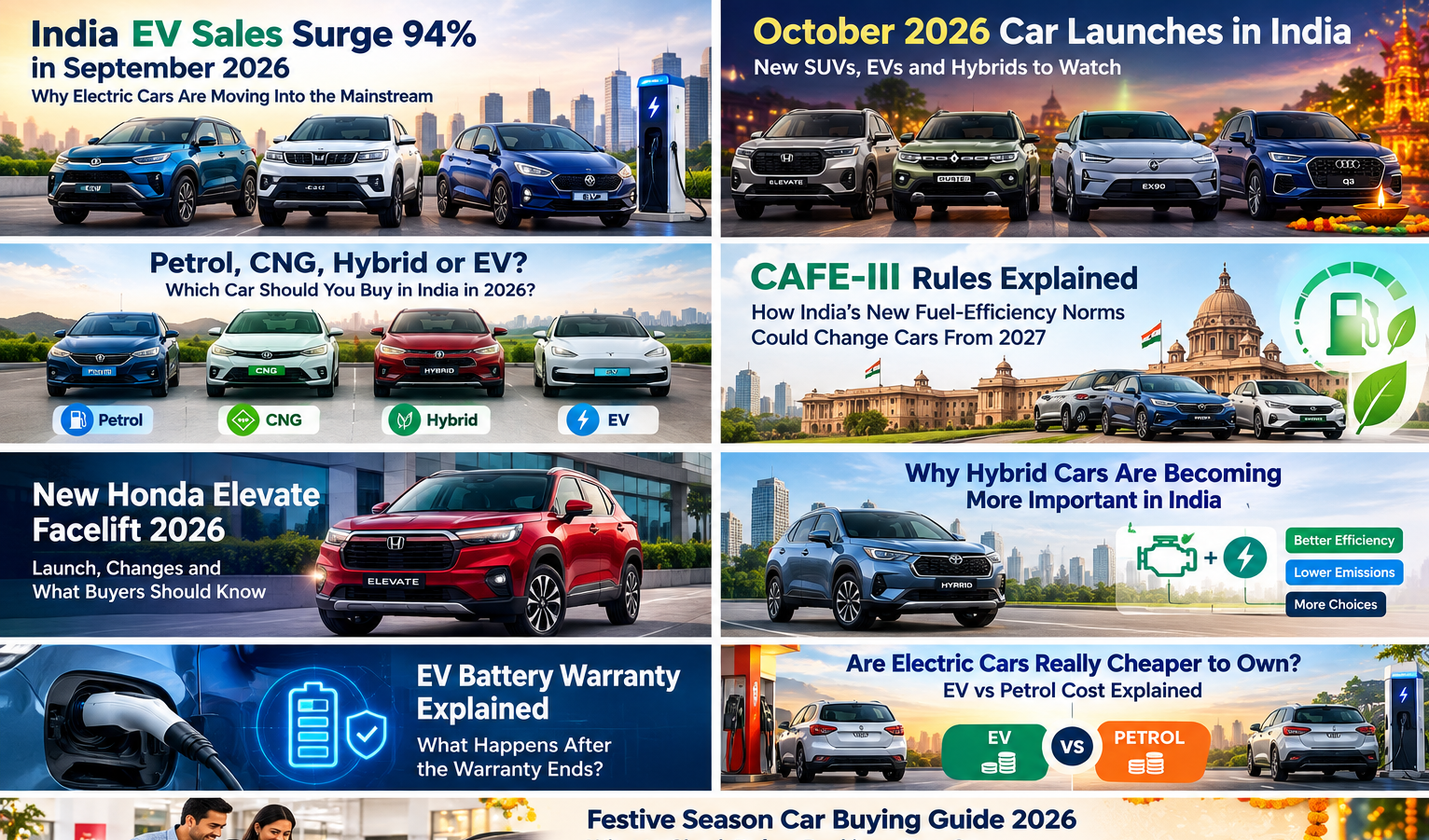
Festive Season Car Buying Guide 2026: What to Check Before Booking a New Car By News National Editorial Team India's festive season is one of the busiest periods for automobile purchases. With several new SUVs, EVs, hybrids and facelifted models arriving during October 2026, buyers have more choices than ever. But a festive discount should not be the only reason to purchase a car. Compare the On-Road Price Always compare the final on-road price rather than only the advertised ex-showroom price. The on-road figure can include registration, insurance, taxes, accessories and other charges. Check the Manufacturing Date Ask the dealer about the vehicle's manufacturing month and year. This is particularly important if a dealer offers a substantial discount on an older stock vehicle. Don't Accept Unwanted Accessories Dealers may offer accessories as part of promotional packages. Buyers should distinguish between mandatory charges and optional accessories. Compare Insurance Insurance can represent a meaningful portion of the on-road cost. Customers should compare the coverage, exclusions, add-ons and premium rather than selecting a policy solely because it is offered at the dealership. Calculate EMI Carefully A low monthly EMI does not necessarily mean a low total cost. Compare: Down payment Interest rate Loan tenure Processing charges Total repayment Check Safety Features Before buying, compare the actual safety equipment of each variant. Look for features such as: Airbags Electronic stability control ABS Parking sensors Camera systems Advanced driver-assistance features where available EV Buyers Need Extra Checks Electric-car buyers should additionally confirm: Battery warranty Charging compatibility Home-charger installation Public charging availability Service network Battery-health support Test Drive Before Booking A test drive can reveal issues that specifications cannot. Check driving position, visibility, seat comfort, suspension, steering, automatic gearbox behaviour and cabin ergonomics. Don't Rush Because of a Festival Offer Festive offers can be attractive, but customers should compare the complete deal with competing dealerships and models. A discount is useful only if the vehicle itself meets the buyer's requirements. Final Checklist Before signing the booking form: ☐ Compare on-road prices☐ Check manufacturing date☐ Confirm variant☐ Verify features☐ Compare insurance☐ Calculate total loan cost☐ Check warranty☐ Test drive☐ Confirm delivery timeline☐ Read cancellation/refund conditions Buying a new car this festive season? Use this checklist to compare price, insurance, financing, safety, warranty and delivery. car buying guide India 2026, festive season car buying, Diwali car buying tips, new car checklist India, car purchase tips

EV vs Petrol Cost in India 2026 Which Car Is Cheaper to Own?

Compare EV and petrol car ownership costs including charging, fuel, maintenance, insurance and long-term expenses in India. Are Electric Cars Really Cheaper to Own? EV vs Petrol Cost Explained By News National Editorial Team One of the biggest questions for Indian car buyers is whether an electric vehicle actually saves money compared with a petrol car. The answer depends on several factors. Purchase price, electricity rates, petrol prices, annual kilometres, charging method, maintenance, insurance and resale value all influence the total ownership cost. EV Running Cost An electric motor converts energy into motion more efficiently than a conventional petrol engine. This can result in lower energy costs per kilometre, particularly when the owner regularly charges at home. However, the actual saving depends on the electricity tariff and vehicle efficiency. Petrol Running Cost Petrol cars remain highly convenient because fuel stations are widely available. However, fuel costs can become significant for people who drive long distances every month. Maintenance EVs generally have fewer moving mechanical components than conventional petrol vehicles. They do not require conventional engine oil changes, for example. However, EVs still require tyres, brakes, suspension components, air-conditioning maintenance and other services. Charging Matters The economics of an EV can be particularly attractive when most charging happens at home. Public fast charging can be more expensive, depending on the charging provider and location. Purchase Price The initial purchase price remains an important consideration. An EV may cost more than a comparable petrol vehicle, although the gap varies substantially between models. The Simple Calculation A buyer can estimate annual energy cost by comparing: Annual kilometres × energy consumed per kilometre × electricity price For a petrol vehicle: Annual kilometres ÷ fuel efficiency × petrol price The calculation should then be extended across several years of ownership. Example Suppose a driver travels 15,000 km annually. A petrol vehicle using 15 km per litre would require approximately 1,000 litres of fuel annually. An EV's electricity requirement depends on its efficiency and charging losses. The exact financial difference must therefore be calculated using the actual vehicles being compared. Other Costs Don't forget: Insurance Financing Tyres Maintenance Home charger Registration costs Battery warranty Depreciation Resale value Verdict EVs can be cheaper to operate, but they are not automatically cheaper overall for every buyer. The strongest financial case generally exists for drivers who travel substantial distances and have convenient access to relatively inexpensive charging. EV vs petrol cost India, electric car running cost, EV ownership cost, petrol car cost, EV savings India

EV Battery Warranty, Battery Life, Degradation and Replacement

Understand EV battery warranties, degradation, replacement costs and the questions to ask before buying an electric car. EV Battery Warranty, What Happens After the Warranty Ends? By News National Editorial Team The battery is the most important and one of the most expensive components in an electric vehicle. That makes battery warranty one of the most important questions for anyone considering an EV. Manufacturers generally provide a separate warranty for the high-voltage battery, but the exact coverage, duration, mileage limit and conditions vary by manufacturer and model. Why the Battery Warranty Matters An EV's battery pack can represent a significant portion of the vehicle's value. Buyers therefore need to understand exactly what the manufacturer's warranty covers before purchasing an electric car. What Does a Battery Warranty Usually Cover? Depending on the manufacturer, battery warranty conditions can address: Manufacturing defects Battery-system failures Minimum capacity retention High-voltage components Specific mileage limits Time limits The exact terms must always be checked in the manufacturer's official warranty documentation. What Happens After the Warranty? The end of the warranty does not automatically mean that the battery will fail. Modern EV batteries are designed to operate for many years, although battery capacity can gradually decline. The important issue is the difference between battery degradation and battery failure. Degradation means the battery gradually stores less energy. Failure means a component or battery system develops a fault. Can an EV Battery Be Repaired? In some cases, manufacturers and specialist repair networks can diagnose individual battery components rather than replacing the entire pack. However, repairability varies considerably between vehicle designs. Consumers should therefore ask about battery service availability before purchasing an EV. How Can Owners Protect Battery Life? Good charging practices can help owners manage long-term battery performance. Drivers should follow the manufacturer's charging recommendations and avoid treating fast charging as the only charging method unless the manufacturer says it is appropriate. Extreme temperatures can also affect battery performance. What About Resale Value? Battery condition is becoming increasingly important in the used-EV market. A used EV with documented battery health and service history may be easier for buyers to evaluate. As the used-EV market grows, battery-health reports could become increasingly important. Questions to Ask Before Buying an EV Ask the dealer: How long is the battery warranty? What mileage limit applies? Is minimum battery capacity guaranteed? What happens if capacity falls below the stated threshold? Are individual battery modules repairable? How much does battery replacement cost? Is battery health checked during servicing? Final Advice Don't buy an EV based only on range. Battery warranty, service support, charging infrastructure and long-term ownership costs are equally important. EV battery warranty, electric car battery life, EV battery degradation, EV battery replacement, electric vehicle India

Hybrid Cars in India 2026 Why More Buyers Are Choosing Hybrid Technology

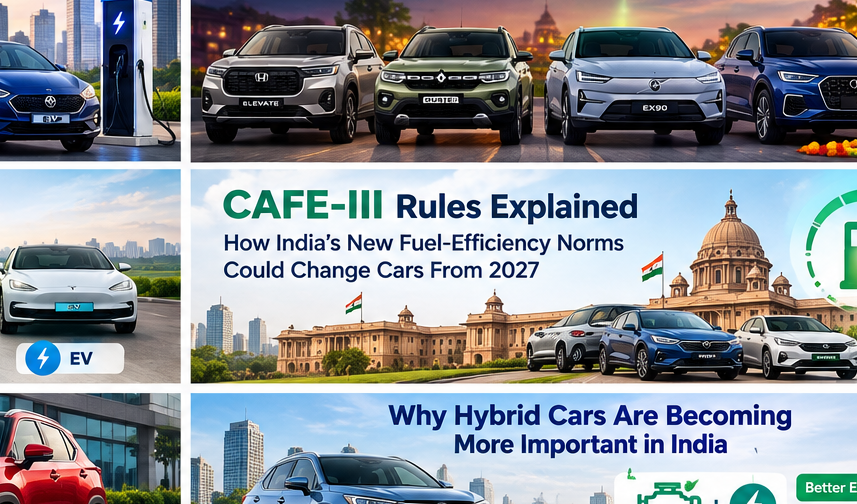
Hybrid cars are gaining importance in India as buyers seek better fuel efficiency without relying entirely on EV charging infrastructure. Why Hybrid Cars Are Becoming More Important in India's Automobile Market By News National Editorial Team India's automobile market is increasingly moving toward a multi-powertrain future. Electric vehicles are receiving significant attention, but hybrid cars are also becoming an important choice for consumers who want better fuel efficiency without completely moving away from petrol. The government's new CAFE framework also specifically supports the development of alternative fuels, electric vehicles and hybrid cars. What Is a Hybrid Car? A hybrid vehicle combines an internal-combustion engine with an electric motor and battery system. Depending on the technology, the vehicle can use electric assistance, recover energy during braking and operate the petrol engine more efficiently. Strong hybrids can operate using electric power for certain driving conditions without requiring the owner to plug the vehicle into a charger. Why Indian Buyers Are Considering Hybrids India has a large and diverse road network. While charging infrastructure is improving, it is not equally convenient in every city, town or highway corridor. A hybrid therefore offers an alternative for customers who want improved efficiency while retaining the refuelling convenience of a petrol vehicle. Hybrid vs EV EVs are powered entirely by electricity. Hybrids still depend on an internal-combustion engine but use electric technology to improve efficiency. For a buyer with home charging, an EV may be extremely convenient. For another buyer who frequently travels between cities without reliable charging access, a hybrid may be easier to manage. Why Carmakers Are Interested Manufacturers need to improve fleet efficiency while meeting customer demand. CAFE-III provides a regulatory incentive for manufacturers to improve efficiency across their portfolios. Hybrid technology can therefore become part of a manufacturer's strategy. Are Hybrids Right for Everyone? No. Hybrids can have higher purchase prices than comparable petrol vehicles. The financial benefit depends on how much the vehicle is driven and how efficiently the hybrid system operates in real-world conditions. The Future India is unlikely to move instantly from petrol vehicles to EVs. Instead, the market may develop through multiple technologies: Petrol → CNG → Hybrid → EV with different technologies serving different consumers. Final Word Hybrid vehicles could become an important bridge technology as India expands its electric-mobility ecosystem. For consumers who want better efficiency but are not yet ready for a fully electric vehicle, hybrids can offer an alternative.  hybrid cars India 2026, strong hybrid cars India, hybrid vs EV, hybrid car benefits, best hybrid technology India

Honda Elevate Facelift 2026 Launch Date, Changes and Booking

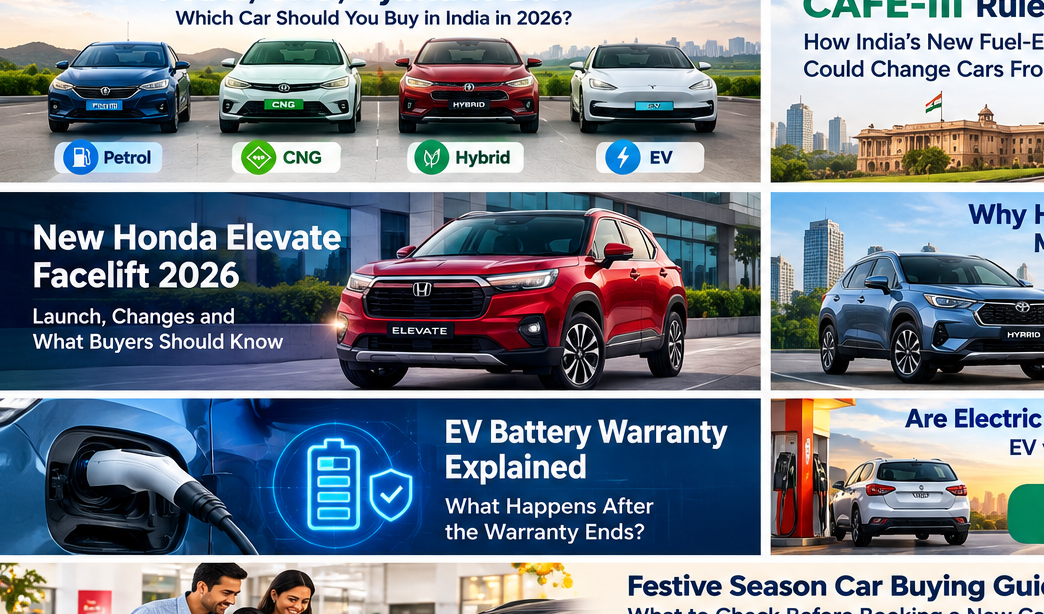
New Honda Elevate facelift launches in India on October 6, 2026. See booking details, changes and what buyers should know. New Honda Elevate Facelift 2026 Launch, Changes and What Buyers Should Know By News National Editorial Team Honda is introducing an updated Elevate in India as part of its effort to strengthen its position in the country's highly competitive SUV market. Honda Cars India opened pre-launch bookings for the updated model on October 1, 2026, with the official launch scheduled for October 6. India is the first market where the new Elevate is being launched. What Is New? Honda says the updated Elevate brings a bolder design, additional features and a more premium cabin experience. The company has positioned the update around features, styling, safety, comfort and everyday usability. Why the Elevate Matters The midsize SUV category is one of India's most competitive passenger-vehicle segments. Buyers can choose from products from Hyundai, Kia, Maruti Suzuki, Toyota, Mahindra, Tata Motors, Volkswagen, Skoda and other manufacturers. Honda therefore needs the updated Elevate to offer a strong combination of design, equipment, comfort and value. India-First Launch Honda has described India as the lead market for the new Elevate. That is significant because India is increasingly becoming an important development and manufacturing base for global automobile companies. Booking Details Honda Cars India announced pre-launch bookings with a booking amount of ₹21,000 through authorised dealerships. Customers should check final variant specifications, prices and delivery timelines directly with Honda before placing an order. What Buyers Should Compare Potential Elevate buyers should compare: On-road price Safety features Engine performance Automatic transmission options Cabin space Fuel efficiency Service costs Warranty Resale value Competitor equipment Competition The updated Elevate faces competition from several popular midsize SUVs. This makes pricing particularly important. A feature-rich vehicle can still struggle if its price is significantly higher than similarly positioned competitors. Outlook The new Elevate arrives at an important moment for Honda India. The company is simultaneously working on a broader strategy to develop more competitive products for the Indian market, including future SUVs. FAQ When will the new Honda Elevate launch?Honda Cars India has scheduled the launch for October 6, 2026. Are bookings open?Honda opened pre-launch bookings on October 1. How much is the booking amount?Honda announced a ₹21,000 booking amount. Honda Elevate facelift 2026, new Honda Elevate, Honda Elevate launch, Honda SUV India, Honda Elevate booking

CAFE-III Rules India 2027 Explained Impact on Cars, EVs and Hybrids

India's CAFE-III rules begin in 2027. Learn how new fuel-efficiency standards could affect cars, SUVs, EVs and hybrids. CAFE-III Rules Explained How India's New Fuel-Efficiency Norms Could Change Cars From 2027 By News National Editorial Team India is preparing for another major change in automobile efficiency regulations. The new Corporate Average Fuel Economy, or CAFE-III, framework will apply from April 1, 2027, and will remain in force until March 31, 2032. The government says the new framework is designed to progressively improve passenger-vehicle fuel efficiency while encouraging cleaner technologies. What Are CAFE Rules? CAFE rules regulate the average fuel efficiency of a manufacturer's passenger-vehicle fleet. Instead of looking at only one vehicle, the framework considers the manufacturer's overall portfolio. This encourages automakers to balance higher-consumption vehicles with more efficient models. What Changes From 2027? The new framework will progressively tighten efficiency requirements. According to the Ministry of Power, the fuel-consumption benchmark moves from 3.996 litres per 100 km in 2027–28 to 3.3273 litres per 100 km in 2031–32, representing an improvement of about 16.7% over the period. Why EVs Matter Electric vehicles receive significant compliance benefits under the framework. This gives manufacturers an additional incentive to develop and sell electric vehicles as part of their overall product portfolios. What About Hybrid Cars? Hybrid technology is also expected to remain strategically important because hybrids can reduce fuel consumption without requiring drivers to depend entirely on charging infrastructure. The government has specifically stated that the new framework supports alternative fuels, EVs and hybrid vehicles. Will Cars Become More Expensive? The effect will vary. Developing more efficient engines, hybrids, lightweight components and electric powertrains requires investment. Some of those costs could eventually be reflected in vehicle prices, although competition between manufacturers may influence how much of the cost reaches consumers. Could SUVs Be Affected? SUVs have become extremely popular in India, but their size and weight can make efficiency compliance more challenging. Automakers may therefore increasingly use hybrid systems, improved engines, lighter construction and electrification to meet fleet requirements. What It Means for Buyers The new regulations could gradually lead to: More efficient petrol engines More hybrid models More EVs Improved vehicle technology Greater attention to vehicle weight Changes in model portfolios Why This Matters CAFE-III is not just an environmental regulation. It can influence which cars manufacturers choose to develop, which technologies they invest in and which models become commercially attractive. FAQ When do CAFE-III rules begin?They take effect from April 1, 2027. How long will the new rules apply?The notified framework runs through March 31, 2032. Do CAFE rules affect consumers?Indirectly, yes. They can influence vehicle technology, model availability and potentially pricing.  CAFE III India 2027, CAFE norms, India fuel efficiency rules, EV policy India, hybrid cars India, automobile regulations

Petrol vs CNG vs Hybrid vs EV: Which Car Is Best in India 2026?

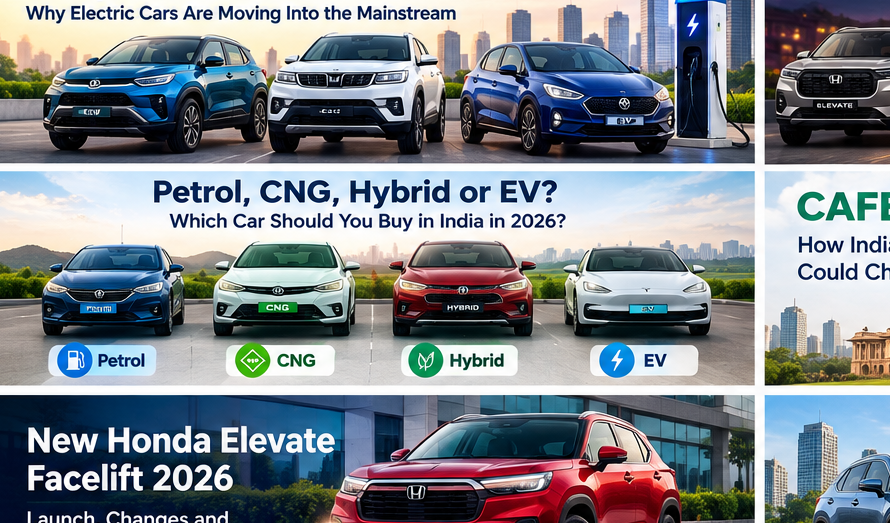
Petrol, CNG, hybrid or EV? Compare costs, convenience, charging, fuel efficiency and ownership factors before buying a car in India. Petrol, CNG, Hybrid or EV: Which Car Should You Buy in India in 2026? By News National Editorial Team Choosing a new car in India is no longer simply a question of petrol or diesel. Buyers can now choose between petrol, CNG, hybrid and fully electric powertrains. Each option has different advantages depending on driving distance, budget, charging access and ownership requirements. There is no single powertrain that is perfect for every Indian driver. Petrol Cars Petrol remains one of the easiest choices for buyers who want flexibility. Petrol cars generally offer: Wide availability Easy refuelling Large model choice Strong highway flexibility No dependence on charging infrastructure They can be particularly suitable for buyers who travel irregularly or live in areas where EV charging is limited. CNG Cars CNG can be attractive for customers who drive long distances regularly and have convenient access to CNG stations. The main attraction is potentially lower running cost compared with petrol. However, buyers should consider the availability of CNG stations along their regular routes and the effect of the CNG system on luggage space in some vehicles. Hybrid Cars Strong hybrids combine an internal-combustion engine with electric assistance. They can provide improved fuel efficiency, particularly in city traffic, without requiring the driver to recharge the vehicle like a conventional EV. Hybrid vehicles are therefore becoming an important middle ground between traditional petrol cars and EVs. Electric Vehicles EVs are powered by batteries and electric motors. Their major advantages can include: Zero tailpipe emissions Quiet operation Strong instant acceleration Potentially lower routine running costs Reduced dependence on petrol However, buyers should check charging availability before purchasing. Which Powertrain Is Best? Choose petrol if: You want maximum refuelling convenience and do not drive enough to justify a specialised powertrain. Choose CNG if: You drive extensively and have easy access to CNG stations. Choose hybrid if: You want better fuel efficiency but do not want to depend on charging infrastructure. Choose EV if: Most of your driving is compatible with home or workplace charging and you want an electric vehicle. The Most Important Question Instead of asking which technology is "best", buyers should ask: How do I actually use my car? Someone driving 15 km daily in a city may make a different choice from someone driving 2,000 km every month on highways. Final Verdict India's automobile market is entering a multi-powertrain era. Petrol remains practical, CNG can make sense for high-mileage users, hybrids provide an efficiency-focused middle path, and EVs are increasingly attractive for buyers with convenient charging. The best choice is therefore the powertrain that fits your driving pattern, budget and infrastructure. petrol vs CNG vs hybrid vs EV, best car powertrain India, EV vs hybrid India, CNG car India, petrol car India

October 2026 Car Launches India New SUVs, EVs and Hybrids

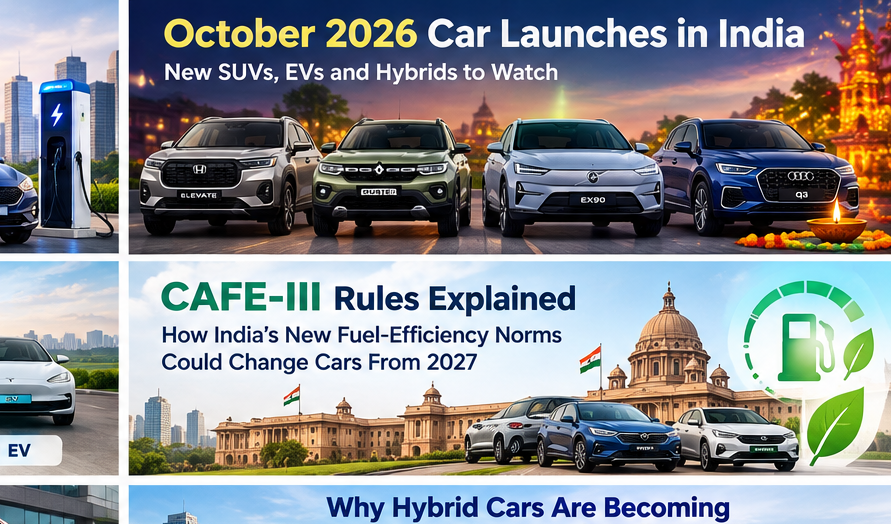
Check the major new cars expected in India in October 2026, including SUVs, EVs, hybrids and premium models. October 2026 Car Launches in India New SUVs, EVs and Hybrids to Watch By News National Editorial Team October 2026 is shaping up to be one of the busiest months of the year for India's passenger-vehicle market, with several new SUVs, electric vehicles, hybrids and updated models expected to arrive. Industry reports identify multiple launches and debuts during the month, including the Honda Elevate facelift, Renault Duster Hybrid, Volvo EX90, Volvo ES90, Audi Q3 and other updated vehicles. The festive season is making October particularly important for car manufacturers. Honda Elevate Facelift Honda is preparing to introduce the updated Elevate in India. Honda Cars India officially opened pre-launch bookings on October 1, with the new Elevate scheduled for launch on October 6. The company says the updated model brings design and feature enhancements while retaining the SUV's core positioning. Renault Duster Hybrid The Renault Duster is also attracting attention as the company prepares to bring a new generation of the SUV to India. The hybrid version is particularly important because hybrid technology is becoming an increasingly significant alternative to both conventional petrol engines and fully electric powertrains. Volvo EX90 Volvo's flagship electric SUV is another major model expected during October. The EX90 uses Volvo's SPA2 platform and is positioned as a premium electric SUV. Industry reports indicate a 106kWh dual-motor all-wheel-drive configuration for the Indian model. Volvo ES90 Volvo is also preparing the ES90 electric sedan during the same period. The model gives premium EV buyers an alternative to large electric SUVs and demonstrates Volvo's continued investment in battery-powered vehicles. Audi Q3 Audi's new Q3 is another important premium SUV expected in the October launch calendar. The Q3 competes in one of India's most competitive premium compact-SUV categories. Why October Matters Automakers traditionally use the festive period to introduce new models and encourage customers to purchase vehicles. Diwali and the broader festive season can therefore have a major impact on automobile sales. EVs and Hybrids Take a Bigger Role One of the most important features of the October launch calendar is the presence of multiple electrified vehicles. This reflects the broader transformation of India's automobile industry. Consumers now have more choices between: Petrol Diesel CNG Strong hybrid Plug-in hybrid in selected markets Battery-electric vehicles What Buyers Should Do Consumers planning to buy a car during the festive season should compare the total ownership cost rather than simply the introductory price. Important factors include: On-road price Insurance Fuel or charging cost Maintenance Warranty Resale value Safety equipment Waiting period Financing cost Outlook October 2026 could become an important month for India's automobile industry. With SUVs continuing to dominate demand and EVs and hybrids expanding their presence, manufacturers are using the festive season to compete for increasingly informed buyers. FAQ Which major cars are expected in October 2026?Industry reports list models including the Honda Elevate facelift, Renault Duster Hybrid, Volvo EX90, Volvo ES90 and Audi Q3. When is the new Honda Elevate launching?Honda Cars India has scheduled the launch for October 6, 2026. Why are so many cars launching in October?The festive season traditionally creates strong consumer demand for automobiles. October 2026 car launches, new cars India 2026, upcoming SUVs India, new EV India, Honda Elevate, Renault Duster

India EV Sales Jump 94% in September 2026 Full Market Analysis

India's electric passenger-vehicle registrations rose 94% in September 2026. Here is what the record EV growth means for buyers. India EV Sales Surge 94% in September 2026 Why Electric Cars Are Moving Into the Mainstream By News National Editorial Team India's electric passenger-vehicle market reached a new milestone in September 2026, with registrations rising sharply compared with the same month last year. According to Vahan data reported by automobile industry publications, electric passenger-vehicle registrations reached about 35,995 units in September 2026, representing a year-on-year increase of approximately 94%. The numbers show that electric cars are becoming a more important part of India's passenger-vehicle market. Record EV Month September's registration figure was the highest monthly level reported for India's electric passenger-vehicle market. Tata Motors remained the largest EV manufacturer by registrations, with 14,769 units and around 41% market share in the reported data. Mahindra followed with 7,779 units, while JSW MG Motor India recorded 5,242 units. The growth was not limited to established EV manufacturers. Several newer players and global brands also recorded increases. Why EV Sales Are Growing Several factors are contributing to the increase. First, customers now have more electric models to choose from across different price categories. Second, charging infrastructure is gradually expanding in major cities and along important highways. Third, battery technology and vehicle efficiency continue to improve. Finally, consumers are increasingly considering running costs when choosing their next vehicle. Tata Motors Maintains the Lead Tata Motors continued to dominate India's electric passenger-vehicle registrations in September. The company recorded 14,769 registrations, giving it approximately 41% of the reported market. Its large installed base of electric models has helped the company maintain a strong position while competition increases. Mahindra Strengthens Its EV Position Mahindra also recorded strong EV registrations in September, with 7,779 units according to the reported Vahan data. The company's growing electric SUV portfolio gives it an important position in one of India's strongest vehicle segments. Tesla and New Entrants Tesla also recorded growth in September, although its overall volume remained much smaller than the market leaders. The data indicates that India's EV market is becoming increasingly competitive, with both established domestic manufacturers and international companies participating. Are EVs Ready for Mass Adoption? Electric vehicles still face challenges. Charging availability varies significantly between cities and smaller towns. Buyers also remain concerned about battery replacement costs, resale values and long-distance travel. However, the rapid increase in registrations suggests that these concerns are becoming less restrictive for a growing number of consumers. What Happens Next? If EV registrations continue to grow at the current pace, manufacturers will have stronger incentives to introduce more electric models. The market could increasingly divide into different EV categories: Affordable urban EVs Premium electric cars Electric SUVs Long-range EVs Performance EVs Fleet and commercial electric vehicles Outlook September 2026 marks an important point for India's electric-car industry. The market is no longer dependent on a small number of early adopters. A broader customer base is now considering EVs as a practical alternative to petrol and diesel vehicles. The next major challenge will be making electric mobility affordable, convenient and reliable across India's smaller cities as well as major metropolitan areas. FAQ How many electric passenger vehicles were registered in September 2026?Reported Vahan data put the figure at approximately 35,995 units. Which company led India's EV market?Tata Motors led September registrations with 14,769 units. Are EV sales increasing in India?Yes. September 2026 registrations were reported to be about 94% higher than September 2025. What are the biggest EV challenges?Charging availability, battery costs, resale values and long-distance charging remain important concerns. India EV sales 2026, electric cars India, September 2026 EV sales, Tata EV, Mahindra EV, electric vehicle market India

Honda India Strategy Reset With Tata Technologies New Cars From 2028

Honda is changing its India strategy with Tata Technologies, targeting lower costs, faster development and new SUVs from 2028. Honda Reworks India Strategy With Tata Technologies What It Means for Future Cars in India By News National Editorial Team Honda is preparing for a major reset of its India automobile strategy as competition intensifies across SUVs, electric vehicles and hybrid technology. The Japanese automaker has partnered with Tata Technologies for vehicle-development work aimed at making future Honda products more competitive in the Indian market. According to a Reuters report published on October 5, 2026, Honda is targeting cost reductions of up to 20% and significantly shorter vehicle-development timelines through the new approach. Honda has also acknowledged that it needs to offer Indian customers products that provide a stronger balance between quality and value. Why Honda Is Changing Its India Strategy Honda has traditionally relied heavily on globally developed products adapted for India. That approach helped establish the brand, but the Indian market has changed significantly. SUVs have become increasingly important, while customers are also showing greater interest in hybrids and electric vehicles. At the same time, Indian manufacturers and global competitors are competing aggressively on price, features and technology. Honda's India market share has fallen considerably over recent years, increasing pressure on the company to develop products specifically suited to Indian buyers. Tata Technologies Partnership Tata Technologies is expected to support Honda with engineering and vehicle-development activities for the Indian market. The reported objective is to reduce development costs and shorten the time needed to bring new products to market. Reuters reported that Honda is targeting up to a 20% cost reduction and roughly half the previous development time. For consumers, faster development could eventually mean more frequent updates and a broader product portfolio. New Honda SUV Planned for India One of the most important developments is a new sub-four-metre SUV planned for India from 2028 onwards. The segment is strategically important because compact SUVs are among India's most competitive passenger-vehicle categories. Honda has also indicated plans for vehicles in the midsize SUV category from 2028 onwards. Honda's Hybrid Strategy Honda is also placing greater emphasis on hybrid technology as the global automobile industry adjusts its EV strategy. Hybrids can provide lower fuel consumption without requiring buyers to depend entirely on charging infrastructure. This could make hybrid vehicles attractive in India, particularly for customers who regularly travel long distances. What This Means for Indian Car Buyers The new strategy could eventually bring: More India-focused Honda models Greater SUV choice More competitive pricing Faster product updates Increased hybrid options Better localisation Potentially stronger exports from India However, the actual benefits will depend on the vehicles Honda eventually launches and their pricing. Honda's Bigger Challenge Honda's biggest challenge is not simply launching new cars. It must rebuild consumer interest in the brand. Indian buyers now expect large infotainment screens, advanced safety technology, connected features, multiple powertrain choices and competitive pricing. Honda therefore needs to combine its engineering reputation with products designed around Indian market requirements. Outlook Honda's partnership with Tata Technologies represents a significant change in strategy rather than simply another product-development agreement. If the new approach successfully reduces costs and accelerates product development, Honda could become more competitive in India's fast-changing SUV and hybrid markets. The first major test will come when the new India-focused products begin reaching the market. FAQ Why is Honda changing its India strategy?Honda is seeking more competitive products, lower development costs and faster vehicle development in response to stronger competition. What is Tata Technologies' role?Tata Technologies is supporting vehicle-development work for Honda's India-focused products. When could Honda launch its new compact SUV?The first new sub-four-metre SUV under the revised strategy is targeted for 2028. Will Honda launch more SUVs?Honda has indicated plans for both sub-four-metre and midsize SUV products from 2028 onwards. Honda India, Tata Technologies Honda, Honda new SUV 2028, Honda India strategy, Honda cars India, Honda hybrid cars

SEO in India How Google Search Is Changing in 2026

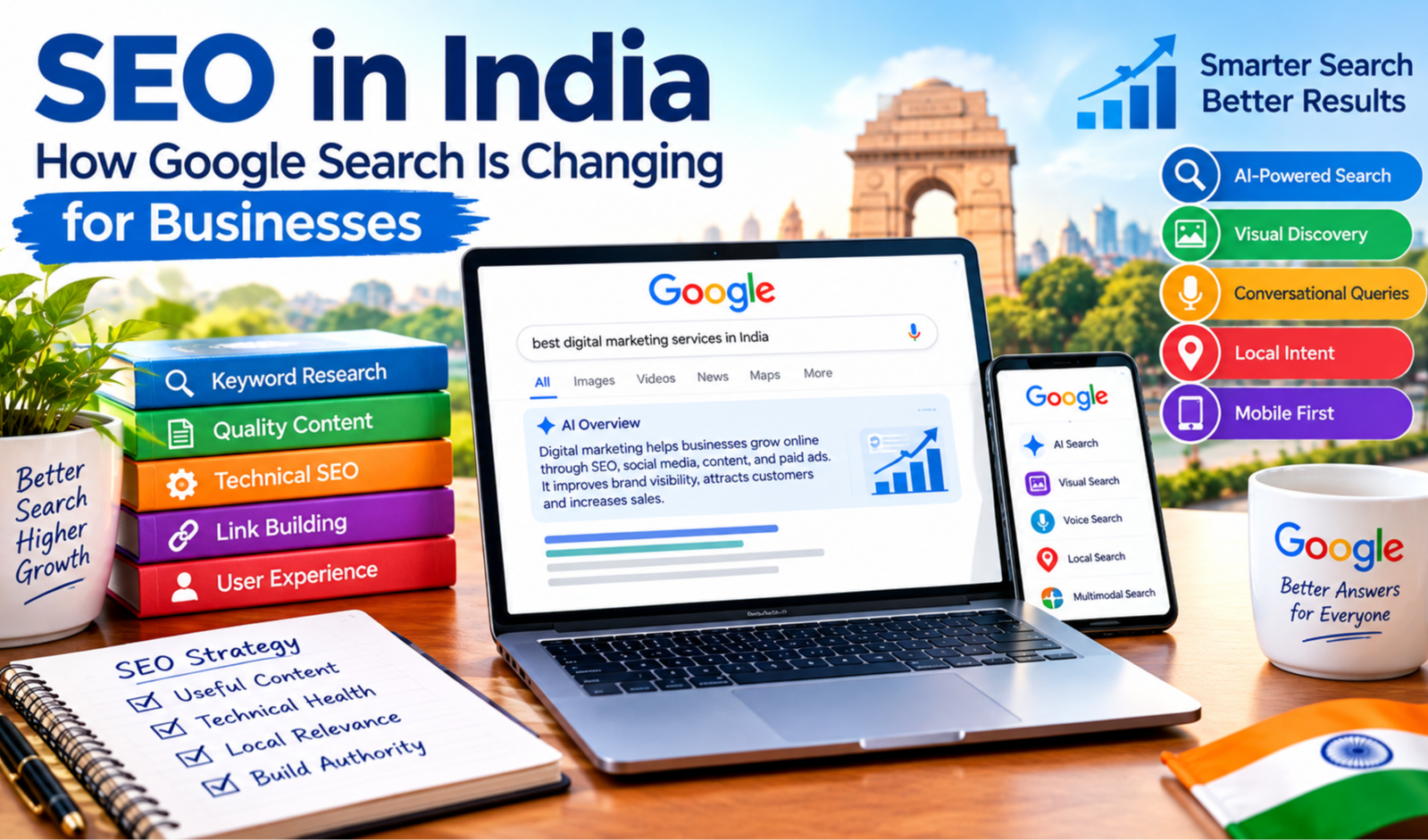
SEO in India How Google Search Is Changing for Businesses Learn how SEO is changing in India as search becomes more visual, AI-powered and focused on useful original content. Search engine optimisation in India is entering a more sophisticated phase. Businesses can no longer depend only on inserting popular keywords into webpages. Search is becoming increasingly visual, conversational and AI-assisted. Google has also expanded reporting around multimodal search, including image-based discovery. Quality Over Keyword Repetition A website should answer the visitor's question clearly. Repeating a keyword dozens of times can make an article difficult to read and does not create genuine value. Google recommends people-first content that provides original information, research, analysis or useful explanations. Technical SEO Still Matters Search engines need to crawl and understand websites. Businesses should therefore monitor indexing, canonical URLs, redirects, broken pages, mobile performance, structured data and site security. Search Is Becoming More Visual Images can now contribute to discovery through visual search experiences. Publishers should therefore use descriptive image filenames, useful ALT text and relevant original images. Indian Businesses Need Local Relevance An Indian business competing globally should not ignore its local audience. Location-specific pages, Indian pricing where appropriate, regional information and locally relevant examples can improve usefulness. Building Long-Term Authority SEO is not a one-week campaign. Businesses should build topic authority through interconnected, genuinely useful content. The objective should be to become a reliable destination for a subject rather than publishing hundreds of unrelated keyword pages. FAQ Can a new Indian website rank on Google?Yes, but ranking depends on many factors including relevance, quality, competition, technical accessibility and authority. Does keyword density improve rankings?There is no recommended keyword-density percentage. Write naturally for users. Should businesses invest in SEO?SEO can be particularly valuable for businesses seeking sustainable organic discovery. SEO India, Google SEO India, search engine optimisation, SEO trends 2026