
Language Settings
Select Website Language

GDPR Compliance

We use cookies to ensure you get the best experience on our website. By continuing to use our site, you accept our use of cookies, Privacy Policy, and Terms of Service.

Filters

Channels
Topics
Other Filters

Philippines Probes China-Linked Remittances in Sara Duterte Case

Philippine authorities are investigating China- and Hong Kong-linked remittances raised during Sara Duterte's impeachment trial. Philippines Probes China-Linked Remittances Raised During Sara Duterte Impeachment Trial By News National Editorial Team The Philippines' National Security Council is investigating allegations involving China- and Hong Kong-linked remittances that were raised during the impeachment trial of Vice President Sara Duterte. National Security Adviser Eduardo Año said authorities were examining information presented during the proceedings after Philippine banks reportedly flagged certain transactions as suspicious and referred them to the Anti-Money Laundering Council for examination. Reuters reported the investigation on October 6. The development adds another layer to the politically sensitive impeachment proceedings involving Duterte, daughter of former President Rodrigo Duterte. What authorities are examining According to reporting from Reuters and Philippine media, the issue concerns remittances allegedly received by a company associated with Duterte's husband from China and Hong Kong. The National Security Council has not established that the transactions were illegal. The investigation is intended to determine the nature and origin of the funds and whether any financial or national-security concerns arise from them. That distinction is important because allegations raised during a political proceeding do not by themselves establish criminal wrongdoing. Impeachment trial continues Duterte's impeachment trial is being conducted by the Philippine Senate sitting as an impeachment court. The House of Representatives previously approved impeachment proceedings against the vice president, while the Supreme Court subsequently addressed challenges concerning the constitutional and procedural questions surrounding the case. The House prosecution panel said in August that it expected the trial to continue through the presentation of evidence, with Duterte's defence given an opportunity to present its case. The proceedings have attracted considerable political attention because they involve one of the country's most prominent political families. Why the financial investigation matters The investigation comes amid broader concerns in the Philippines about foreign influence, political financing and the use of the financial system for potentially suspicious transactions. China is one of the Philippines' major economic partners, but relations between Manila and Beijing have also been strained by disputes in the South China Sea. Any confirmed evidence of illicit financial activity or foreign interference could therefore carry wider political and security implications. However, authorities must distinguish legitimate commercial transactions from unlawful activity through documentary evidence, banking records and formal investigations. Avoiding premature conclusions The current information does not establish that the Duterte family or the company involved committed a crime. The National Security Council's investigation should therefore be treated as an examination of allegations rather than a finding of guilt. Further evidence from the Anti-Money Laundering Council, financial institutions or other government agencies could determine whether the transactions violated Philippine law. News National Verification Confirmed: Philippine authorities are examining information concerning China- and Hong Kong-linked remittances raised during Sara Duterte's impeachment proceedings. Not established: The available reporting does not establish criminal wrongdoing by Duterte or her family. Political context: The investigation is taking place while the vice president's impeachment trial continues. Sources: Philippine National Security Council statements as reported by Reuters; Philippine House of Representatives; Philippine Senate impeachment proceedings. Philippines news 2026, Sara Duterte impeachment, China remittances Philippines, National Security Council Philippines, Philippine politics

Bangalore Freedom Park Protest on October 8 Over SIR Voter Rolls

Bengaluru's Freedom Park will host a People’s Tribunal and protest over SIR voter-roll revision on October 8, with Dhruv Rathee and Prakash Raj expected. Bengaluru Freedom Park Protest on October 8 Over SIR Voter Roll Revision- Dhruv Rathee, Prakash Raj Expected to Attend BENGALURU, October 7, 2026: A protest and People’s Tribunal concerning the Special Intensive Revision (SIR) of electoral rolls is scheduled to take place at Freedom Park in Bengaluru on Thursday, October 8. The programme is being organised with the involvement of the Cockroach Janta Party (CJP) and civil-society groups. Organisers say the event will provide an opportunity for people who claim they have been affected by changes to the electoral rolls to present their concerns publicly. The programme is scheduled to begin at around 10:30 a.m. Dhruv Rathee announced as special guest Actor and activist Prakash Raj has announced that YouTuber and political commentator Dhruv Rathee is expected to attend the Bengaluru event. According to reports, Rathee is expected to join the gathering in support of the campaign calling for changes to the SIR process. Prakash Raj has also appealed to citizens to participate in the event. Other participants expected at the programme include CJP founder Abhijeet Dipke, spokesperson Saurav Das, CJP co-convenor Ashutosh Ranka, Prakash Raj and representatives of youth and civil-society organisations. Focus on voter-list revision The People's Tribunal is expected to focus on concerns surrounding the SIR exercise, particularly claims by some citizens and campaign groups that eligible voters have been incorrectly removed or categorised during the revision process. Reports have said the Bengaluru tribunal will hear concerns involving voters placed in categories such as Absent, Shifted, Dead, Duplicate and Others (ASDDO). These claims are being raised by the organisers and participating groups and should not be treated as independently established evidence of wrongdoing without official verification. The groups involved in the campaign are demanding that disputed deletions be reviewed and that eligible voters be protected from losing their voting rights. Some organisers have also called for the retention of the earlier electoral roll while disputed cases are examined. 'Save democracy' message The event has been promoted as a campaign to protect voting rights and democratic participation. Prakash Raj has described the gathering as a collective effort involving civil society, young organisations and people who say they have been affected by the SIR process. The protest will reportedly be followed by a “Chappal Protest”, which organisers say is also intended to express solidarity with women and concerns about women's safety. The Bengaluru programme follows similar demonstrations and political activity concerning the SIR process in other parts of India. The issue has become a subject of wider public and political debate over electoral-roll accuracy, voter inclusion and the procedures used to revise electoral registers. Citizens planning to attend the Bengaluru event should verify venue, timing and any official restrictions before travelling, as protest arrangements can change. By News National Editorial Team Bengaluru protest October 8, Freedom Park protest, SIR voter list, Dhruv Rathee Bengaluru, Prakash Raj protest, voter rights India, electoral roll revision, Bengaluru news

Quebec Separatist Party Wins Election but Falls Short of Majority

Quebec's Parti Québécois won the provincial election but fell short of a majority, reviving debate over the province's independence. Quebec Separatist Party Wins Provincial Election but Falls Short of Majority By News National Editorial Team Quebec's separatist Parti Québécois (PQ) has returned to power after winning the province's election, bringing the question of Quebec independence back into Canadian political debate. The PQ won the largest number of seats in the 127-member Quebec National Assembly but fell short of the majority required to govern alone. The result represents a major political setback for the outgoing Coalition Avenir Québec government and a significant revival for the separatist movement. The party's victory gives leader Paul St-Pierre Plamondon an opportunity to advance his political programme while also forcing his government to work with opposition parties on legislation. The PQ secured 59 seats according to Associated Press reporting, while other election reporting has placed the final count slightly differently depending on the reporting stage. Independence referendum remains a future issue The election has revived discussion about whether Quebec could eventually hold another referendum on independence from Canada. St-Pierre Plamondon has previously supported holding a referendum, but he has indicated that such a vote would not take place immediately. He has said the question could be considered after U.S. President Donald Trump's current term ends. The PQ's election victory therefore does not mean Quebec is immediately moving toward independence. The party also received only about 28% of the popular vote, according to analysis published after the election. That means the result should not automatically be interpreted as a broad mandate for separation. Ottawa calls for cooperation Canadian Prime Minister Mark Carney has called on Quebec's incoming government to concentrate on economic issues and cooperation with Ottawa. Carney highlighted affordable housing, infrastructure, economic growth and the impact of U.S. tariffs as areas where the federal government and Quebec can work together. He also emphasized what he described as cooperative federalism. The federal government's response reflects concerns that another constitutional confrontation could distract from immediate economic challenges. Quebec is an important part of Canada's economy, with major industries ranging from aerospace and manufacturing to technology, agriculture and energy. What the result means for Canada The election could have consequences beyond Quebec. A renewed independence debate could affect Canada's federal politics, investor confidence and relations between Ottawa and provincial governments. The result also comes amid wider discussions about Canadian national unity. Alberta is separately facing debate over provincial separation, adding another dimension to the country's constitutional conversation. However, Quebec's new government will first have to manage everyday issues such as housing, healthcare, infrastructure and the economy. The immediate challenge for the PQ is therefore to translate its electoral victory into effective government while maintaining its longer-term sovereignty ambitions. News National Verification Confirmed: Parti Québécois won the Quebec election and will form the provincial government. Important clarification: The party did not win a majority and Quebec has not begun an independence process. Key political issue: The PQ continues to support the possibility of a future independence referendum. Sources: Associated Press; The Guardian; Government of Canada/Prime Minister's Office. Quebec election 2026, Parti Québécois, Paul St-Pierre Plamondon, Quebec independence, Canada politics, Mark Carney

Australia Coalition Faces Questions Over Proposed Migration Cuts

Australia's Coalition faces questions over the cost and workforce impact of its plan to cut net overseas migration to 100,000. Australia Coalition Faces Questions Over Cost of Proposed Migration Cuts By News National Editorial Team Australia's opposition Coalition is facing growing questions over the economic impact and independent costings of its proposal to sharply reduce net overseas migration if it wins government. The Coalition has proposed reducing net overseas migration to 100,000 a year for the first two years, followed by targets of 130,000 and 160,000 in subsequent years. Opposition Leader Angus Taylor has described the plan as a major reset of Australia's migration system, but the policy has drawn criticism from business, education and workforce groups concerned about possible labour shortages. Questions over independent costing A central issue is whether the policy has been fully costed by Australia's independent Parliamentary Budget Office. Coalition figures have said they worked with the PBO while arguing that the proposal would be budget neutral. However, reporting on October 7 indicated that the PBO had not completed a full independent costing of the entire policy. That distinction is important because reducing migration affects not only visa numbers but also government revenue, public services, labour supply and population growth. Proposed visa changes The Coalition proposal includes major changes to temporary migration. It would substantially reduce graduate and bridging visas, impose a cap on international student commencements and reduce Australia's humanitarian intake to 10,000 people a year. At the same time, the Coalition says it would increase the proportion of skilled migration, particularly in areas such as construction and regional employment. The policy would therefore not simply reduce migration across the board. Instead, it would attempt to change the composition of migrants entering and remaining in Australia. Aged-care workforce concerns One of the most sensitive areas is aged care. Taylor acknowledged that some aged-care workers could be affected by the proposed changes, while saying transition arrangements would be considered for health workers in regional areas. That has raised concerns because Australia's health and aged-care sectors already depend heavily on migrant workers. Business and education organisations have also warned that a rapid reduction in migration could make it harder for employers to fill vacancies and could affect universities that rely on international students. Government's existing migration path Australia's current budget forecasts already anticipate a substantial decline in net overseas migration. The 2026–27 federal budget forecasts net overseas migration of about 245,000 in 2026–27, followed by 225,000 in later years. The Coalition's proposal would therefore represent a much sharper reduction than the existing government forecast. Why the debate matters Migration is closely connected to Australia's population growth, housing demand, workforce supply and public finances. Supporters of lower migration argue that slower population growth could reduce pressure on housing and infrastructure. Critics counter that an abrupt reduction could worsen shortages in industries that depend on overseas workers. The policy also creates a difficult balance between controlling population growth and maintaining enough skilled workers for essential sectors. The Coalition is expected to provide further details and costings as the next federal election approaches. News National Verification Confirmed: Coalition proposal for net overseas migration of 100,000 for the first two years, followed by 130,000 and 160,000. Key unresolved issue: Full independent costing of the proposed policy. Important context: Australia's federal budget already forecasts declining migration levels. Sources: Australian Broadcasting Corporation; Australian Government Budget papers; Parliamentary Budget Office reporting. Australia migration policy, Coalition migration plan, Angus Taylor, Australia immigration, net overseas migration, aged care workers

Brazil Heads for Lula-Flávio Bolsonaro Presidential Runoff

Brazil's presidential election heads to an October 25 runoff between Lula and Flávio Bolsonaro after neither won outright. Brazil Heads for Lula-Flávio Bolsonaro Runoff After Divisive Presidential First Round By News National Editorial Team Brazil is heading toward a decisive presidential runoff on October 25, after neither President Luiz Inácio Lula da Silva nor Senator Flávio Bolsonaro secured enough votes to win the presidency outright in the first round. The result has produced a closely contested second-round campaign and created uncertainty over the future direction of Brazil's economic, environmental and foreign policies. According to election reporting, Bolsonaro finished ahead of Lula in the first round, with more than 56 million votes compared with about 53.6 million for the incumbent president. Neither candidate crossed the threshold required for an outright victory, sending the election to a second round. Reuters reported that Lula's campaign has begun changing its strategy ahead of the October 25 vote as it seeks support from voters who backed smaller candidates or did not participate in the first round. A major political test The election represents a major political test for Lula, who is seeking another term after returning to the presidency. Flávio Bolsonaro, a senator and son of former president Jair Bolsonaro, has emerged as the main challenger. His first-round performance exceeded some expectations and has strengthened the political influence of the Bolsonaro family and its allies. The result also reflects the continuing political polarization that has shaped Brazil since the rise of Jair Bolsonaro. Economy, security and the Amazon The runoff is expected to focus heavily on issues including crime, the economy, social programmes, public security and environmental policy. The Amazon rainforest is particularly important because Brazil contains the largest portion of the Amazon basin. The two political camps have different approaches to environmental regulation and development. Environmental campaigners are watching the election closely because the result could affect policies concerning deforestation, Indigenous territories, agriculture and infrastructure development. Lula has promoted stronger environmental protection during his current administration, while Bolsonaro's political movement has generally favoured greater flexibility for economic activity in the Amazon region. Voters who did not choose either finalist One of the biggest challenges for both campaigns is attracting voters who supported other candidates or stayed away from the polls. Reuters reported that Lula's campaign is attempting to improve its outreach to younger voters and women while changing its messaging ahead of the runoff. The second round therefore will not simply be a repeat of the first. Both candidates have an opportunity to build broader coalitions. What happens next The presidential runoff is scheduled for October 25. The campaign period is expected to bring sharper debate over economic policy, public security, environmental protection and Brazil's position in international affairs. Because the first round was closely contested, turnout and voter movement between the first and second rounds could be decisive. The election will ultimately determine whether Brazil continues under Lula's left-leaning administration or moves toward a government led by the Bolsonaro political movement. News National Verification Confirmed: Brazil's presidential election has entered a second round between Lula and Flávio Bolsonaro. Runoff date: October 25, 2026. Key issues: Economy, security, social programmes, Amazon policy and Brazil's international position. Sources: Brazil election reporting; Associated Press; Reuters; Brazilian election authorities. Brazil election 2026, Lula, Flavio Bolsonaro, Brazil presidential election, Brazil runoff, Amazon policy, Brazilian politics

South Korea Unveils $747 Billion Green Transformation Plan

South Korea unveils a $747 billion green transformation strategy through 2035 covering renewable energy, industry and clean technology. By News National Editorial Team South Korea has unveiled a major long-term energy and industrial transformation programme that aims to invest around 1,000 trillion won (about US$745–747 billion) by 2035 to accelerate decarbonisation, expand clean energy and strengthen the country's position in emerging green industries. The government announced the Korea Green Transformation, known as K-GX, on October 7 as part of a broader strategy to combine climate policy with industrial competitiveness and economic growth. The programme includes government fiscal support and policy financing, while the private sector is expected to make additional investments. The government plans to provide about 1,000 trillion won in combined fiscal and policy-financing support through 2035. Private companies are expected to contribute another 220 trillion won, according to South Korean government-linked reporting. Renewable energy expansion A central part of the strategy is a rapid increase in renewable-energy capacity. The plan targets 100 gigawatts of renewable-energy capacity by 2030, alongside efforts to expand electricity infrastructure and develop cleaner energy supply chains. The government also wants electric and hydrogen-powered vehicles to account for more than 70% of new vehicle sales by 2035. South Korea is seeking to reduce emissions from major industrial sectors while protecting the competitiveness of industries that remain important to its export economy. Steel and heavy industry Steel, petrochemicals, cement and semiconductor manufacturing are among the sectors expected to receive particular attention. One example is POSCO's plan to develop a hydrogen-based steelmaking demonstration facility in Pohang. The company has announced plans for a 300,000-tonne-per-year HyREX demonstration facility by 2028, linking hydrogen supply, low-carbon steel production and industrial infrastructure. Hydrogen-based steelmaking is being explored as a way to reduce dependence on coal in the production process, although commercial-scale deployment remains technically and economically challenging. Green technology as an economic strategy The South Korean government is presenting K-GX not simply as an environmental programme but as an industrial strategy. The plan includes support for batteries, hydrogen technology, green steel, renewable energy and small modular reactors. Officials also want to develop domestic clean-energy supply chains and commercialise newer solar technologies. President Lee Jae Myung has described the transformation as an opportunity for South Korea to become a leader in emerging green markets rather than simply responding to international climate regulations. Challenges ahead The scale of the programme means implementation will be as important as the headline investment figure. South Korea must secure reliable low-carbon electricity, develop transmission infrastructure, build competitive hydrogen supply chains and reduce the cost of low-carbon industrial technologies. The country also faces competition from China, Europe, Japan and the United States in clean-energy manufacturing and advanced industrial technology. If successfully implemented, K-GX could therefore influence not only South Korea's emissions profile but also the country's position in global clean-technology supply chains. News National Verification Confirmed: South Korea announced the K-GX strategy and a 1,000-trillion-won government support framework through 2035. Additional confirmed target: Private-sector investment of approximately 220 trillion won. Key areas: Renewable energy, green steel, batteries, hydrogen, electric vehicles and industrial decarbonisation. Sources: South Korean government/Yonhap reporting; Reuters; Korea Economic Daily; POSCO information. South Korea green energy, K-GX, Korea Green Transformation, renewable energy Korea, South Korea climate plan, green steel, hydrogen

Seven Injured in Poland School Knife Attack, 19-Year-Old Arrested

Seven people were injured in a knife attack at a school in Ostrołęka, Poland. A 19-year-old student was arrested as police investigate. By News National Editorial Team At least seven people were injured in a knife attack at a vocational school in Ostrołęka, north of Warsaw, on October 7, according to Polish authorities and local officials cited by international news organizations. A 19-year-old male suspect was arrested after the incident at Vocational School Complex No. 4. Emergency services responded to the school and the situation was brought under control. Reuters, citing Polish broadcaster RMF FM, reported that two of the injured people were seriously hurt. The suspect was identified as a student at the school. Authorities have not yet established a publicly confirmed motive for the attack. Investigation underway Police are investigating the circumstances surrounding the incident, including what led to the attack and the relationship between the suspect and the victims. Ostrołęka Mayor Paweł Niewiadomski confirmed that emergency services had responded and that the immediate situation had been brought under control. The investigation is expected to establish how the weapon entered the school, what happened immediately before the attack and whether anyone else was involved. School safety concerns The incident has renewed attention on safety in Polish schools, although it would be premature to draw broader conclusions from a single attack while investigators are still establishing the facts. Schools in Poland have procedures for responding to dangerous objects and violent behaviour. Local school regulations, for example, prohibit students from possessing knives and other dangerous weapons on school grounds. The attack also highlights the importance of rapid coordination between schools, police, emergency medical services and local authorities when serious violence occurs. No speculation over motive Because the investigation is at an early stage, claims about the suspect's motive or psychological condition should not be treated as established facts. News National is therefore reporting only information that has been independently reported or attributed to authorities and established media sources. Further details are expected as Polish investigators continue examining the incident. News National Verification Confirmed/Reported: Seven people injured; 19-year-old suspect arrested; attack occurred at a vocational school in Ostrołęka. Not yet established: Motive and full circumstances surrounding the attack. Sources: Associated Press; Reuters/RMF FM; Ostrołęka municipal information; Polish school safety regulations. Poland school attack, Ostroleka knife attack, Poland news, school violence Poland, Polish police, Ostroleka

Japan Antitrust Regulator Raids Four Major Beer Makers

Japan's Fair Trade Commission raids four major beer makers over suspected price coordination and possible antimonopoly-law violations. Japan Antitrust Regulator Raids Four Major Beer Makers Over Suspected Price Cartel By News National Editorial Team Japan's Fair Trade Commission has launched an investigation into four of the country's largest beer companies over suspected antimonopoly-law violations, creating a major regulatory challenge for the domestic brewing industry. The companies involved are Asahi Breweries, Kirin Brewery, Suntory Spirits and Sapporo Breweries. Japan's Fair Trade Commission carried out raids at the companies on October 7 as part of its investigation into suspected coordination of beer and other alcoholic-beverage prices. Japanese broadcaster Nippon TV reported that investigators are examining whether the companies coordinated the timing and scale of price increases through discussions among sales representatives. The suspected conduct could involve restrictions on competition under Japan's Antimonopoly Act. The investigation concerns alleged conduct rather than an established violation. The companies have not been found guilty, and the Fair Trade Commission's investigation is continuing. Four major companies under scrutiny The four companies collectively account for more than 90% of Japan's domestic beer market, according to Reuters reporting. Their combined market position means that any evidence of coordinated pricing could have broader implications for consumers, wholesalers and the Japanese beverage industry. Suntory confirmed that it had been subject to an on-site inspection by the Fair Trade Commission concerning suspected violations of Japan's Antimonopoly Act and said it would fully cooperate with the investigation. The other companies also confirmed the inspections and said they intended to cooperate with investigators. Market reaction The investigation immediately affected investor sentiment. Shares of major listed brewers declined during trading on October 7, with Sapporo, Kirin and Asahi among those affected. The market reaction reflects concerns about possible financial penalties, reputational damage and the potential effect of any regulatory action on future pricing practices. Japan's competition authorities have increased scrutiny of suspected coordination between major companies in several consumer sectors. The latest beer investigation therefore adds to wider questions about competition and pricing in concentrated industries. What happens next The Fair Trade Commission will examine documents and other evidence obtained during the raids. Depending on what investigators find, the case could lead to further administrative action or, potentially, a criminal complaint. At this stage, however, the allegations remain under investigation. For consumers, the case is significant because beer prices have already been affected by higher production and raw-material costs. The investigation will determine whether some price changes were independently decided or involved unlawful coordination. News National Verification Confirmed: Japan's Fair Trade Commission conducted raids involving four major beer companies. Under investigation: Alleged coordination of prices and other conduct potentially violating Japan's Antimonopoly Act. Important: No final finding of wrongdoing has been established at this stage. Sources: Japan Fair Trade Commission reporting; company statements; Nippon TV; Jiji Press/Nippon.com; Reuters. Japan beer cartel, Japan Fair Trade Commission, Asahi, Kirin, Suntory, Sapporo, Japan antitrust investigation

Mercedes-Benz China Sales Fall 31% as EV Demand Grows in 2026

Mercedes-Benz China sales fell 31% in Q3 2026, while electric-vehicle sales grew strongly amid intense market competition. China Weak Demand Pressures Mercedes-Benz Sales as Electric Vehicle Deliveries Rise By News National Editorial Team Weak demand and intense competition in China continued to weigh on Mercedes-Benz's global vehicle business during the third quarter of 2026, even as the German luxury automaker reported strong growth in electric-vehicle sales. Mercedes-Benz said global sales in its core car business fell 8% year on year during the July-September quarter to about 407,200 vehicles. Sales in China dropped 31% to 86,800 vehicles. China remains one of Mercedes-Benz's most important markets, making the decline significant for the company's overall performance. The company has previously identified intense competition, subdued demand and model changes as factors affecting its Chinese business. Its second-quarter reporting also showed a 30% year-on-year decline in China sales. Electric vehicles show a different trend The overall sales decline contrasts with stronger demand for Mercedes-Benz electric vehicles. The company reported a substantial increase in battery-electric vehicle sales during the third quarter. Reuters reported a 52% rise in electric-vehicle sales, while other reporting based on company figures put the increase at 61% depending on the vehicle category and reporting period used. The contrasting results highlight the transition taking place in the global automobile industry: traditional premium-car sales are facing pressure in China, while demand for newer electric models is growing. Mercedes-Benz's Chinese website continues to offer a broad range of petrol, hybrid and fully electric models, showing that the company is maintaining a diversified product strategy in the market. Competition remains a major challenge China's automobile market has become increasingly competitive, particularly in electric vehicles, where domestic manufacturers have expanded their product ranges and technology offerings. Mercedes-Benz has therefore been investing in new models and adjusting its product portfolio. The company said in its 2026 outlook that challenging conditions in China were one reason it expected overall vehicle sales to finish slightly below the previous year's level. For Mercedes-Benz, the challenge is now twofold: defend its position in China's premium-car market while accelerating the transition toward electric vehicles. What it means for the wider industry China's importance to international automobile manufacturers means the latest Mercedes-Benz figures provide another indication of the pressure facing premium global brands. The combination of weaker demand, intense competition and rapid electrification is forcing established manufacturers to reconsider pricing, product launches, technology investment and manufacturing strategies. For consumers, the competition could mean more electric models and greater technology choices, while manufacturers face increasing pressure to deliver vehicles that compete with both established luxury brands and rapidly expanding Chinese EV companies. News National Verification Verified: Mercedes-Benz's third-quarter global sales decline, China sales decline and reported growth in electric-vehicle sales. Company context: Mercedes-Benz has previously cited difficult Chinese market conditions and model changes. Sources: Mercedes-Benz Group; Reuters; Mercedes-Benz China. Mercedes-Benz China sales, China auto market, Mercedes EV sales, electric vehicles China, luxury cars, Mercedes-Benz 2026

Qatar Enters 2036 Olympic Race After IOC Confirms Interested Parties

Qatar advances its 2036 Olympic bid after the IOC confirms it among interested parties competing to host the Games. Qatar Confirmed Among Interested Parties for 2036 Olympic and Paralympic Games By News National Editorial Team Qatar has officially entered the next stage of its ambition to host the 2036 Olympic and Paralympic Games after the International Olympic Committee confirmed the country among the interested parties in the revised host-selection process. The Qatar Olympic Committee announced on October 6 that Qatar had been included in the IOC's confirmed list of interested parties. The announcement marks another step in Doha's effort to bring the world's largest multi-sport event to the Middle East. Qatar's bid is being led by the Doha 2036 Olympic and Paralympic Bid Committee, headed by CEO Fatima Sultan Al Kuwari. The committee says the proposal will build on Qatar's experience hosting major international sporting events. The country previously hosted the 2022 FIFA World Cup and has developed extensive sports infrastructure in Doha and other parts of the country. A different Olympic bidding process The 2036 selection process is different from older Olympic host competitions. The IOC is using a continuing dialogue model in which interested parties work with the organization before a final host is selected. Qatar has already participated in the dialogue process and says its next objective is to present a detailed proposal addressing venues, transport, accommodation, sustainability and other requirements. The IOC has also identified several other countries interested in hosting the 2036 Games, meaning Qatar faces significant international competition. Reuters reported that India, Germany, Hungary, Turkey, South Africa and South Korea are also among the countries involved in the preliminary process. Why Qatar wants the Games Qatar's Olympic bid is being presented as more than a sporting project. Officials argue that hosting the Games would create a long-term sporting, economic and social legacy while giving greater representation to the Arab region. The Qatar Olympic Committee says the proposal is designed around existing infrastructure and a future-ready approach, while emphasizing sustainability and athlete experience. However, being an interested party does not mean Qatar has been selected as the host. The process still involves further assessment and dialogue before the IOC makes its final decision. News National Verification Confirmed: Qatar's inclusion on the IOC's list of interested parties. Important clarification: Qatar has not won the right to host the 2036 Olympics; it remains part of the selection process. Sources: Qatar Olympic Committee; Qatar News Agency; Reuters. Qatar 2036 Olympics, Doha Olympics bid, Qatar Olympic Committee, IOC 2036, Qatar Paralympics, Olympic bid

France Student Protests Expand Over Education Funding and School Conditions

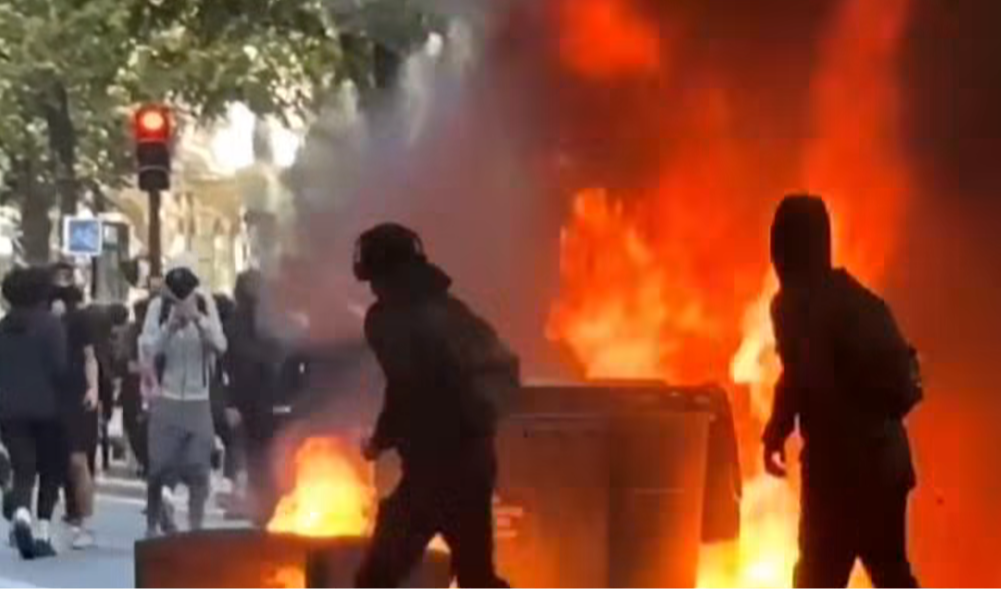
France faces growing student protests over education funding, school conditions, staffing shortages and police response. France High School Protests Expand Nationwide Over Education Funding and School Conditions By News National Editorial Team France is facing a growing nationwide student protest movement over the condition of public education, with high school students and supporters demanding additional funding, better facilities and more staff. On October 6, more than 266,000 people participated in demonstrations across France according to official figures, while organizers estimated a significantly higher turnout. Paris was one of the main centers of the demonstrations, where clashes between protesters and police resulted in arrests and the use of tear gas. The movement began with student demonstrations in the Paris region in September and has since expanded into a broader campaign involving students, teachers, parents, unions and other supporters. Protesters have raised concerns about overcrowded classrooms, shortages of teachers and deteriorating school facilities. Student groups are also demanding changes to the university admissions system and greater educational equality. The French government has faced criticism over the policing of the demonstrations, particularly after injuries involving minors. Officials have defended the police response while saying investigations should examine individual incidents where misconduct may have occurred. Government opens student dialogue The education ministry has introduced a separate response aimed at opening dialogue with students. Beginning October 7, French high schools are holding a half-day dedicated to student democracy, allowing students to discuss difficulties and expectations within their schools. The ministry has also opened a national consultation through the Agora platform, running from October 5 to October 23. This means the government is pursuing both a policing response to disruptive demonstrations and an institutional dialogue process inside schools. Why the protests matter The demonstrations come at a politically sensitive time for France, with education, public services and living conditions becoming increasingly important political issues. The size of the mobilization also indicates that the dispute has moved beyond individual school complaints. It has become part of a wider debate about public investment, educational inequality and the government's response to young people's concerns. Student organizations have indicated that demonstrations could continue if they do not see concrete measures from the government. News National Verification Verified: Nationwide demonstrations, official participation figures, government consultation and the education ministry's student-dialogue initiative. Points requiring attribution: Protest organizers' higher attendance estimates and allegations concerning individual police incidents. Sources: French Ministry of Education; Associated Press; Le Monde. France student protests, French education protests, France schools, education funding, Paris protests, French students

Singapore Faces Challenge Meeting 6 GW Clean Power Target by 2035

Singapore aims to import 6 GW of low-carbon electricity by 2035, but project financing and construction delays could threaten the target. Singapore Faces Challenge Meeting 2035 Low-Carbon Electricity Import Target By News National Editorial Team Singapore may face difficulties achieving its target of importing around 6 gigawatts of low-carbon electricity by 2035, according to a new assessment by energy consultancy Wood Mackenzie. The target is a major part of Singapore's strategy to reduce emissions while maintaining energy security in a country with limited domestic renewable-energy resources. Singapore's Energy Market Authority says the country aims to import around 6 GW of low-carbon electricity by 2035, equivalent to about one-third of projected electricity demand at that time. However, Wood Mackenzie has warned that Singapore's approved projects face challenges in moving from regulatory approval to actual construction and commercial operation. Reuters reported that no projects covered by the latest assessment had yet reached financial closure or begun construction. More than 9 GW conditionally approved Singapore's government has made substantial progress in developing potential cross-border electricity imports. The Ministry of Energy and Trade and Industry said in September 2026 that Singapore had awarded Conditional Approvals to 13 projects representing 9.25 GW of potential low-carbon electricity imports from Australia, Cambodia, Indonesia, Malaysia and Vietnam. Six Indonesian projects had progressed to Conditional Licences. The figures show that Singapore has approved more potential capacity than the 6 GW target. But conditional approval does not automatically mean that a project will be built and begin supplying electricity. Projects must still overcome technical, regulatory, financing and commercial challenges. Why Singapore needs imported electricity Singapore has very limited land for large-scale renewable-energy development. The government therefore views regional electricity imports as an important way to expand access to cleaner power. The Energy Market Authority says regional power connections can also support the wider ASEAN Power Grid and encourage renewable-energy development in neighbouring countries. Singapore is also continuing to rely heavily on natural gas while developing other energy sources. The Ministry of Energy, Trade and Industry says natural gas currently supplies around 95% of the country's electricity generation. Indonesia and regional connections Indonesia is an important part of Singapore's plans. Several Indonesian projects have already advanced through Singapore's regulatory process, while Singapore is also working with Malaysia, Cambodia, Vietnam and Australia on other potential electricity-import routes. The approach is intended to diversify Singapore's electricity supply instead of relying on a single external source. The challenge ahead Singapore's 2035 target is therefore not simply a question of approving enough projects. Developers must secure financing, negotiate commercially viable power-purchase arrangements, obtain approvals in source and transit countries, and construct the necessary generation and transmission infrastructure. The Wood Mackenzie assessment highlights the gap between planned capacity and operational capacity. Singapore's government continues to state that it is progressing projects and will balance energy security, sustainability and cost competitiveness as the electricity-import programme develops. News National Verification Confirmed: Singapore's 2035 target is approximately 6 GW of low-carbon electricity imports; 9.25 GW of potential capacity has received Conditional Approvals as of August 2026. Assessment: Wood Mackenzie has warned about delays between approvals and actual project development. Important clarification: Conditional approval does not mean the electricity is already being imported. Sources: Singapore Energy Market Authority; Singapore Ministry of Energy and Trade and Industry; Reuters/Wood Mackenzie. Singapore clean energy, Singapore electricity imports, low carbon electricity, Singapore 2035 energy target, ASEAN Power Grid

Russia Strikes Ukraine With Missiles and Drones, Killing Civilians

Russia launches major missile and drone attacks across Ukraine, killing civilians and damaging homes and critical infrastructure. Russian Missile and Drone Strikes Kill Civilians Across Ukraine as Energy Infrastructure Is Hit By News National Editorial Team Russia launched a major wave of missile and drone attacks against Ukraine on October 7, killing civilians and damaging residential, industrial and energy infrastructure in several parts of the country. Ukrainian authorities said the attacks affected multiple cities, including Kyiv, Pryluky, Oleksandria and Kremenchuk. Reuters reported that at least 15 people were killed and around 40 injured in the strikes. In Pryluky, a missile hit an apartment building, killing nine people, including three children. The attacks came after Ukrainian authorities had warned that Russia was preparing another large-scale strike. In a statement on October 6, President Volodymyr Zelenskyy said Ukrainian intelligence had updated information about preparations for a major Russian operation and urged residents to follow air-raid warnings. Ukraine said its air-defence forces intercepted a large proportion of the incoming drones, although the attacks still caused significant damage. Energy infrastructure was among the facilities affected, increasing concerns about the country's electricity supply as the colder season approaches. Emergency power restrictions were reported in several regions following the attacks. Russia's Defence Ministry said its forces had targeted military-industrial facilities. Reuters reported that Russia identified the Ukrainian company Fire Point, which produces missiles, among the targets it said were struck. Ukraine, meanwhile, accused Russia of deliberately targeting civilian and critical infrastructure. The competing accounts highlight the importance of independent verification in reporting the conflict. Statements from both governments are being treated as claims unless supported by independent evidence. Black Sea security concerns The latest strikes also come amid increasing concern over attacks involving civilian shipping in the Black Sea. President Zelenskyy said Ukraine was investigating an attack involving two civilian vessels in Bulgarian waters. He described the incident as part of a broader pattern of attacks affecting civilian shipping and Ukrainian ports. The Black Sea remains strategically important for Ukraine's exports, regional security and international trade. Any expansion of attacks against civilian shipping could have consequences beyond the immediate battlefield. Pressure for additional air defence Ukraine has repeatedly asked its international partners for additional air-defence systems, particularly systems capable of intercepting ballistic missiles. The latest attack again demonstrates the challenge facing Ukraine: even when a substantial percentage of incoming drones and missiles are intercepted, large-scale attacks can still overwhelm defences and cause casualties and infrastructure damage. The continued attacks also come as diplomatic efforts surrounding the war remain uncertain, with both Russia and Ukraine maintaining sharply different positions over the conflict's future. News National Verification Confirmed/Reported: Large-scale Russian missile and drone strikes, civilian casualties, infrastructure damage and Ukrainian air-defence operations. Official Ukrainian source: Office of the President of Ukraine. Russian position: Russia says its attacks target military-industrial facilities. Sources: Reuters; Office of the President of Ukraine. Russia Ukraine war, Ukraine attacks, Kyiv, Russian missiles, drones, Ukraine energy infrastructure, Zelenskyy

Yemen Conflict Escalates as Houthi Attacks Hit Aden Airport and Saudi Arabia

Yemen fighting intensifies as Houthi attacks target Aden airport and Saudi Arabia, raising concerns over regional security and Red Sea shipping. Yemen Conflict Escalates as Houthi Attacks Target Aden Airport and Saudi Arabia By News National Editorial Team Fighting in Yemen has intensified sharply, with Houthi forces launching attacks involving missiles and drones against Aden International Airport and targets in Saudi Arabia, while Saudi-backed forces continue military operations along Yemen’s western coast. The escalation marks another serious deterioration in Yemen’s security situation and has raised concerns about the wider consequences for commercial aviation, maritime trade and regional energy markets. According to Yemen’s Transport Ministry, Houthi forces attacked Aden International Airport with ballistic missiles and explosive-laden drones on October 7. One missile reportedly landed close to the airport runway shortly before a flight from Cairo was due to arrive. The aircraft was diverted to Jeddah in Saudi Arabia, while aircraft at Aden airport were moved away from the immediate danger area. The Houthis said their operation was aimed at military supplies associated with Saudi-backed forces. Their claim about the target could not independently be verified. At the same time, Saudi Arabia said its forces intercepted a ballistic missile launched toward the area north of Riyadh. Houthi statements also claimed attacks against airports and military facilities in Saudi Arabia. Saudi authorities have previously reported interceptions of missiles and drones launched by the Houthis. The latest fighting is connected to a broader military campaign around Yemen’s Red Sea coast and the strategically important Bab el-Mandeb Strait. Saudi-backed Yemeni forces have been attempting to regain territory from the Houthis, including areas around Mocha and the western part of Taiz province. The Bab el-Mandeb is particularly important because it links the Red Sea with the Gulf of Aden and provides a major route for international shipping. Any sustained deterioration around the waterway could increase risks for commercial vessels and add pressure to global transport and energy costs. Saudi Arabia has also reported military operations against Houthi positions and weapons facilities in the coastal region. The Saudi-led coalition said a recent naval operation in Al-Hudaydah targeted weapons depots, explosive-laden boats and naval mines that it said posed a threat to maritime navigation. Why the escalation matters Yemen’s conflict is no longer only a domestic security issue. The country sits beside one of the world's most important maritime corridors, while the wider Middle East is already experiencing heightened military and energy-market tensions. The latest attacks also demonstrate how civilian infrastructure can become exposed when fighting spreads. The incident at Aden airport forced the diversion of a passenger aircraft and temporarily disrupted normal airport operations. The situation remains fluid, and claims from the opposing sides should be treated carefully until independently verified. News National Verification Confirmed/Reported: Aden airport attack, aircraft diversion, Saudi interception claim and continuing coalition military operations. Claims requiring caution: Specific Houthi target claims and battlefield claims made by either side. Sources: Yemen Transport Ministry statements as reported by Reuters and Al Jazeera; Saudi Press Agency; Associated Press. Yemen conflict, Houthis, Aden airport, Saudi Arabia, Red Sea, Bab el-Mandeb, Yemen war, Middle East news

RBI Raises Repo Rate to 5.5% as Inflation and Oil Risks Rise

RBI raises the repo rate to 5.5% as inflation, crude oil prices and global economic risks put pressure on India's economy. RBI Raises Repo Rate to 5.5% as Inflation and Global Energy Risks Increase By News National Editorial Team The Reserve Bank of India has raised its benchmark repo rate by 25 basis points to 5.50%, marking the first increase in the policy rate since February 2023. The decision comes as India faces renewed inflationary pressure, higher global energy prices and uncertainty linked to geopolitical developments. The RBI's latest move represents a shift away from the accommodative policy environment that followed its earlier rate-cut cycle. Reuters reported that the central bank also moved its policy stance from “neutral” toward calibrated tightening, signalling that further action could depend on developments in inflation and economic growth. India's consumer inflation reached 4.82% in August, remaining above the RBI's medium-term target of 4%. The central bank raised its inflation forecast while continuing to expect strong economic growth. Reuters reported an updated inflation projection of 5.2% and a GDP growth expectation of 7.1% for the financial year. The rate decision is particularly significant because global oil prices have risen sharply amid renewed conflict and supply concerns in the Middle East. Higher crude prices can increase India's import bill and place pressure on transportation costs, inflation and the Indian rupee. The RBI therefore faces a difficult balancing act: maintaining economic growth while preventing inflation expectations from becoming entrenched. Impact on borrowers An increase in the repo rate can eventually translate into higher borrowing costs, particularly for loans linked to external or repo-based benchmarks. Home-loan, business-loan and other floating-rate borrowers could therefore face higher interest costs if banks transmit the policy increase to lending rates. However, the actual impact on individual borrowers will depend on the benchmark used by their lender, the timing of rate resets and the terms of their loan. Impact on savers Higher policy rates can also support deposit rates over time as banks adjust their funding strategies. For savers, this could improve returns on some fixed deposits and other interest-bearing products, although the effect varies between banks and financial instruments. Why the RBI acted now The central bank is responding to a combination of domestic inflation and international risks. Global energy-market volatility is especially important for India because the country remains heavily dependent on imported crude oil. A prolonged rise in oil prices can affect inflation, the current account and the currency. At the same time, India's economy continues to show strong growth, allowing the RBI greater room to focus on price stability without necessarily having to prioritise emergency growth support. The latest decision therefore represents a significant change in India's monetary-policy direction and will be closely watched by banks, businesses, investors and households. News National Verification Confirmed: RBI repo rate raised by 25 basis points to 5.50%. Key supporting source: Reserve Bank policy decision as reported by India's public broadcaster Akashvani and Reuters. Economic context: Inflation, crude-oil prices, currency pressure and global geopolitical risks. Sources: Reuters; Akashvani News; Reserve Bank of India policy information. RBI repo rate, RBI rate hike 2026, India inflation, Indian economy, crude oil prices, monetary policy, RBI