Explore the Charminar Bhagyalakshmi Temple controversy, its disputed history, legal issues, political involvement and impact on Hyderabad's communal harmony.
Introduction
Hyderabad's historic Charminar is more than a tourist attraction. It is one of India's most recognisable historical monuments and a symbol of the city's cultural, architectural and commercial identity.
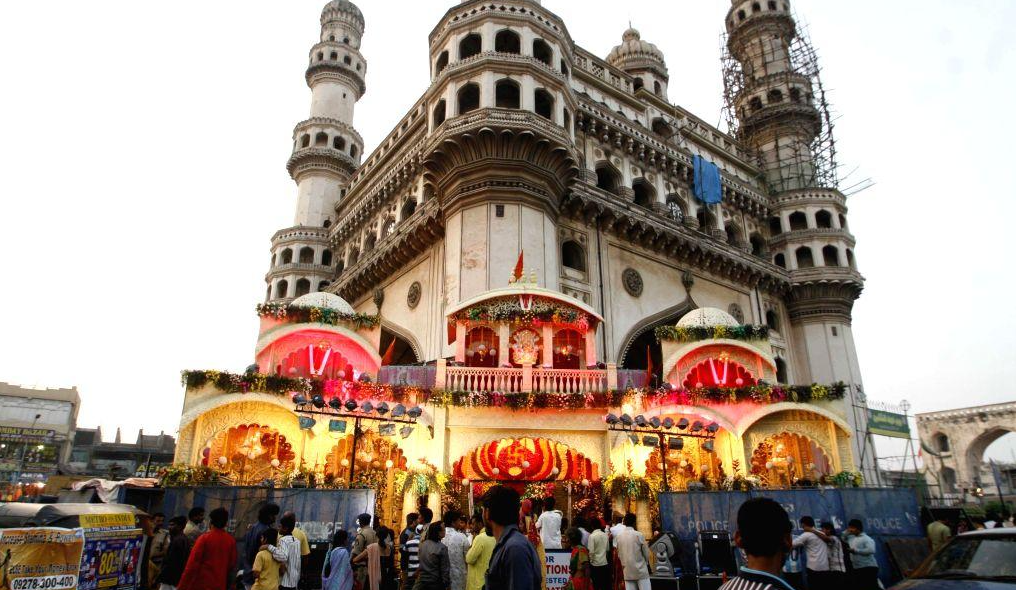
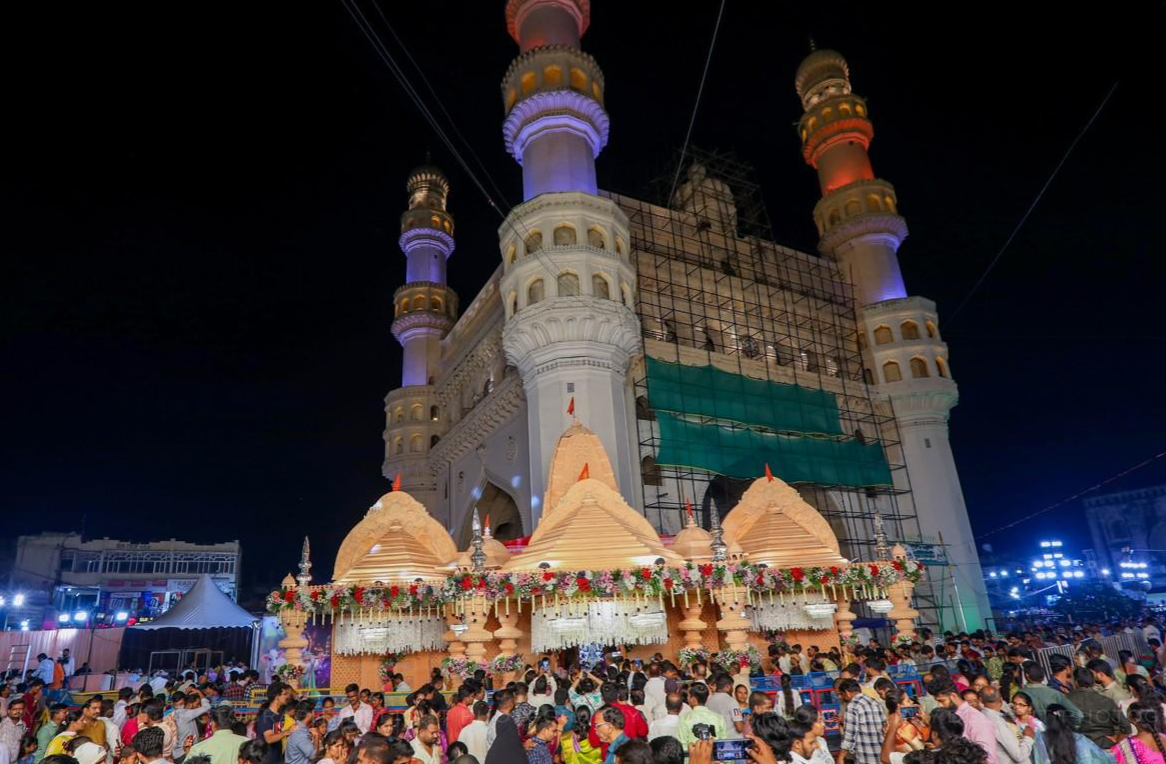
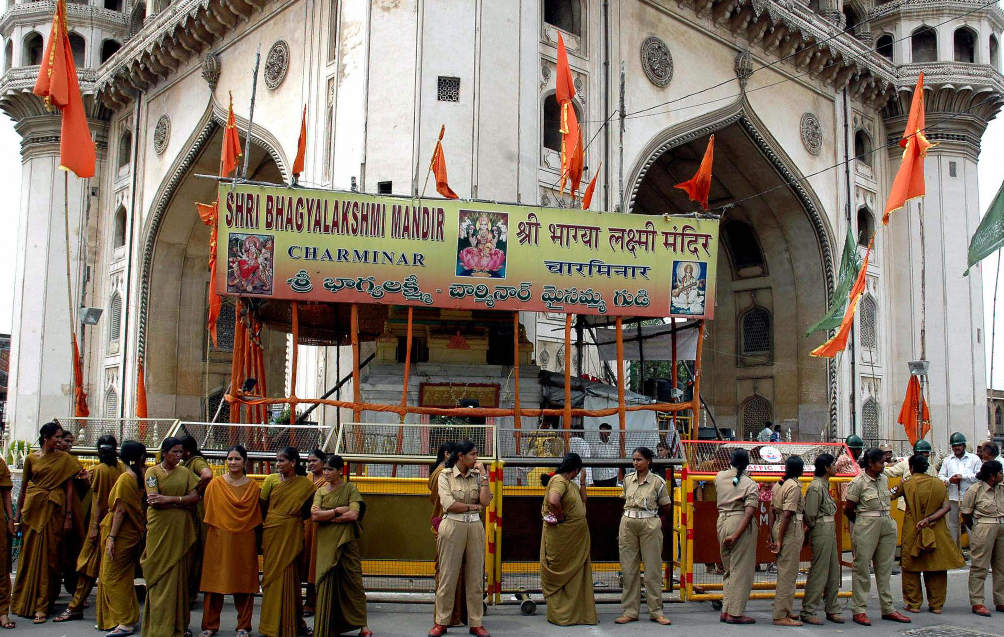
However, the area surrounding Charminar periodically becomes the centre of religious and political controversy because of the Bhagyalakshmi Temple, situated beside one of the monument's minarets.
Questions about the temple's historical origins, its legal status, construction restrictions and the protection of the monument have repeatedly brought political leaders, religious representatives and government authorities into the debate.
The central question is not simply whether a temple should exist beside a historical monument. It is how religious freedom, historical conservation, the rule of law and communal harmony can be protected together.
Why does this controversy continue to return, and are political interests making an already sensitive issue more complicated?
1. A dispute rooted in history
Charminar was built in 1591 during the reign of Muhammad Quli Qutb Shah, the founder of Hyderabad. The monument is protected by the Archaeological Survey of India (ASI).
The historical origins of the Bhagyalakshmi Temple beside its southeastern minaret remain disputed.
An important development came in April 2013, when the ASI responded to an RTI application concerning the temple. According to the response reported by The Times of India, the ASI described the temple as an unauthorised construction under the applicable monument-protection legislation.
The ASI also supplied photographs from 1959, 1980 and 2003. The 1959 photograph reportedly did not show the temple structure visible in later photographs.
Hyderabad News - Times of India+1
These records are significant because they raise questions about when the structure appeared and whether subsequent changes complied with heritage regulations.
However, historical claims should be assessed using official records rather than political speeches or social media posts.
2. What did the High Court decide?
The controversy became particularly serious in October and November 2012, when allegations of construction and expansion near the temple triggered protests.
On 5 November 2012, the Andhra Pradesh High Court directed the authorities to maintain the status quo concerning the temple.
The court made it clear that construction threatening the historic Charminar would not be permitted.
The temple committee, meanwhile, maintained that its work was intended to repair the roof rather than expand the structure.
The court's intervention was intended to prevent changes to the disputed site and reduce tensions.
The New Indian Express+1
This distinction is important: a status quo order should not be interpreted as a blanket prohibition on religious worship, nor should it be treated as permission for unrestricted construction.
The current implementation of the court's directions deserves transparent examination by the relevant authorities.
3. Why are political leaders visiting the temple?
According to an India Today report published on November 10:
-
Union Home Minister Amit Shah visited the temple on November 2.
-
Several BJP leaders visited during the festival.
-
BRS representatives also offered prayers.
-
Telangana Governor Shiv Pratap Shukla and his wife visited the shrine.
-
Large numbers of devotees gathered for the distribution of silver coins.
-
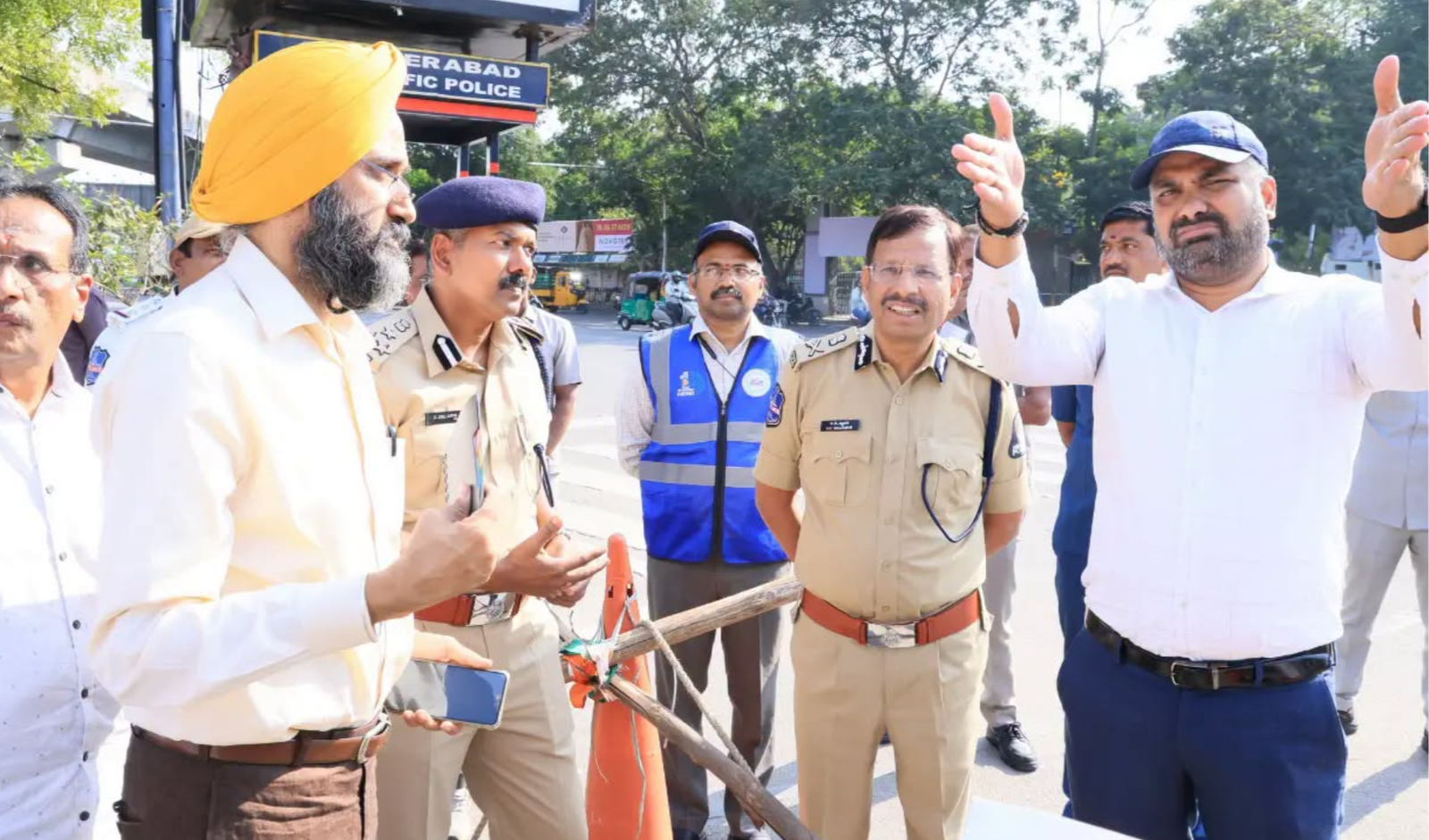
Hyderabad Traffic Police issued traffic advisories because of the crowds.
The silver coin distribution, which continued through November 11, attracted significant attention.
These visits have political significance because the temple has featured in public debates about Hyderabad's identity and the BJP's demand to rename the city Bhagyanagar.
However, visiting a religious place is not, by itself, evidence of wrongdoing or an attempt to provoke another community.
The relevant question is whether political leaders are supporting peaceful religious practice or using sensitive historical disputes to mobilise voters.
That question deserves scrutiny across all political parties.
4. The BJP, BRS, Congress and AIMIM: Political interests under scrutiny
Hyderabad's political environment makes the Charminar issue particularly sensitive.
BJP: The party has repeatedly highlighted the Bhagyalakshmi Temple in its political messaging, including discussions about renaming Hyderabad. Its leaders describe visits as expressions of religious faith and cultural identity.
BRS: Leaders from the Bharat Rashtra Samithi have also visited the temple. Their participation demonstrates that the controversy is not limited to one political party.
Congress: As the ruling party in Telangana, Congress has responsibility for maintaining public order, enforcing applicable laws and ensuring that heritage protections are respected.
AIMIM: The party has historically opposed alleged expansion of the temple and raised concerns about the protection of Charminar and the legal status of structures around it.
These political positions reflect competing narratives. They should be examined through official statements, court records and documented actions rather than assumptions about the intentions of entire communities.
5. What happened to the temple's administration in 2025?
Another important development occurred on February 21, 2025.
The Telangana Endowments Tribunal ruled that the Bhagyalakshmi Temple's administration would come under the jurisdiction of the Telangana Endowments Department.
The decision followed a long-running dispute between families claiming management rights over the temple.
The ruling concerned temple administration and management. It did not resolve the separate historical and heritage-protection controversy surrounding the structure's location beside Charminar.
The Times of India
This distinction is important when interpreting claims that the temple's administrative status has settled every legal question surrounding the site.
6. Is communal politics damaging Hyderabad's image?
Hyderabad is an important centre for information technology, pharmaceuticals, education, tourism and international investment.
Its reputation depends partly on public safety, social stability and confidence in the rule of law.
Repeated controversies involving religious places can create unnecessary anxiety among residents and visitors.
The Old City is also home to thousands of small businesses, traders, restaurants, traditional markets and tourism-related establishments. Traffic restrictions and public disturbances can affect their daily livelihoods.
Religious festivals should bring communities together rather than create an atmosphere of suspicion.
Neither Hindu devotees nor Muslim residents should be collectively blamed for political disputes.
7. What should the Telangana Government do?
The state government and relevant central authorities should take the following steps:
-
Publish the legal position: Make relevant court orders, ASI reports and official permissions accessible to the public.
-
Protect Charminar: Ensure that no unauthorised construction, alteration or activity damages the protected monument.
-
Respect religious freedom: Allow peaceful worship in accordance with applicable laws and judicial directions.
-
Maintain transparency: Clarify the permitted physical boundaries and responsibilities of the temple administration.
-
Prevent political provocation: Take action against unlawful conduct and genuine incitement, irrespective of political affiliation or religion.
-
Improve crowd management: Coordinate police, traffic and heritage authorities during major religious festivals.
-
Promote communal harmony: Engage representatives of both communities, historians, heritage experts and local residents.
Conclusion: Protect history, respect faith and reject communal politics
The Bhagyalakshmi Temple controversy is not simply a dispute between two religious communities. It involves historical evidence, religious freedom, heritage conservation, political competition and the responsibility of government institutions.
The historical records and court proceedings must be respected. Equally, peaceful religious practices should not become targets of collective hostility.
Political leaders from every party have a responsibility to avoid turning religious places into instruments of division.
Charminar is part of Hyderabad's shared historical identity. Its protection should never depend on political calculations.
The message should be clear: Protect Charminar, respect every community's religious freedom, follow the law and do not allow political interests to threaten Hyderabad's communal harmony.
Sources and references
The following sources should be included with the published article for transparency and independent verification.
-
-
-
-