
Language Settings
Select Website Language

Filters

Channels
Topics
Other Filters

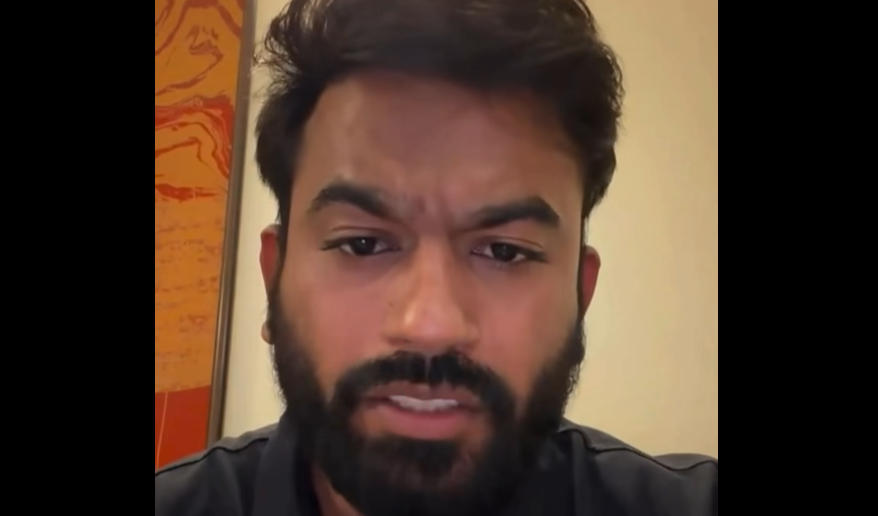
CB-CID probes AI deepfake video impersonating Tamil Nadu CM Vijay

In a concerning incident, cybercrime police have launched an investigation into an AI deepfake video that appears to impersonate popular actor C. Joseph Vijay. The fake video features an individual resembling Vijay soliciting financial aid via WhatsApp. Authorities are collaborating with Meta to trace the origin of the video, which is suspected to have links to Pakistan, while alerting the public to remain vigilant against such deceptive content.

Hanuman Ansh Rs 2 Crore Film Earns Rs 50 Crore, Part 2 Confirmed

Made on a Rs 2 crore budget, Neem Karoli Baba biopic 'Hanuman Ansh' has grossed Rs 50 crore, beaten 'Dhurandhar' and locked a sequel. 'Hanuman Ansh', a film based on the life of Neem Karoli Baba, has pulled off a box office feat few saw coming. The small-budget release has left far bigger titles behind, and its sequel is now officially on the way. Rs 2 Crore Turns Into Rs 50 Crore Made on a budget of just Rs 2 crore, 'Hanuman Ansh' has gone on to do business of Rs 50 crore at the box office. Rooted in the life of Neem Karoli Baba, the film has delivered a result that few filmmakers could have imagined. Set against its modest cost, that earning makes it one of the biggest surprises of the year. A Blockbuster Built in 25 Days The film crossed the Rs 50 crore mark within just 25 days of release. Its buzz did not peak in the opening week - it began building only after the second week. Despite a slow start, the collection graph kept climbing steadily until the film earned blockbuster status. Ahead of 'Dhurandhar' 'Hanuman Ansh' has now overtaken 'Dhurandhar', widely regarded as the most successful Hindi film of the year. Against a big-budget release carrying heavy expectations, this Rs 2 crore film has pulled ahead in terms of earnings - a fact that makes its success all the more remarkable. Outpacing 'Toxic' Yash's pan-India film 'Toxic' is currently running in theatres, yet 'Hanuman Ansh' is getting the better of it too. The number of shows for the film is rising by the day, with strong word of mouth clearly driving the momentum. Audience love has become the film's biggest strength. A Hint Hidden in the Climax The sequel was teased in the film's climax itself. Those who watched 'Hanuman Ansh' know that Neem Karoli Baba's full story was not wrapped up in a single film. The director had promised a Part 2, though at the time no one knew whether it would actually become possible. The Box Office Keeps the Promise After this major box office success, 'Hanuman Ansh 2' is now confirmed. The love from audiences has translated directly into preparations for the sequel getting underway. What once looked like an unfulfilled promise now appears set to be delivered. Team Meets Fans in Agra According to a Bollywood Hungama report, the 'Hanuman Ansh' team recently visited a multiplex in Agra, where they met the audience seated inside the theatre. After stepping out, director Vishal Chaturvedi made several revelations about Part 2 and clarified the direction the story will take next. Part 2 to Focus on Firozabad According to Vishal Chaturvedi, the second part will focus on Baba Neem Karoli's birthplace, Firozabad, before moving on to the life he spent in Agra and Mathura. At the time of the announcement, the project was presented as a trilogy. It is inspired by his book 'Divine Detour', which depicts the Baba's life in three parts. Hanuman Ansh, Hanuman Ansh movie, Neem Karoli Baba film, Hanuman Ansh 2, Vishal Chaturvedi director, box office collection, Hanuman Ansh sequel, blockbuster Hindi film

Dow, S&P 500, Nasdaq Fall as Oil Tops $95, Yields Climb

US stocks dropped Tuesday as Brent crude topped $95 on new US strikes in Iran and the 10-year Treasury yield hit 4.79%, its highest since January 2025.: "the motley fool" US stocks fell on Tuesday after fresh US airstrikes on Iran pushed oil prices higher, while rising bond yields and uncertainty over the Federal Reserve's next move kept buyers cautious. The Dow Jones Industrial Average slid nearly 0.8% and the S&P 500 lost roughly 0.7%. The tech-heavy Nasdaq Composite dropped more than 1%. The declines came just after stocks closed August with solid gains. Markets entered September carrying double-digit year-to-date returns and rising earnings expectations, but volatile oil prices and the prospect of renewed Fed rate hikes weighed on sentiment. Crude oil prices accelerated in afternoon trading after US Central Command said it had launched new attacks on Iranian targets, marking a reescalation of the conflict in the Middle East. The strikes followed the targeting of two oil tankers as they tried to leave the Strait of Hormuz. Brent futures, the global benchmark, traded above $95 per barrel. US government bonds also sold off. The 10-year Treasury yield rose to 4.79%, its highest intraday level since January 2025. The 30-year yield climbed to 5.27%, hovering near multi-decade highs. Economic data offered a mixed picture. The Job Openings and Labor Turnover Survey showed openings ticked up slightly in July, a relatively steady read on hiring ahead of Friday's monthly jobs report. Separately, the Institute for Supply Management reported that US manufacturing activity expanded for the eighth straight month, though the pace of growth eased slightly. With the second-quarter earnings season now winding down, investors are turning to upcoming results from Dell and Palo Alto Networks for a read on how large companies are spending on technology and cloud services. stock market today, Dow Jones, S&P 500, Nasdaq, oil prices, Brent crude, Treasury yields, Strait of Hormuz

UK Surgeons Perform Scarless Hysterectomy Through Belly Button

London doctors say they carried out Europe's first hysterectomy through a single tiny cut in the navel, leaving no visible outer scars. A surgical team in London has removed a woman's uterus through a single small cut in her belly button, in what the doctors describe as the first operation of its kind in Europe. The procedure left no scars visible on the outside of the patient's body. The patient, Debbie Price, 46, underwent the hysterectomy after living for years with adenomyosis, a painful disorder in which the lining of the womb grows into the muscular wall of the uterus. Surgeon Thomas Ind led the team that carried out the operation. The approach used is called single incision laparoscopic surgery. It builds on standard keyhole methods, but rather than requiring several small openings across the abdomen, the entire procedure runs through one point at the navel. Surgeons pass their instruments, along with a small camera, through that single opening and work while watching their progress on a television monitor. Ind said the technique is a further step forward from keyhole surgery already in routine use. He explained that where conventional keyhole operations call for three or four separate openings to hold the different instruments, this method needs only one. Patients, he said, welcome not being left with several small marks running across the stomach. Hysterectomy involves the complete removal of the uterus and is one of the more common gynaecological operations. By concentrating the surgery at the belly button, the team says the wound can heal without any outward sign that an operation took place. single incision laparoscopic surgery, scarless hysterectomy, keyhole surgery, Thomas Ind, adenomyosis, belly button surgery, uterus removal, London hospital

Zeenat Aman on Why She Stayed in Turbulent Marriage to Mazhar Khan

Zeenat Aman reflects on her marriage to Mazhar Khan, why she stayed, and the lessons heartbreak taught her about boundaries and self-respect. Veteran actress Zeenat Aman has spoken again about her marriage to actor-director Mazhar Khan, explaining why she remained in the relationship despite the difficulties it brought. The couple wed in 1985 and had two sons, Azaan and Zahaan. Aman later separated from Khan, who died in 1998 of kidney failure. In a recent conversation on the show 'Between Us by Anamika', the 'Qurbaani' star addressed long-running talk about how the marriage began and how she managed it. She pushed back on the simplified narrative that has circulated over the years, saying real relationships rarely match the tidier stories people repeat. Aman said her decision to marry was rooted in a specific wish. She wanted to have children and saw marriage as the way to start a family, and she made her choice on that basis. She said she has never hidden that motivation. On why she continued in a union she has called troubled, Aman pointed to the promise she had made, the children they shared, and her belief that circumstances might improve. Over time, she said, she came to a hard conclusion: rescuing another person is impossible if it means dismantling yourself in the process. She described taking on struggles that were not hers to carry. Aman said she eventually accepted that Khan was the only one who could change his situation. Even so, she declined to speak ill of him, noting that he remains the father of her sons. What heartbreak taught her Aman drew a distinction between what achievement gives a person and what pain does. Professional wins, she suggested, build self-assurance, while emotional hurt teaches a person where to draw the line. Affection alone, she added, cannot make up for an absence of respect. Sometimes walking away is itself a caring act, she said, both toward yourself and toward those who rely on you. She reflected that many women are raised to bend and adjust, and she wished she had grasped sooner that unease is a signal worth reading rather than ignoring. Advice for young women Asked what she would tell young women about building a sound partnership, Aman warned against the habit of adapting so completely to a partner that a person loses her own identity. A good relationship, she said, should let someone expand rather than diminish who they are. She recalled that her own marriage carried pressure to cut herself off from the wider world, which she believes hampers a person's growth as both an individual and an artist. She urged women to weigh how they feel in a partner's company: whether they feel secure, whether they can voice disagreement, and whether they can keep their own goals, friendships and finances. The most telling question, in her view, is whether a woman likes the person she becomes when she is with that partner. When the discussion turned to whether she is open to romance now, Aman said she is open to life and already has plenty of love around her, including from her children. On the professional side, Aman was most recently seen in 'The Royals'. She is set to appear next in 'Bun Maska', which also features Shabana Azmi and Abhay Deol. Zeenat Aman, Mazhar Khan, Bollywood, Zeenat Aman marriage, Bun Maska, veteran actress, Azaan Zahaan, self-respect boundaries

Joel McCrea's 1933 California Ranch Now a Wildlife Haven

The Santa Rosa Valley ranch bought by actor Joel McCrea in 1933 is now protected land near Thousand Oaks, after his family donated 74 acres. A working farm that Hollywood western star Joel McCrea purchased in Santa Rosa Valley in 1933 has passed into public hands, safeguarding hundreds of acres of open country along the northern edge of Thousand Oaks, California. What began as a 3,000-acre cattle and grain operation now anchors a stretch of protected habitat, the result of land transfers and gifts arranged by the actor's family over several decades. The family formally gave 74 acres to be held as a wildlife sanctuary and helped broker the public purchase of a further 220 acres, keeping that section as parkland and historic open space. Records held by the Conejo Open Space Conservation Agency describe the 74-acre preserve as a landscape of rocky cliffs, deep canyons and clusters of uncommon native vegetation. Tall sandstone bluffs give birds of prey places to nest and roost, and a stream that runs all year sustains local wildlife. Entry to the smaller preserve is tightly controlled to shield its fragile terrain. It holds protected populations of the Conejo rock plant, a species that grows almost nowhere outside this corner of Ventura County. The Byers ranch house and its historic buildings The 220-acre tract holding the old ranch buildings moved into public stewardship under a deal struck between the McCrea family and area park officials. Accounts kept by the Los Angeles Times record that the arrangement let the Conejo Recreation and Park District take on the house and the ground around it, shielding it from later suburban building. A friendship between McCrea and Tex Ward, the district's general manager emeritus, smoothed the transfer and left the neighbouring hillsides untouched. McCrea had bought the property at the urging of his friend and mentor Will Rogers, who often told young film actors to put money into farmland as a hedge against the instability of the movie trade. McCrea and his wife, the actress Frances Dee, put up their main house on the land in 1933 and raised three sons while running the farm. The site joined the National Register of Historic Places in 1997. Filings with the National Park Service count eight historic structures, among them a main residence by architect John Byers. Unlike the Spanish Colonial Revival work that made Byers known, the house reflected an early version of the plain California ranch style. Growth of protected land in the Conejo Valley As cities spread across Ventura County through the middle of the last century, the McCreas sold off portions of their holdings, contributing to the early footprint of Thousand Oaks. Other parcels went to non-profit groups, including ground used to set up the area's YMCA branch. After McCrea died in 1990, relatives set out to secure the last 280 acres of the original estate. The park district went on to open a visitor centre there and now runs it alongside the Joel and Frances McCrea Ranch Foundation, offering classes, historic tours and outdoor activities. Public bodies have kept adding to the buffer around the ranch. Officials later acquired a nearby 33-acre stretch of hillside grassland, and a separate housing agreement handed another 55 acres of steep ridgeline to conservation authorities. The ranch complex sits at the base of the historic Norwegian Grade road and opens to visitors through scheduled programmes run by park staff. Repair work paid for by the foundation continues on the standing buildings, keeping both the valley's farming past and its natural setting intact. Joel McCrea ranch, Conejo Valley conservation, Thousand Oaks wildlife sanctuary, Frances Dee, Conejo Recreation and Park District, Ventura County parkland, National Register of Historic Places, Conejo rock plant

Tata Motors Sales Cross 65,000 Units in August 2026, EV Sales Nearly Double

Tata Motors sold 65,253 passenger vehicles in August 2026, a 59% jump. EV sales rose 94% to 16,549 units and CV sales climbed 49%. Tata Motors sold 65,253 passenger vehicles in the Indian market in August 2026, up 59.15% from 41,001 units in August 2025. It was the company's strongest domestic wholesale month of the current financial year, FY2026-27. The August figure also rose 4.22% over July 2026, when Tata dispatched 62,611 units, an increase of 2,642 vehicles month on month. Including exports, total passenger vehicle sales reached 67,753 units, up 56.42% from 43,315 units a year earlier. Tata's Vahan passenger vehicle market share stood at 14.7% for the month. The company said demand held up across its range, backed by steady bookings and retail sales. It sells petrol, diesel, CNG and electric models across segments and flagged strong demand for its CNG line-up. The Punch was one of the biggest contributors, posting its highest-ever domestic monthly sales. Tata did not release individual Punch numbers, though the total is expected to be above 22,000 units. EV Sales Cross 16,500 Units Electric vehicles delivered the standout result. Combined domestic and international EV sales reached 16,549 units, against 8,540 units in August 2025. The gain of 8,009 units, or 93.78% year on year, marked the first time Tata's monthly EV volumes crossed the 16,500 mark. Tata's EV market share on Vahan rose to a record 43.74% during the month. Even with rising competition in India's electric car segment, the company accounted for more than four in every ten EV registrations. The Punch EV also logged its highest-ever monthly sales, though Tata did not disclose the figure. Exports added another record. Passenger vehicle shipments reached an all-time high of 2,500 units in August, up 8.04% from 2,314 units a year earlier. Commercial Vehicle Sales Jump 49% Tata Motors Commercial Vehicles reported total sales of 44,411 units, a 49% increase from 29,863 units in August 2025. Domestic commercial vehicle sales rose 33% to 36,619 units. Among domestic categories, heavy commercial vehicle truck sales grew 42% to 10,612 units. Intermediate, light and medium commercial vehicle trucks rose 20% to 6,859 units, and passenger carriers climbed 31% to 4,701 units. Small commercial vehicle cargo and pickup sales increased 34% to 14,447 units. The international commercial vehicle business led the growth, surging 227% year on year to 7,792 units from 2,382 units in the same month last year.  Tata Motors sales, Tata August 2026 sales, Tata EV sales, Tata Punch, Tata commercial vehicles, Tata Motors market share, Indian car sales, Tata car exports

Mahindra BE 6 SPORTEQ Safety Kit Explained, Variant by Variant

Mahindra reworks the BE 6 SPORTEQ lineup with clearer variants, from six airbags on the base ONE to Level 2+ ADAS and five radars up top. Mahindra has overhauled the way it structures safety equipment across the BE 6 SPORTEQ range, dropping its earlier pack-based system in favour of a set of named variants. The previous Pack One, Pack Two, Pack Three Select and Pack Three tiers have been retired. In their place sit eight variants: ONE, TWO, THREE, THREE+, FOUR, Launch Edition, FE and FE FOUR. Safety kit rises in defined stages as buyers climb the ladder. The entry model opens with six airbags and stability control, while the range-topping variants carry Level 2+ ADAS, five radars and a dedicated knee airbag. The changes at each rung are precise, and Mahindra warns that the badge alone will not always reveal which tier a buyer is getting. What the base ONE variant carries The ONE variant sits at the bottom of the range but is not thin on protection. It ships with six airbags, a rear-view camera paired with parking sensors, and tyre-pressure monitoring that flags readings inside the cabin. Buyers also get a tyre inflator kit, disc brakes on all four wheels and the Electronic Stability Programme. Brake hardware on the ONE runs on brake-by-wire technology backed by an intelligent electronic brake booster. The variant adds an electronic parking brake and a driver drowsiness alert that works off the ESP system. That drowsiness feature is aimed at long highway drives, though it is designed to back up an alert driver rather than replace one. TWO sharpens low-speed visibility Moving to TWO keeps everything on the ONE and layers on parking and close-quarters aids. The single rear camera gives way to a 540-degree system, and front parking sensors join the setup. Tyre-pressure monitoring becomes per-wheel, showing individual readouts rather than a lone warning light. TWO also introduces manual drive video recording and a third-screen parental lock through TEQ_Secure. For drivers regularly squeezing into tight city bays, the shift from a rear-only view to full surround coverage is the standout gain over the base car. THREE and FE: comfort with a visibility edge The THREE variant leans toward convenience. Its main additions are a six-way powered driver's seat with memory, ventilated front seats and mirrors that tilt down automatically when reversing. The auto-dipping mirrors carry a minor safety benefit by helping drivers judge kerbs and boundaries while backing up. THREE shares exterior lighting touches with the FE variant, including animated LED lamps and sequential turn indicators that signal the car's intentions to other road users. FE sits in the same equipment group as THREE, adding Formula E styling, intelligent adaptive suspension and 20-inch alloy wheels, but its safety package matches the THREE tier rather than the top rung. THREE+ brings driver assistance Level 2 ADAS first appears on the THREE+ variant, running on a single radar and one vision camera. At this point the car begins to actively assist with tasks such as lane positioning and adaptive cruise control instead of merely issuing warnings. THREE+ also gains front fog lamps, cornering lamps and auto booster lamps for poor light and weather. Mahindra notes that the system remains an aid, not autonomous driving. Worn lane markings, heavy rain or a blocked camera can all reduce its effectiveness, leaving control with the driver. FOUR and above: five radars and Secure360 Pro The FOUR variant, alongside the Launch Edition and FE FOUR, steps up to Level 2+ ADAS supported by five radars and one vision camera, replacing the single radar of THREE+. Mahindra calls this wider sensing coverage the biggest leap in the entire range. These top variants also add a knee airbag and continuous DVR recording. They introduce TEQ_Secure Secure360 Pro, a system built around the car when parked rather than moving. It offers live camera feeds, two-way audio relay and tamper alerts, all delivered through the Me4U app. Continuous DVR keeps the cameras running while the owner is away, adding a security layer on top of routine parking precautions. The naming can mislead. FE FOUR shares its tier with FOUR and the Launch Edition, so it receives the full package of Level 2+ ADAS, Secure360 Pro, continuous DVR and the knee airbag. Despite the shared FE label, it is a genuinely higher safety tier than the standard FE. Buyers who want ADAS should focus on THREE+ and above, while Secure360 Pro narrows the choice to FOUR-grade variants, and Mahindra advises confirming the exact spec sheet before purchase. Mahindra BE 6 SPORTEQ, BE 6 safety features, Level 2 ADAS, Secure360 Pro, Mahindra electric SUV, BE 6 variants, 540-degree camera, knee airbag

India Name Near Full-Strength Squad for Afghanistan T20Is

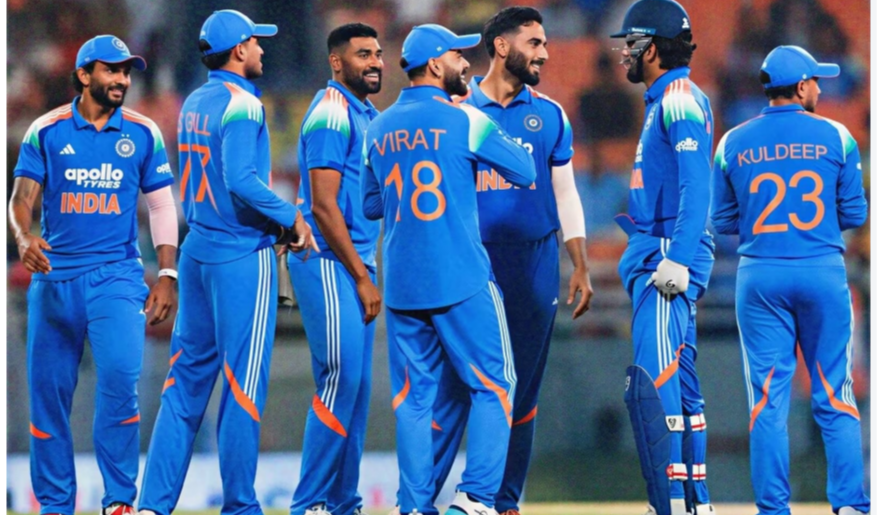
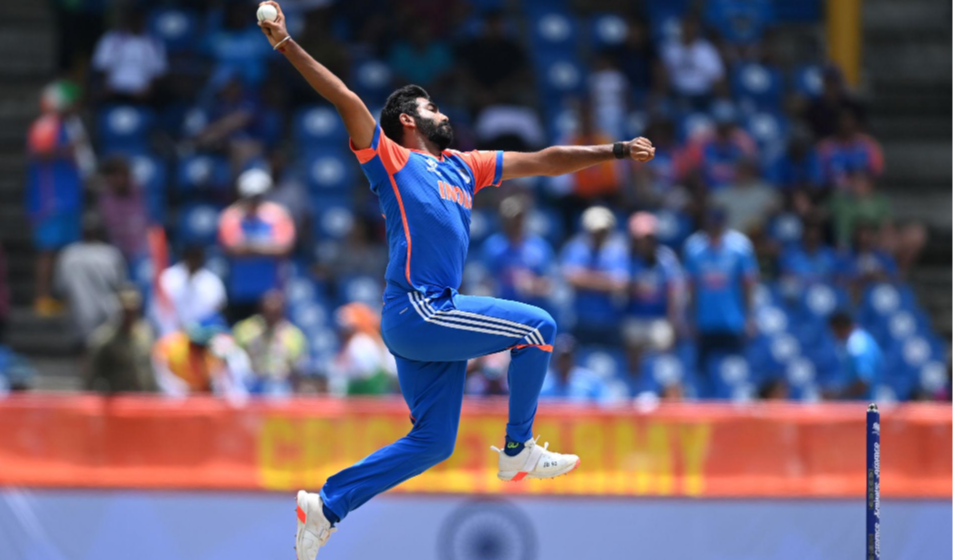
"afghanistan series india squad" India recall Jasprit Bumrah, Sanju Samson and other frontline stars for three T20Is against Afghanistan in New Delhi on September 13, 15 and 17. India have picked a near full-strength side for their three-match T20I series against Afghanistan, bringing back several frontline players. Shreyas Iyer will captain the team, with Tilak Varma named his deputy. All three games will be played in New Delhi on September 13, 15 and 17. The standout name is fast bowler Jasprit Bumrah, who has not featured in the format since the T20 World Cup final against New Zealand in March. He is joined by fellow specialist bowlers Arshdeep Singh and Varun Chakaravarthy, giving India a first-choice attack. Wicketkeeper-batter Sanju Samson also earns a recall after sitting out the Zimbabwe T20Is. He is one of two designated keepers in the group, the other being Ishan Kishan. Samson's return is among eight changes from the side that toured Zimbabwe. The reshuffle saw Rinku Singh, Suryansh Shedge, Harsh Dubey, Prabhsimran Singh, Prince Yadav, Yash Thakur, Mayank Yadav and Ashok Sharma dropped from the Zimbabwe unit. The new squad closely resembles the one that toured England, though Shedge, Prince and Prasidh, who were part of that trip, missed out this time. Four players have been named subject to fitness clearance. Harshit Rana, Nitish Kumar Reddy and Washington Sundar all need to prove their fitness before the series, as does Bumrah. India's squad Shreyas Iyer (C), Abhishek Sharma, Vaibhav Sooryavanshi, Sanju Samson (WK), Ishan Kishan (WK), Tilak Varma (VC), Shivam Dube, Nitish Kumar Reddy*, Axar Patel, Washington Sundar*, Varun Chakaravarthy, Ravi Bishnoi, Jasprit Bumrah*, Arshdeep Singh, Harshit Rana*. *Subject to fitness clearance. Keywords: India Afghanistan T20I series, India squad Afghanistan, Jasprit Bumrah return, Sanju Samson, Shreyas Iyer captain, New Delhi T20Is, India cricket squad 2026

Google Rolls Out Election Tools for India's 2024 General Vote

Google unveils voting-information links, YouTube content ranking, ad verification and AI-content rules for India's 2024 General Election. Google has unveiled a package of measures to help voters find reliable information and to shield its platforms from misuse during India's 2024 General Election. The company said it accepts a duty to link users with dependable sources and to blunt the reach of false information, including material produced by artificial intelligence, as a large share of the country's eligible voters prepare to cast ballots. At the centre of the effort is a tie-up with the Election Commission of India. Through that arrangement, Google Search and YouTube will surface practical guidance for voters, including how to register and how to cast a ballot, in both English and Hindi. The company framed authoritative, trusted sources as its first priority. Voting details on Search and YouTube During the polling season, YouTube's recommendation engine will push trusted content higher. The platform's homepage will feature such material alongside an "Up Next" panel so users can quickly reach election coverage. At significant moments, YouTube will also spotlight reliable reporting through its Top News and Breaking News sections and a dedicated news watch page. Google is adding context labels as well. Information panels will flag publishers that draw on public or government funding, and separate panels will supply background on subjects that are especially vulnerable to false claims. Policing abuse and false claims To protect the integrity of the vote and guard its services from misuse, Google said it has strengthened its existing rules. Those rules apply to every user and cover all formats of content. Enforcement relies on both human reviewers and machine-learning systems that detect and take down material breaching the policies. The company said its AI tools are sharpening this work, allowing quicker responses to new threats as they surface. On the advertising side, Google is tightening transparency. Advertisers running election messages must verify their identity and supply the certifications required by the Election Commission. Each election ad must carry disclosures naming the advertiser and stating its location. The company keeps a searchable database of these ads, giving the public a view of who is buying them and how much they are spending. Curbing deepfakes and synthetic media Google has moved to make AI-generated material easier to spot. Election ads that contain synthetic content now face disclosure requirements, and YouTube creators will soon be obliged to label realistic altered or synthetic footage. Fresh advertising rules bar the use of manipulated media, such as deepfakes or doctored clips, that is designed to mislead. The company has also placed limits on Gemini, restricting the kinds of election-related questions the chatbot will answer and steering it toward high-quality information. In Search, the "About this Image" feature and digital watermarking for AI-generated images are meant to help people gauge what they are seeing and judge its credibility. Google has joined the C2PA coalition, an industry-wide push to attach transparency and context to AI-generated content. The company said it has deployed technology to counter harmful AI-created material aimed at deceiving voters during the 2024 elections. Google Indian elections 2024, Election Commission of India, YouTube trusted content, election misinformation, AI-generated content, election ad transparency, Gemini election queries, C2PA coalition

Oracle to Cut 3,000 India Jobs Microsoft Puts 500 on PIPs

Oracle plans to cut about 3,000 jobs in India from September 1, while Microsoft has placed roughly 500 Indian staff on performance improvement plans. Oracle is preparing to remove roughly 3,000 roles from its India operations, while Microsoft has placed around 500 of its Indian employees on performance improvement plans (PIPs). The moves land as major technology firms rework their teams and shift budgets toward newer priorities such as artificial intelligence. Pareekh Jain, chief executive of the market research firm EIIRTrend, told ET that close to 2% of Microsoft's India workforce - roughly 400 to 500 people - could be caught up in the company's global PIP round. He put Oracle's expected reductions at between 2,000 and 3,000 staff, with the cuts due to begin on September 1. Oracle has about 30,000 workers in India and had already dropped around 12,000 positions in the country during an earlier round. A Microsoft spokesperson said the firm runs a formal PIP process alongside a global voluntary separation programme. Staff who miss the expectations set for their jobs may receive coaching, be placed on a PIP, be offered voluntary exit, or be let go. The spokesperson described the global share of employees on PIPs as very small and said the company does not discuss individual cases or break out figures by region. Not the same as layoffs Several analysts cautioned against reading the PIP numbers as disguised job cuts. Gaurav Vasu, who heads the research firm UnearthInsight, said the 2% India figure should not be taken as proof that firms are swapping layoffs for performance-based exits. He said involuntary or PIP-linked attrition usually sits between 1% and 2% of staff, driven by skill gaps or performance concerns, and called the reported figure part of routine management. Vasu framed Oracle's overhaul as a change in the abilities and roles the company wants to back. In his view, the restructuring moves spending away from older sales roles toward emerging skills, and combines PIPs with a broader tilt toward AI-focused work as budgets are redirected. Kamal Karanth, co-founder of the staffing company Xpheno, said PIPs are meant to give workers a chance to raise their performance rather than serve as a substitute for layoffs. He expects AI's effect on engineering jobs to grow clearer over the coming two to three years, with junior and mid-level engineers handling simpler tasks facing the sharpest exposure. Freshers left waiting The pressure is falling hardest on new graduates. Large technology employers have grown wary of campus recruitment, and a rising number are pushing back the start dates of fresh hires, leaving candidates unsure when their careers will begin. Earlier this year, firms including IBM, Accenture, Oracle Financial Services Software and Cognizant told recruits that joining dates would hinge on project availability, business needs and administrative steps. Some engineering graduates waited months, and in certain cases more than a year, before starting. Analysts say recruitment now tracks specific projects and real demand, rather than mass hiring of freshers to stock the bench. That reset shows in the numbers. India's five biggest IT firms cut a combined net 6,981 jobs in FY26 after adding 12,718 in FY25. Nasscom estimates the wider industry workforce grew by just 1.35 lakh to 5.9 million in 2026. There are early signs of a turn. The country's six largest IT companies added a net 5,400 employees in the first quarter of FY27, reversing a net loss of 7,100 jobs in the previous quarter. TCS drove much of that gain, adding a net 9,000 people - its biggest quarterly increase in three years. As the older hiring model fades, Global Capability Centres (GCCs) - the offshore arms of multinationals that run technology, engineering, finance, research, analytics and other operations for their parent companies - are emerging as significant employers of tech talent. HR professionals, though, do not see them as a straight replacement for campus recruitment. Their hiring leans toward specialised areas such as AI, data analytics, product development, cybersecurity and digital engineering, rather than bulk intake of fresh graduates. Oracle India layoffs, Microsoft PIP India, tech job cuts India, Indian IT hiring, AI restructuring, Global Capability Centres, IT freshers onboarding, Nasscom workforce

Tamil Nadu to roll out digital driving licences, RCs from September 15

Tamil Nadu will introduce digital driving licences and vehicle registration certificates statewide from September 15. Applicants can download these essential documents online, eliminating postal delivery delays. New vehicle buyers will receive digital RCs after registration, and licence holders will get theirs on the same day. QR codes on digital documents will aid authorities in verifying authenticity and preventing fake papers.