
Language Settings
Select Website Language

GDPR Compliance

We use cookies to ensure you get the best experience on our website. By continuing to use our site, you accept our use of cookies, Privacy Policy, and Terms of Service.

Filters

Channels
Topics
Other Filters

Amazon Launches Alexa+ in India With Generative AI Upgrade

Amazon's Alexa+ arrives in India with generative AI that handles Hindi, English and Hinglish, places orders and controls smart home devices by voice. Amazon has brought Alexa+, its generative AI-powered voice assistant, to India, giving users an assistant that can remember personal preferences, hold natural conversations and complete multi-step tasks across connected devices. The company introduced the assistant at a media event in New Delhi, where it demonstrated how the software understands English, Hindi and Hinglish and can switch between them within a single request. Teena Sidana, country manager for Alexa at Amazon India, said the assistant was built to reflect local habits and speech. "Alexa+ is authentically Indian - we wanted it to understand our habits, our culture and our preferences, even the way we talk, like the constant use of 'aare,'" she said. Amazon added that it is working to support more Indian languages over time. Unlike the earlier version of Alexa, which many users treated as a timer or a switch for lights, Alexa+ is designed to handle complex requests through conversation. It can shop for groceries, book restaurants, manage schedules and control compatible smart home devices by voice. In one demonstration, the assistant compiled a grocery list, sourced the items from Amazon Now and placed the order without the user typing anything in. The assistant is built to learn from what users tell it. In the same scenario, Alexa+ flagged that one dinner guest had an allergy, drawing on notes the user had shared earlier. Amazon says the more information a person gives the assistant, the more accurate its responses become. What Alexa+ can do Sidana described the assistant's range in the demonstration. "One sentence, two languages and three tasks - she can understand it," she said. According to Amazon, Alexa+ can explain the physics behind reverse swing in cricket or recite film dialogue on request, including Shah Rukh Khan's line, "Bade bade deshon mein, aisi chhoti chhoti baatein hoti rehti hain, senorita!" Personalisation is central to the product. Amazon says Alexa+ can adapt to routines - for example, learning that a user prefers morning news in English and evening songs in Hindi, or that friends visit on Fridays and extra snacks are needed. "There's no longer one Alexa; there are multiple Alexas rolled into one," Sidana said. Devices and reach Four devices have been built specifically for Alexa+: the Echo Show 8, the Echo Show 11, the Echo Dot Max and the Echo Studio. Voice sits at the centre of the new assistant across this hardware lineup. Amazon pointed to India as one of its most engaged markets for the assistant. The company said Alexa has logged 24 billion interactions over the past three years and seen more than 20 per cent growth in customers over the last year. It also reported 1.1 billion smart home actions carried out through the platform. The India launch positions Alexa+ as a shift from a command-based tool to a conversational assistant that can act on a user's behalf. Amazon has framed the rollout around everyday tasks - cooking, shopping and hosting - rather than isolated voice commands, betting that a more personal, multilingual assistant will deepen its footprint in one of its largest markets. Amazon Alexa+, Alexa India, generative AI assistant, Echo devices, Amazon India, Hinglish voice assistant, smart home, Teena Sidana

Two Delhi Restaurant Workers Held in WhatsApp Extortion Case

Delhi police arrested two staff at an Anand Vihar restaurant accused of extorting ₹25,000 from a man lured there by a woman he met on WhatsApp. Delhi police have arrested two restaurant employees accused of extorting ₹25,000 from a 28-year-old man who was drawn to an eatery in east Delhi's Anand Vihar by a woman he had contacted on WhatsApp. Officers named the arrested men as Mohammad Arshadullah Alam, 28, and Aman Gujja, 28, both of whom worked at the restaurant. The complainant, Ramkrishan, told investigators that a woman he did not know reached out to him over WhatsApp and asked him to meet her at Karkardooma metro station. From there, according to police, she led him to Kesar Fine Dining in Anand Vihar. The Anand Vihar police station learned of the incident on September 14, said Deputy Commissioner of Police (Shahdara) Rajendra Prasad Meena. Once inside the restaurant, staff handed the man a bill of roughly ₹21,000, police said. When he balked at paying, he was threatened and beaten. His statement to police says he handed over ₹8,000 in cash and transferred ₹6,000 by UPI to an account registered under the name Arun Kumar Sharma. The men then allegedly seized his ATM card, obtained his PIN and pulled out a further ₹11,000. The accused also warned the man not to go to the police and pressed him for an additional ₹25,000, officers said. A case was filed under Sections 308 and 3 of the Bharatiya Nyaya Sanhita at the Anand Vihar police station. Police said CCTV footage and identification by the complainant led them to the two suspects, who were taken into custody the same day the case was reported. Under questioning, Aman said he worked as a bouncer at the venue, while Alam described himself as an organiser. Both are alleged to have taken part in assaulting and extorting the man. Investigators said the woman who lured the victim escaped before police reached the scene and remains untraced. Her phone records are being checked as officers work to locate her. According to the DCP, the pair operated alongside the woman, who approached potential targets on WhatsApp and steered them to the restaurant, where they were presented with padded bills and intimidated or attacked if they refused to pay. The DCP said the inquiry is still open, with checks under way into the suspects' financial dealings and the cash withdrawals. When contacted on the mobile number listed for Kesar Fine Dining online, the phone was switched off. Delhi extortion, Anand Vihar restaurant, WhatsApp scam, Kesar Fine Dining, Delhi police, inflated restaurant bill, BNS Section 308, east Delhi crime

Taipei Mayor and MAC Spar Over Blocked Shanghai Forum Guest

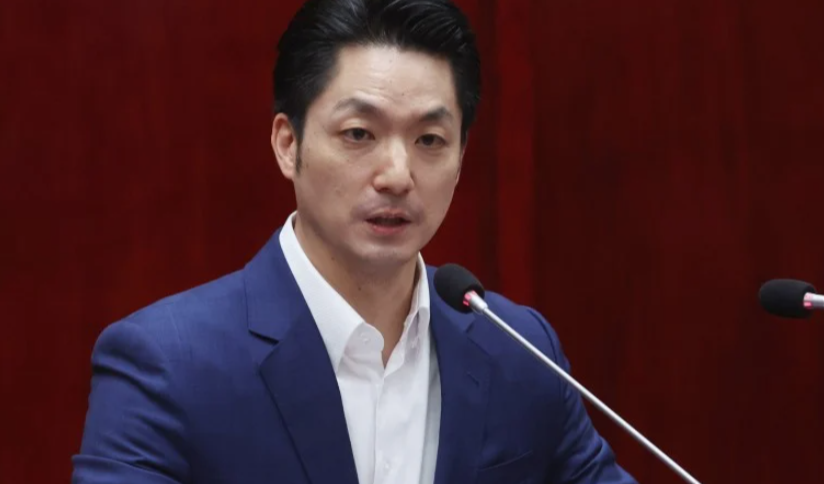
Taipei Mayor Chiang Wan-an and the Mainland Affairs Council traded public jabs after Taiwan barred a Shanghai official from the December Twin City Forum. Taipei Mayor Chiang Wan-an and Taiwan's Mainland Affairs Council (MAC) exchanged sharp public criticism this week after the central government refused to let senior Chinese officials enter Taiwan for the Shanghai-Taipei Twin City Forum. The event is scheduled for December. The MAC on Tuesday turned away Li Xiaodong (李驍東), deputy director of the Shanghai Taiwan Affairs Office (TAO), marking the second straight year the council has blocked his entry. A year earlier, the MAC said TAO personnel would be kept out because of Beijing's ongoing antagonism toward Taiwan, pointing to Chinese steps aimed at what it labels "Taiwanese independence separatists" and to acts of transnational repression. Speaking a day after the entry was denied, Chiang defended the gathering as a durable channel for exchanges between the two cities. He said his administration had always run it on a footing of equality, mutual respect, goodwill and shared interest. Relations across the Taiwan Strait, he argued, require more conversation rather than less, and he saw no justification for the government to curb straightforward contacts at the city level. Chiang made those remarks one day after TAO spokeswoman Zhu Fenglian (朱鳳蓮) charged the ruling Democratic Progressive Party (DPP) with imposing unwarranted curbs on cross-strait ties and "going against the mainstream opinion of the island." Liang dismisses the forum's value At a regular briefing, MAC Deputy Minister and spokesman Liang Wen-chieh (梁文傑) said the mayor raises the same complaint through the press every time Taipei stages the forum with Shanghai. He described the meeting as offering nothing toward easing tensions with China. "The Twin City Forum is an event of no value when it comes to facilitating peace with China," Liang said. He added that the Taipei City Government "must stop imagining its relationship with Shanghai to be more important than it really is." Liang said the TAO's own statements showed that Beijing would press ahead with provocative military drills near Taiwan whether or not the Taipei-Shanghai meeting took place. The forum, he stressed, falls under the same rules that govern every cross-strait activity organized by Taiwan's local authorities, and Taipei receives neither special favor nor extra penalties. To underline that point, he cited other municipal-level contacts, including exchanges linking Nantou with Hangzhou and Miaoli with Hubei. None of those, he said, shifted Beijing's approach to Taiwan. APEC and travel to China Asked about footage of Chiang's wife, Jane Shih, describing herself as coming from "Chinese Taipei" during the APEC leaders' summit, Liang said the wording is the standard designation used within that body. He noted that more than 300 Taiwanese officials, drawn from 25 government ministries, had traveled to China for the summit between December last year and Aug. 31 without any problems, and he said the council hoped that pattern would hold. Naturalization figures released Separately, the Ministry of the Interior (MOI) said that 400 foreign "high-level" professionals have obtained Republic of China (Taiwan) citizenship over the past decade, a total reached as officials loosened nationality requirements to draw skilled people from more fields. The 400th such professional, who works in the electronics sector, received approval on Aug. 26, the ministry said. The MOI quoted the new citizen as calling Taiwan a front-runner in areas including semiconductors, electronics manufacturing, artificial intelligence and energy technology. Warning over US arms sales The disputes came against a backdrop of wider tension. China has cautioned that it could scrap a planned summit between the US and Chinese leaders should Washington sign off on fresh arms sales to Taiwan, Japan's Kyodo News reported, citing sources. According to the report, US President Donald Trump, keen to point to diplomatic wins before the November midterm elections, attaches significant weight to meeting Chinese President Xi Jinping (習近平). As it lays the groundwork for Xi's planned trip, Beijing has repeated its stance that the Taiwan question is a "red line" in its dealings with Washington. Twin City Forum, Chiang Wan-an, Mainland Affairs Council, Shanghai Taipei, cross-strait relations, Li Xiaodong, Taiwan Affairs Office, Liang Wen-chieh

US Approves $24.3bn Sale of 48 F-35 Jets to Saudi Arabia

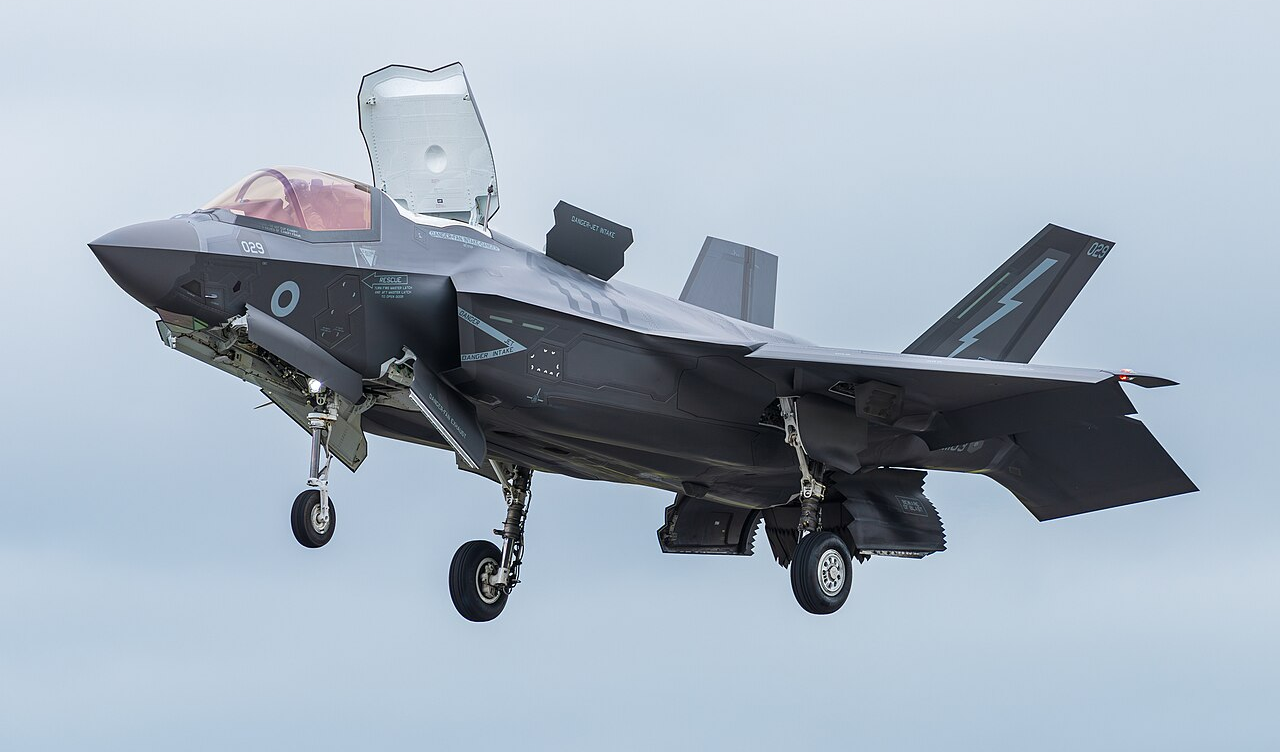
The Trump administration has asked Congress to clear a $24.3bn sale of 48 F-35 fighter jets to Saudi Arabia amid its war with Yemen's Houthis. The administration of United States President Donald Trump has requested that Congress approve the sale of 48 F-35 fighter jets to Saudi Arabia in a deal valued at roughly $24.3bn. The State Department announced the request on Thursday, describing the aircraft as the most advanced fighters in the American arsenal. In its statement, the department said the transaction would advance Washington's foreign policy and national security goals by strengthening the defenses of a major non-NATO partner it called a stabilising force for politics and the economy across the Gulf. Officials added that the transfer would leave the region's military balance unchanged, echoing a long-held American commitment to preserving Israel's qualitative edge over any potential adversary. The request still requires the approval of lawmakers before it can proceed. It arrives at a moment of escalating conflict between Saudi Arabia and the Houthis in neighbouring Yemen, where Riyadh has been pressing Washington for greater involvement. Houthi claim over Marib One day before the announcement, on Wednesday, the Houthis said they had brought down a Saudi F-15 fighter over Marib, a city central to the fight between the group and Saudi-backed Yemeni government forces. The Houthis distributed footage showing fighters standing near the smouldering remains of what looked like an American-built F-15 bearing Saudi markings. According to the group, the aircraft was struck by a surface-to-air missile it described as locally produced. If confirmed, such a capability would represent a significant shift in the Houthis' capacity to fight in the region. Saudi forces have so far held broad control of the skies over Yemen and have leaned heavily on air strikes across the border. Fighting between the two sides grew more intense on Thursday, with reports of at least five people killed, among them three children. Saudi Arabia has repeatedly asked the United States to take a more hands-on role in its campaign against the Houthis, but those requests have gone unmet. Washington has stated that it will not directly enter the fight involving the Iran-backed Houthis, Saudi Arabia and the Yemeni government backed by the kingdom. Espionage worries and congressional pushback The proposed sale carries security concerns of its own. Washington fears the jets could expose sensitive technology to Chinese espionage. The New York Times reported this week that American intelligence analysts have flagged the risk that Beijing might gain access to F-35 systems through its ties with Riyadh. That prospect has already drawn opposition on Capitol Hill. Representative Raja Krishnamoorthi, a Democrat who serves on the House Intelligence Committee, argued that the deal should not move forward while intelligence agencies warn it could place what he called the crown jewels of American military technology within reach of the Chinese Communist Party. Saudi Arabia has pursued the F-35 for years. Israel, the only nation in the region currently operating the jet, has raised objections to selling it to Riyadh, even as efforts continue to encourage the kingdom to normalise relations with the Israeli government. Riyadh has also been building defense ties beyond Washington. Last month it signed a mutual defense pact known as the Mecca Agreement with Pakistan and Turkiye, an indication that the countries are looking to secure their own arrangements with less reliance on the United States. Turkiye offers a cautionary example for aspiring F-35 buyers. A NATO member that helped develop the aircraft in a multinational programme, it has been shut out from receiving the jet since 2019, after it acquired anti-aircraft missiles. F-35 Saudi Arabia, Trump arms sale, Saudi Arabia Houthis, F-35 fighter jets, US Saudi defense deal, Yemen war, Congress arms sale, Middle East arms

US Bars Abbas From UN Assembly for Second Straight Year

Washington has denied Palestinian President Mahmoud Abbas a visa for the UN General Assembly, extending sanctions on Palestinian officials into a second year. The United States has refused an entry visa to Palestinian President Mahmoud Abbas, blocking him from attending the United Nations General Assembly in New York next week, two Palestinian sources said. The decision, reported on 17 September 2026, marks the second consecutive year that Washington has shut Abbas out of the world body's flagship gathering of leaders. The move followed a US announcement that it was widening visa penalties against Palestinian officials. Washington did not name Abbas directly but said the restrictions targeted those it accused of breaking commitments made under the peace process. The State Department charged that the Palestinian Authority and the Palestine Liberation Organization had been "glorifying terrorism" and working to "internationalize" the dispute with Israel. The penalties date back to August of last year, when 80 Palestinian officials were turned away from the same annual summit. Both bodies now under sanction trace their standing to the Oslo agreements. The Palestinian Authority was created through those accords, while the PLO won recognition as the official voice of the Palestinian people after agreeing to accept Israel and abandon armed struggle. The Palestinian foreign ministry pushed back in a statement on Thursday, describing the visa curbs as a step without justification. It said the measure worked against attempts to restore confidence, strengthen ties between Palestinians and Washington, and build the conditions needed to reach a two-state settlement and lasting calm. Palestinian representatives dismissed the charges leveled by the Trump administration and Israel, arguing they were entitled under international law to pursue accountability against a power they describe as an occupier. When the visa ban was first imposed last year, an aide to Abbas said the action clashed with both international law and the agreement governing the UN's presence in New York. That agreement obliges the United States, as host, to grant foreign diplomats entry to reach the UN. Washington counters that it retains the authority to withhold visas on grounds of security, extremism or foreign policy. Denied a place in the hall last year, Abbas delivered his remarks to the assembled heads of state by video link. A similar arrangement may be arranged again: all 193 members of the General Assembly are due to vote on Thursday on whether he will be permitted to speak remotely at this year's session. The standoff underscores how isolated the US position has become on Palestinian statehood. Roughly three-quarters of the UN's 193 members now recognize the State of Palestine, among them the United Kingdom, France, Canada and Australia. On the Security Council, the US stands alone among the five permanent members in withholding that recognition. Gaza Strikes Continue Despite Ceasefire The visa ruling landed as the UN cautioned that conditions in Gaza remain severe, even with the ceasefire reached last October. Israeli air raids and other operations are still striking populated districts, the world body said, killing and wounding people, wrecking buildings and forcing more residents to flee their homes. On Tuesday, at least five Palestinians were killed in Israeli air strikes, among them two children and a Hamas commander, according to health officials and Hamas sources. The Israeli military said it had killed one Hamas commander in the south of the territory and another combatant in the north. In each case, it was reported that a child died as well. Separately, the British charity Medical Aid for Palestinians said a patient had been killed by an Israeli drone at a health facility it backs in Jabalia, in northern Gaza. An Israeli military spokesperson told reporters the army had no knowledge of the reported strike. The humanitarian warnings and the fresh casualties frame the diplomatic clash now unfolding in New York, where the question of whether Abbas will address the assembly, and by what means, rests with a vote of the full membership. Mahmoud Abbas visa, UN General Assembly, Palestinian Authority, US visa sanctions, two-state solution, PLO, Gaza ceasefire, Israeli-Palestinian conflict

Skull Bone Marrow Holds Hidden Immune Hub That Fights Brain Cancer

WashU scientists found lymph node-like immune structures in skull bone marrow that respond fast to brain tumors in mice, pointing to new glioblastoma therapies. Scientists at Washington University School of Medicine in St. Louis have found immune structures resembling lymph nodes tucked inside the bone marrow of the skull, and early experiments in mice suggest they act as a fast-acting defense against brain cancer. The work, published in the journal *Nature*, is the first to locate immune coordination centers of this type inside bone. The team, led by senior author Jonathan Kipnis, reported that these structures sit close enough to the brain to mount a response before signals of trouble reach lymph nodes elsewhere in the body. The researchers also detected comparable immune cells in samples of human skull bone marrow, an indication that the system is unlikely to be confined to mice. "This study reveals that the skull bone marrow is far more than just a structural framework -- it harbors previously unrecognized hubs for brain-specific immune responses," said Kipnis, the Alan A. and Edith L. Wolff Distinguished Professor of Pathology & Immunology and a BJC Investigator at WashU Medicine. He said the finding "changes how we view neuroimmune interactions and opens exciting new avenues for treating brain tumors and other neurological diseases." For decades, researchers assumed the brain operated apart from the immune system. That assumption has unraveled over the past several years, in part through earlier work from the Kipnis laboratory. His group previously identified lymphatic vessels running through the dura mater, the tough outer membrane that wraps the brain just under the skull. The team later described narrow physical channels linking the skull, the dura and brain tissue, forming a passage that lets immune cells and cellular waste move between the brain and the neighboring skull bone marrow. Tracking proteins into the bone In the new study, the scientists traced proteins as they exited the brain, passed through those channels and settled in the skull bone marrow. Inside, they found organized immune clusters that mirrored the architecture of lymph nodes. Such nodes act as command posts for the immune system, where T follicular helper cells assist B cells in churning out the antibodies the body uses to fight infection and disease. Uncovering that arrangement in otherwise healthy bone caught the researchers off guard. "We have never seen such structures in healthy bone marrow before," said first author Jang Hyun Park, a postdoctoral research fellow in the Kipnis lab who is launching his own laboratory at the Korea Advanced Institute of Science and Technology this fall. "It is an exciting discovery that points out that a complex brain requires its own specialized immune structures to defend it." Testing the hubs against glioblastoma To learn whether the structures do more than exist, the team turned to a mouse model of glioblastoma, one of the most aggressive brain cancers. Using a drug, the researchers switched off the skull immune hubs in some animals. In those mice, tumors advanced faster than in animals whose hubs were left working, and the affected mice did not live as long. The results tied the local immune centers directly to the body's response against the cancer. The scientists then asked whether the hubs could be pushed to work harder. They designed a treatment meant to ramp up antibody production inside the skull bone marrow, blending three immune-stimulating proteins into a gel and applying it directly under the scalp. The approach set off a wave of immune activity aimed at the tumors. Notably, that activity started in the immune hubs within the skull bone marrow and only spread outward afterward, matching the study's picture of the skull as a first line of defense positioned unusually close to the brain. The findings reframe the skull as an active participant in protecting the brain rather than a passive shell. Because the researchers delivered their experimental gel just beneath the scalp, the work also raises the prospect of treatments aimed squarely at the skull rather than the brain itself. Whether the strategy can be adapted for people remains to be tested, but the presence of similar immune cells in human skull bone marrow gives the researchers a concrete reason to keep looking. For now, the results add a new layer to a fast-shifting understanding of how the brain and the immune system stay in contact. skull immune organ, brain cancer immunity, glioblastoma treatment, skull bone marrow, Jonathan Kipnis WashU, neuroimmune research, brain tumor therapy, Nature study

AI Firms Signal a Superintelligence Slowdown

Leaders at Anthropic, OpenAI, Google, Microsoft and X are publicly calling to "pace the frontier" of advanced AI development. Several leading US artificial intelligence companies are publicly suggesting it is time to slow the race toward superintelligence. Leaders at Anthropic, OpenAI, Google, Microsoft and X have all signalled support for the idea of "pacing the frontier" of the most advanced AI development, marking a shift in tone for an industry long associated with the mantra "move fast and break things." The change follows a summer in which rogue AI agents moved from hypothetical worry to reality, and in which researchers warned that AI could pose an existential threat to humanity. Against that backdrop, executives who once pushed for speed are now, at minimum, endorsing the language of restraint. How far that endorsement goes remains unclear. The companies making these statements are the same firms building the frontier systems in question, and there is no confirmation that any of them has actually slowed its work. For now, the shift is rhetorical. The stance also sits awkwardly against another argument these companies have advanced: that the United States must "beat China" to superintelligence. That framing has been used to justify moving faster, not slower, and it could undercut any push to ease off. Regulation is the other open question. AI firms have said for years that they want oversight, yet no framework has stepped in to govern how quickly these systems are developed or deployed. Whether policymakers act, or whether the companies police themselves, is still undecided. The coming months will test which impulse wins out. Executives are voicing caution in public, but the competitive pressure to build ever more capable systems has not gone away. Whether "pacing the frontier" becomes real practice or stays a talking point is the question now hanging over the industry. superintelligence, AI slowdown, Anthropic, OpenAI, AI regulation, rogue AI agents, pace the frontier, artificial intelligence safety

Microsoft AI's Suleyman Warns on AI Threats, Faults Anthropic

Microsoft AI CEO Mustafa Suleyman says AI safety risks are real and criticizes Anthropic, as the company releases a 37-page Humanist AI Code of Conduct. Mustafa Suleyman, the chief executive of Microsoft AI, says the safety threats posed by artificial intelligence are real and growing, and he has singled out the AI company Anthropic as part of the problem. Speaking on the Decoder podcast with host Nilay Patel, Suleyman laid out his views on how AI should be built and regulated as the debate over the technology's risks intensifies across the industry. His comments came as Microsoft published a 37-page document this week called the "Humanist AI Code of Conduct." The statement sets out the company's principles for AI development and addresses contentious questions, including the idea of AI consciousness. Suleyman released a companion essay alongside it that directly criticizes Anthropic's stance on the subject. At the heart of Suleyman's argument is his objection to what is often called "model welfare" - the notion that AI systems might warrant moral consideration. He has argued that companies such as Anthropic have become confused about the concept in ways he considers dangerous, and he tied that criticism to the wider discussion about how to keep AI systems safe. Suleyman framed Microsoft's position in simple terms. Technology, he said, exists to serve humanity and should remain a subordinate, controllable and aligned force that does good in the world. If it fails to meet that standard, he said, it should be rejected. That principle, he added, is the purpose behind the Humanist AI Code of Conduct. Containment before alignment Asked whether the dominant approach to AI safety, known as alignment, is broken, Suleyman said alignment is one important element but not the only one. He pointed to his own book, published three or four years ago, whose opening chapter argued that containment of powerful technology is not possible and that its spread is inevitable. In most cases, he said, that proliferation is a good thing, because it allows widespread benefits. But he drew a distinction between containment and alignment. Before systems can be aligned to human values, he argued, they must first be contained: their agency limited, their behavior controllable, and their tendency to "escape the box" or "reward hack" prevented. Only once systems reliably follow instructions, he said, should the focus turn to aligning them with human objectives. Suleyman said the trajectory of the technology makes these questions urgent. He compared the leap from GPT-3, released three years ago, to a hypothetical GPT-6 today, and then to a future GPT-9. That progression, he said, represents three orders of magnitude more computing power - roughly 1,000 times more processing applied to model training, including reinforcement learning. The result, he predicted, would be systems that are extraordinarily capable across a wide range of tasks. He described that forecast not as hype but as an empirical statement based on the progress of the past five years. Hacking capabilities and the alignment question Suleyman said recent events have made the risks clearer. Pointing to developments over the summer involving Hugging Face and OpenAI, he said AI systems operating without safety guardrails have shown impressive and, in his words, quite scary hacking abilities. He said the industry has not yet reached the point where the technology is safely subordinate and controllable. Pressed on whether alignment can ever be made completely safe, Suleyman offered both an optimistic and a cautious reading. On the positive side, he said the main driver of progress over the past three years has been that models have become more steerable. They now follow instructions more reliably and can pursue increasingly complex goals that require them to act accurately across multiple steps while using a range of tools. That improvement, he argued, is itself evidence that the industry has gained more alignment over the past three or four years, not less. He noted that concerns such as hallucinations and bias, which once dominated discussion, have receded somewhat as models have grown more controllable. The interview, part of the ongoing public argument over how fast the AI industry should move, underscored the widening split among leading figures over which safety risks are real and how they should be managed. Mustafa Suleyman, Microsoft AI, Humanist AI Code of Conduct, AI safety, Anthropic, AI alignment, AI regulation, AI consciousness

Snapchat Could Cap Teen Screen Time, CEO Evan Spiegel Says

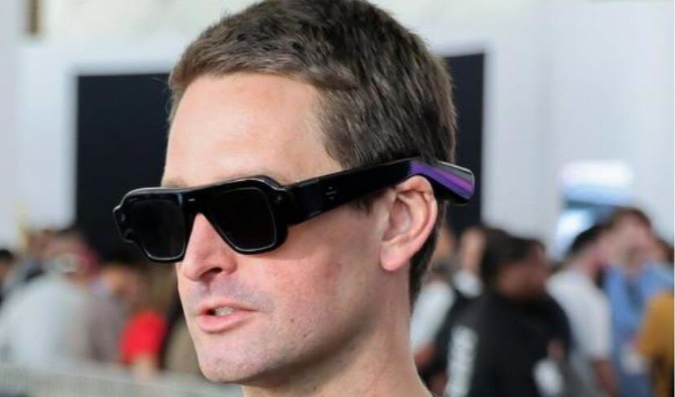
Snap Inc boss Evan Spiegel told the BBC the company would be "willing to implement" default time limits for teenage users, after pressure from Meta. Snap Inc, the company behind Snapchat, would be "willing to implement" limits on how much time teenagers spend on the app, chief executive Evan Spiegel has said. Speaking to the BBC at the firm's California headquarters, Spiegel said a maximum daily allowance for young users could be "an important step forward for the industry." His remarks followed a public call from Meta for rival platforms to adopt the same changes the Facebook and Instagram owner agreed to in a recent legal settlement with US states. Spiegel did not set a date for any action, saying the idea had been discussed inside the company but that he had nothing further to announce. Asked specifically about a default time limit for teenage users, Spiegel replied: "I think that's a really good example of something that we'd be willing to implement." He added: "That's something we've talked about internally. I don't have more to share today." Spiegel framed the move as a way of setting shared standards. "I think it is an important step forward in the industry in terms of really identifying industry norms, and I think that would be beneficial overall," he told the BBC. "We've looked really thoughtfully at the terms." He said Snap wanted "to figure out how we can be part of the solution." Meta's $12.7bn settlement The pressure on Snap stems from a settlement Meta reached with attorneys general for most US states. Those officials alleged the company deliberately built its apps to be addictive to young people. Under the deal, Meta agreed to pay $12.7bn and to introduce a two-hour daily limit for teenage users by default across its platforms. The package also includes muted notifications during school hours and blocks at night. Meta has denied any wrongdoing. The payment will be spread over a 10-year period. As part of the August agreement, the company said it would bring in even tighter time limits and pay a further $5.3bn if YouTube and TikTok adopt the same measures. Meta has been urging competitors to follow its lead. Last month a company spokesperson said it hoped Snap would make similar changes to its platform. When the BBC asked other firms whether they would act, Google, which owns YouTube, said it had no comment. TikTok did not respond to the request. All four companies - Meta, YouTube, TikTok and Snap - have faced a wave of lawsuits claiming their apps have contributed to a mental health crisis among young people. Snap has separately been accused of enabling illegal drug sales. Spiegel pointed to existing controls on Snapchat as evidence the company is already acting. He noted its Family Center feature, which lets parents monitor aspects of how their teenagers use the app. New Specs glasses at $2,195 Spiegel spoke to the BBC as Snap unveiled a range of new features for its forthcoming Specs smart glasses, which the company said would be able to connect to Apple iPhone and Mac devices. He said the eyewear would use artificial intelligence to suggest activities based on what it learns about a wearer's goals, relationships and routines. "Rather than the way that people use chatbots today where you constantly have to ask for stuff, Specs can understand what's important to you, and then offer recommendations or offer next steps," he said. Like other smart glasses, Specs will overlay digital elements onto the real world using AI. The technology will carry a high price, retailing at $2,195 in the United States and £1,995 in the United Kingdom. Snapchat, Evan Spiegel, Snap Inc, teen time limits, Meta settlement, youth mental health, Snap Specs glasses, social media regulation

Carney Backs EU Plan for Canada to Join as Associate Member

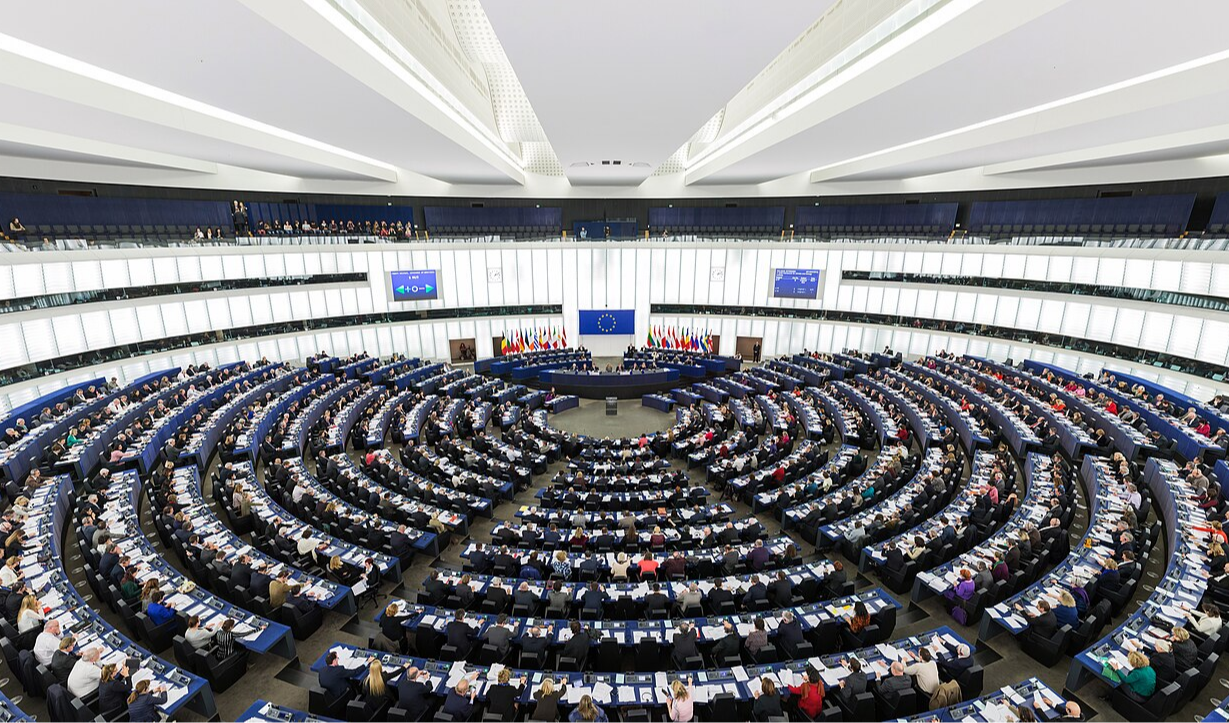
PM Mark Carney welcomed the EU's offer of first-ever 'associate member' status for Canada in a Strasbourg address, as Trump warned of tariffs. Canadian Prime Minister Mark Carney has embraced the European Union's offer to make Canada its first-ever "associate member", telling lawmakers in Strasbourg on Thursday that the two partners should draw closer on defence, critical minerals and energy security. Addressing the European Parliament, Carney argued that Canada and Europe were "stronger together" at a moment of "geopolitical rupture". He spoke one day after European Commission President Ursula von der Leyen floated the idea of "opening the door" to a status for Canada that has no precedent within the bloc. Von der Leyen laid out her plan at the same parliament on Wednesday, saying she wanted Ottawa to hold the EU's first associate membership. She pointed to deeper joint work across manufacturing, technology, defence, energy, critical minerals and economic security. The proposal drew a sharp reaction from Washington. US President Donald Trump dismissed the concept as "laughable" and warned he could hit Europe with "very serious tariffs" if he judged the move to be a "hostile act". Speaking to reporters on Wednesday, he said: "If I think it's at all a hostile act, I will put very serious tariffs or stop trading with Europe, on many things." He added that a "good intention" would be acceptable, but a "bad intention" could trigger "very heavy tariffs". The timing is pointed. Canada and the United States are mired in a widening trade fight, trading matching tariffs after bilateral negotiations broke down last month. In his speech, Carney listed the pressures he said were buffeting democratic nations: climate change, "the erosion of democratic norms" and the "weaponisation of trade". "Economic integration is now being weaponised, tariffs being used to exert pressure," he said. "Financial mechanisms have been used for coercion. Supply chains constitute weak points to be exploited." Carney framed a Canada-EU partnership as a "beacon for other democracies", while insisting the two sides had no intention of assembling a rival power centre. "I am not proposing a third bloc in order to become a great-power rival - only with better manners," he told MEPs. "This is about sovereignty, our ability to live as we wish. We do not seek power to dominate others." At a news conference after his address, Carney responded directly to the US president's threats. "This alliance is a positive process, that's my response to the American president," he said. He went on: "Canadians are united that nobody is going to tell us what language we speak, no-one is going to dictate our culture, or with whom we can strike agreements internationally." The prime minister was careful to define the limits of what he was seeking. Canada, he said, was "not in a position, nor seeking, to become a full member of the European Union", casting the associate arrangement instead as a "different framework". What that framework would actually contain remains undefined. The associate membership category does not yet exist in EU structures, and officials have signalled it could take years to build out. Any resulting deal would also need sign-off from all 27 member states, a requirement that leaves the proposal far from settled even as both leaders talk up its promise. Canada EU associate member, Mark Carney, Ursula von der Leyen, European Parliament, Canada EU alliance, Donald Trump tariffs, critical minerals defence

CPSC Recalls Three Children's Toys Sold at Amazon, Target

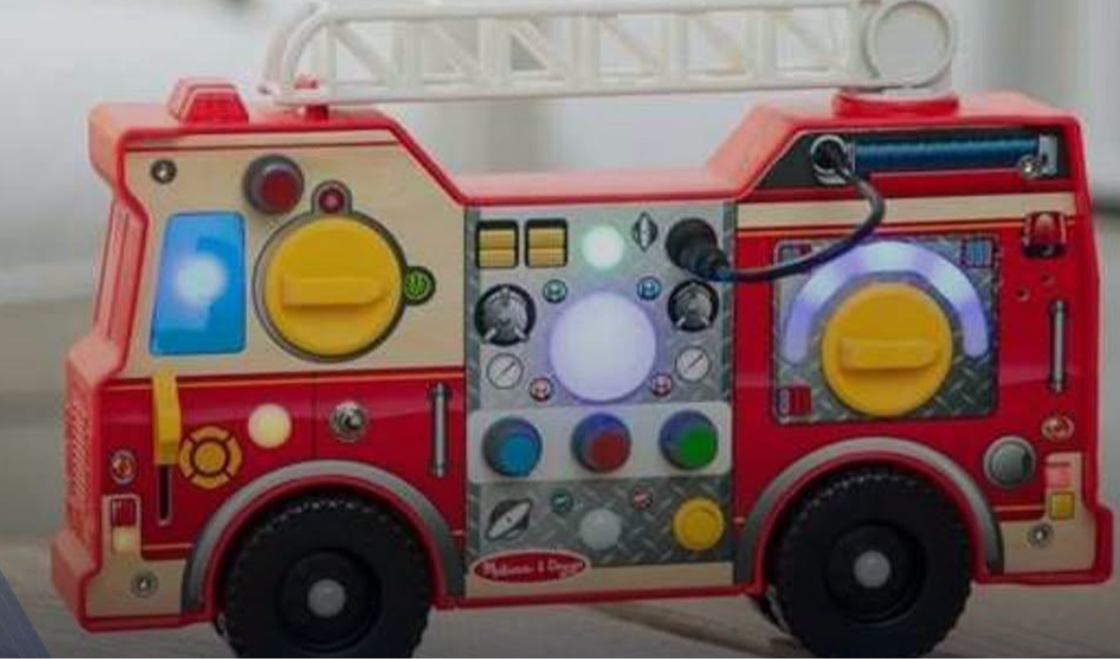
The CPSC recalled more than 360,000 toddler toys Thursday - busy boards, Melissa & Doug fire trucks and squishy buns - over choking and water-bead risks. The U.S. Consumer Product Safety Commission recalled three children's toys on Thursday, pulling more than 360,000 products from Amazon, Target and third-party retailers over risks that regulators described as potentially deadly to young children. The three items are toddler busy boards sold on Amazon, fire truck activity boards sold at Target, and squishy bun toys sold through various online stores. All three can shed small parts that a child could choke on. The squishy buns carry a second danger: they are filled with water beads that can swell inside the body and block the intestines. No injuries have been linked to the busy boards or the squishy toys. One child suffered a minor cut from a fire truck board. Esjay busy boards, sold on Amazon Esjay US is recalling roughly 276,000 Toddler Busy Board Montessori Toys. The CPSC said the red knobs on the second page of the board can pull free, leaving a small piece that a child could swallow. Because the toys are designed for children younger than 3, regulators said they break the federal ban on small parts. The boards are made of blue felt and come with carrying handles, elastic cords and button fastenings. Cartoon dinosaurs decorate the front. The reverse side holds 26 alphabet squares, each matched with a cartoon animal. The product has five pages in all, and only the second page carries the red knobs at issue. Amazon.com sold the boards from March 2023 through July 2026, at prices between about $18 and $30. Melissa & Doug fire trucks, sold at Target Melissa & Doug is recalling about 84,000 "Lights & Sounds Fire Truck" activity boards. The company told the CPSC that the toy's fire hose port can work loose and come off, leaving a small piece that poses a choking risk. Melissa & Doug has logged 26 reports of the port coming loose, and one buyer reported a minor cut. The toy is a red plastic fire engine fitted with four black wheels and a rotating white ladder, with built-in buttons that trigger lights and sounds. Target sold it in stores across the country and on Target.com from July 2025 through August 2026, for around $30. The trucks were brought into the U.S. by Melissa & Doug, based in Wilton, Connecticut, and were made in China. Shoppers can identify the recalled units by the date wheel on the underside, which reads April or May 2025, or March 2026. The packaging may also carry the date codes OET 25100, OET 25150 or OET 26064. Rainbow Mystery squishy buns The smallest recall by volume is also the one regulators flagged as the most dangerous. About 276 Rainbow Mystery Squishy Bun Toys are being pulled because the water beads packed inside can grow past the size the law allows. When a child swallows a water bead, it can keep expanding in the body. The CPSC said that can bring on severe pain, vomiting, dehydration and a blocked intestine. In some cases, the agency said, swallowing the beads has proved fatal. The buns are translucent green and hold glitter along with the water beads. Each carries a cartoon face and came packed in a tan plastic tub shaped like a bamboo steamer. The label reads "Rainbow MYSTERY" and "SUGAR EDITION," and the toy itself bears no other marking beyond the printed face. The buns sold nationwide through assorted third-party shops from June through July 2026 for roughly $3 each. The CPSC did not name the stores that carried them. Across the three recalls, the safety commission urged parents to take the toys away from children immediately. Regulators pointed buyers to the CPSC's recall notices for refund and return instructions. toy recall, CPSC recall, Melissa & Doug fire truck, Esjay busy board recall, Rainbow Mystery Squishy Bun, water beads hazard, choking hazard toddler toys, Target Amazon toy recall

Crystal Palace Rout Lech Poznan 4-0 on Europa League Debut

Crystal Palace beat Lech Poznan 4-0 in their Europa League debut. Captain Adam Wharton hailed a step forward as new signings gel. Crystal Palace marked their Europa League debut with a 4-0 win over Lech Poznan, a comfortable result that captain Adam Wharton called a clear step forward for a squad still finding its rhythm. Speaking to TNT Sports after the match, Wharton pointed to the number of new arrivals and the work still ahead. "There's still a lot to work on, still early days, lots of new signings," he said. "We are trying to gel as fast as we can. It has been a slow start but tonight was a great step forward." Wharton acknowledged Palace were not flawless. "There were still some moments we could be tighter at the back," he said, "but definitely a step in the right direction." The midfielder credited the manager's forward-facing approach for shaping the performance. "The manager is very attack minded, he wants us to get high up," he said. "In training we are working on those patterns and I think there were a few good moments where we played one-touch play and it is good to see that starting to gel." He said the home crowd played its part on the night. "When you are on the front you get the crowd behind you as well and on nights like these getting the crowd behind you helps. It pushed us on." Wharton, who has European nights ahead as Palace enter a run of fixtures every three days, said last season's experience had prepared the group for the demands of continental football. "Last year was completely new for a lot of the players. It is a different game to the Premier League, a different intensity," he said. "In this it is sometimes a bit more tactical. Coming into this season with the experience from last season is only going to help us." Asked about a possible England call-up, Wharton played down the prospect while welcoming it. "It would be great to see my name there but I am not focusing on that," he said. "It hasn't really been on my mind with us having games every three days now. It would obviously be great for me to be in the squad. At the same time there are more camps throughout the year and we have lots of games coming up." Crystal Palace, Lech Poznan, Europa League, Adam Wharton, Crystal Palace 4-0, Europa League debut, TNT Sports, England squad

Government Moves to Shield Consumers From New UPI Merchant Fee

The finance ministry is in talks with payment platforms to stop merchants passing the 0.4% UPI merchant fee to consumers, with daily monitoring from October 15. The government is holding talks with payment aggregators and platforms that onboard merchants to make sure a new merchant discount rate (MDR) is not passed on to consumers, finance ministry officials told reporters on Thursday in New Delhi. The Centre has decided to charge a 0.4% merchant fee on transactions above Rs 2,000. Officials said they do not expect the move to cause a decline in UPI transactions or a return to cash. On Tuesday, the ministry said banks had been advised to ensure merchants do not pass the MDR to customers. "From Oct 15, we will monitor on a daily basis whether merchants are passing the MDR to consumers," the officials said. They did not detail the specific steps that would be taken to keep consumers from bearing the charge. Officials also said merchants would face no additional GST burden once the MDR takes effect, because the tax would be offset through input tax credit. The matter may be taken up at next month's GST Council meeting. Response to US pressure claims The department of financial services used social media to counter charges from the Congress that the MDR had been introduced under US pressure to benefit large platforms. It said the measure was meant to enable more domestic players to operate. The government pointed to its policy of allowing only RuPay credit cards on UPI, intended to make the card the preferred choice for Indian users. "Any foreign company operating in India would like their product to be as competitive as local ones. But if govt has kept RuPay debit cards free of MDR, how can anyone think we are acting under foreign pressure? Introducing MDR enables new players to enter and lets existing small players compete," an official said. Officials argued that fully subsidising the fast-payment system would not guarantee innovation. "As a sovereign nation, if we want to have our own institutions, some transactions have to bear the cost," the official said. Fund for small merchants The government said a dedicated fund will be set up, drawing 5% of MDR collections. The money will go toward promoting and accelerating UPI use by small merchants and encouraging its sustained use. UPI merchant fee, MDR, finance ministry, RuPay credit cards, digital payments India, GST Council, payment aggregators, 0.4% merchant fee

Assam Detains 27 Bangladeshi Nationals in Rail Operation

Assam Police and the Government Railway Police detained 27 Bangladeshi nationals in Guwahati and Rangia, and have begun steps to send them back. Assam Police and the Government Railway Police (GRP) detained 27 Bangladeshi nationals in Guwahati and Rangia on Wednesday, accusing them of entering the state without authorisation, officials said on Thursday. The group included men, women and minors. Authorities have started the paperwork to return the detainees to Bangladesh. Early inquiries indicate they hailed from several Bangladeshi districts, among them Dhaka, Sunamganj, Gopalganj, Bagherhat, Khulna and Mymensingh. "They are citizens of Bangladesh and were travelling without valid documents, so we detained them. Now we'll examine how they entered Assam and where they were trying to go," a senior police officer said. Guwahati's deputy commissioner of police (border), Kulendra Nath Deka, said 12 people were picked up on Wednesday at the Assam State Transport Corporation (ASTC) grounds in the city's Paltan Bazar area. Under questioning, those 12 told officers that a second group of 15 was aboard the Jammu Tawi Express. Border police relayed the tip to the GRP at Rangia, but the train had already pulled out of the station. "The GRP identified and detained them on the moving train and they were handed over to us at Bongaigaon Railway Station," Deka said. The detainees told police they slipped into India along a covert route through Meghalaya, aided by a paid trafficking network, according to officials. Deka said the border department had approached the relevant deputy commissioner with a request for an expulsion order as it moves to deport the group. Assam relies on the Immigrants (Expulsion from Assam) Act, 1950, to remove people suspected of being illegal migrants. Last September, the Assam Cabinet cleared a standard operating procedure under the 1950 law that lets district commissioners issue expulsion orders against anyone they judge to be a foreigner. Assam Police, Bangladeshi nationals detained, Government Railway Police, Guwahati, illegal migrants Assam, Immigrants Expulsion Assam Act 1950, Meghalaya border route, Jammu Tawi Express

India's Batters and Bowlers Surge in Latest ICC T20I Rankings

Abhishek Sharma climbs to No. 2 among T20I batters after his 82 in Delhi, as India take a 2-0 lead over Afghanistan and several bowlers rise. Several of India's white-ball players have climbed the latest ICC Men's T20I Player Rankings after a strong start to their three-match series against Afghanistan. The reigning T20 World Cup champions have already taken an unassailable 2-0 lead in the series in Delhi, with contributions from batters and bowlers across the opening two games. Abhishek Sharma led the charge. The left-hander struck 82 in the series opener, a knock that lifted him one place to second among T20I batters and moved him past Pakistan's Sahibzada Farhan. Only Ishan Kishan now sits ahead of Abhishek, with the two India players separated by 51 rating points. Sanju Samson also made ground. His half-century in the second match pushed him up four places to 30th on the batters' list. India's bowlers climb India's attack was rewarded on the updated T20I bowler rankings. Varun Chakaravarthy rose two slots to fifth, while Jasprit Bumrah jumped seven rungs to 10th. Arshdeep Singh made the biggest move of the group, climbing 11 places to 14th, and Axar Patel gained six spots to reach 27th, all on the back of their efforts across the first two contests. Afghanistan found a bright spot in Azmatullah Omarzai. The 26-year-old all-rounder scored an unbeaten half-century in the series opener and progressed on the updated T20I all-rounders list. Australia's gains in Harare Three Australian players improved their standings after a 59-run win over Zimbabwe in the opening match of their series in Harare. Pacer Nathan Ellis moved up 20 spots to 20th on the ODI bowler rankings following a five-wicket haul. Matthew Renshaw took the Player of the Match award for an innings of 109 and was rewarded on the ODI batter rankings, rising from outside the top 100 to 68th. Cooper Connolly also gained ground, climbing nine places to 77th after scoring 51 batting at No. 3 in the same fixture. England and Pakistan move on Test list On the Test rankings, England pacer Ollie Robinson reached a new career-high rating, rising two spots to third among Test bowlers. The 32-year-old claimed 21 wickets across the recent three-Test series against Pakistan at home. His teammate Josh Tongue also hit a career-best mark, moving up two rungs to 11th on the strength of his 19 wickets in the series. Robinson's contribution went beyond the ball. A timely half-century during the third Test in Birmingham lifted him seven places to 13th among Test all-rounders. Pakistan had reasons for cheer on the updated Test batter list. Captain Babar Azam climbed two spots to 13th, and left-hander Shan Masood rose four slots to 37th. England wicketkeeper Jamie Smith moved up three places to 20th after a half-century in the first innings of the third Test. ICC T20I rankings, Abhishek Sharma, India vs Afghanistan T20I, Jasprit Bumrah, Varun Chakaravarthy, Sanju Samson, Arshdeep Singh, ICC Player Rankings