Former NIAID Adviser David Morens Pleads Guilty in COVID-19 Records Case: What the Guilty Plea Really Shows
By News National Editorial Team
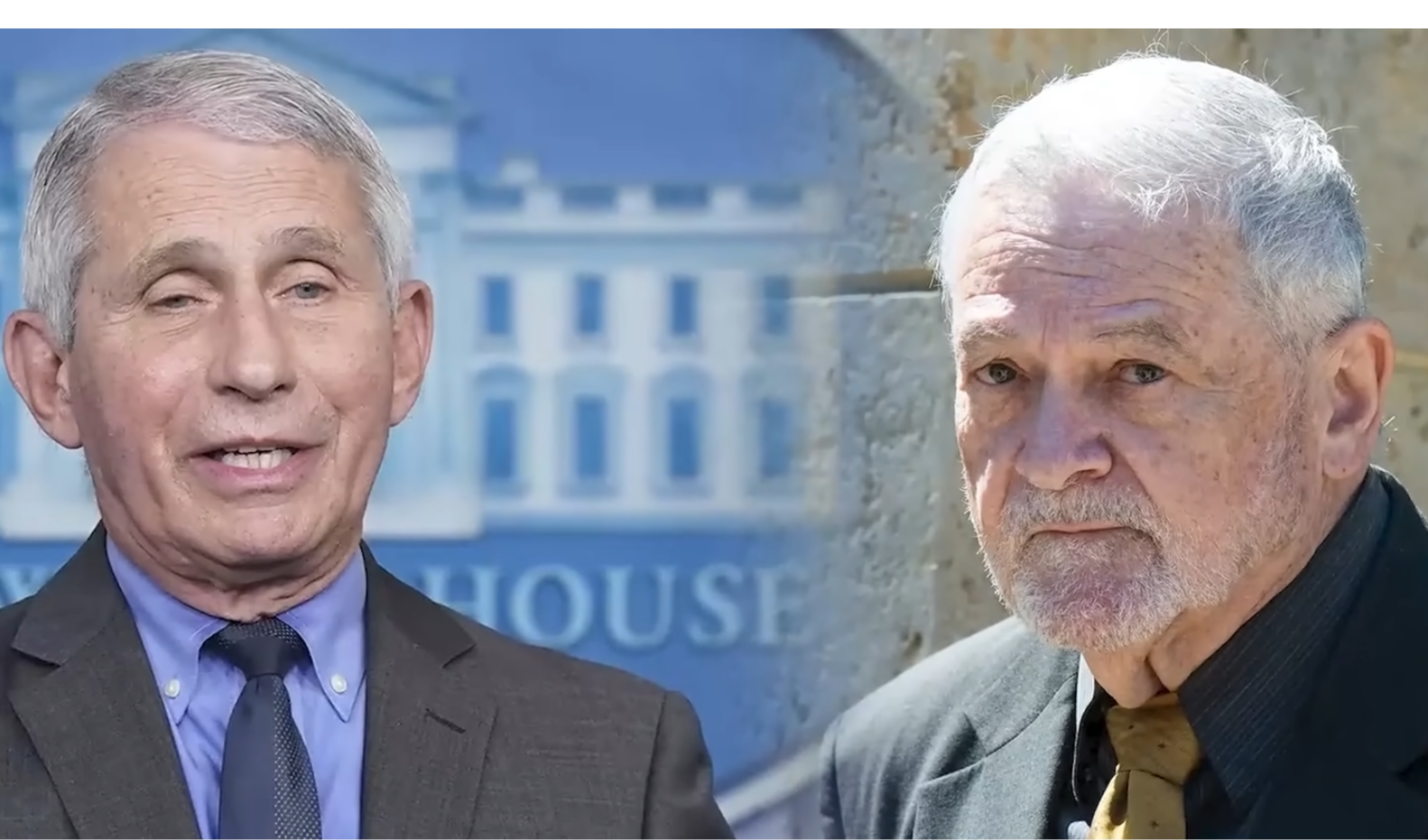
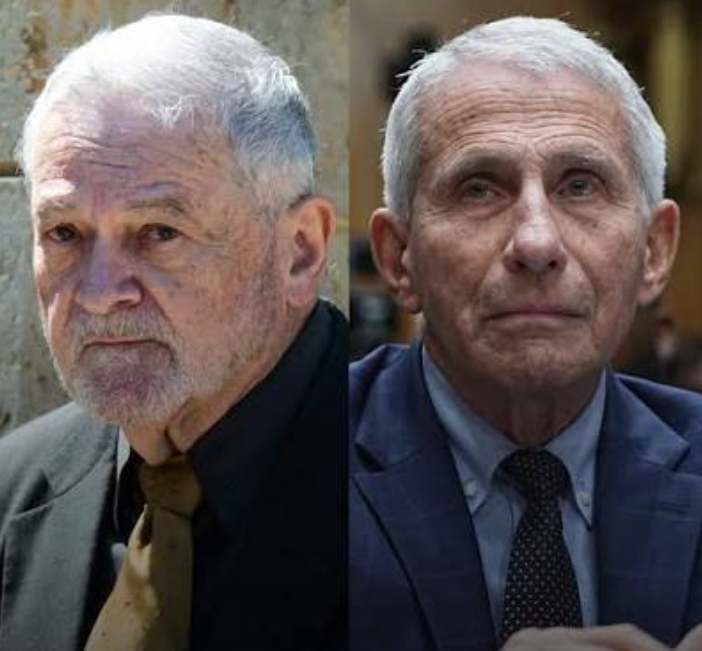
WASHINGTON — A former senior adviser at the U.S. National Institute of Allergy and Infectious Diseases (NIAID), David M. Morens, has pleaded guilty in federal court to a conspiracy charge arising from efforts to conceal government-related communications concerning coronavirus research from public-record requests during the COVID-19 pandemic.
The development is significant because the communications involved coronavirus research funding, a grant connected to research at the Wuhan Institute of Virology (WIV) and efforts to respond to allegations that COVID-19 may have originated through a laboratory-associated incident.
However, the criminal case needs to be understood carefully.
Morens's guilty plea establishes criminal responsibility for the conspiracy described in his plea agreement. It does not, by itself, establish that SARS-CoV-2 escaped from a laboratory, that the virus was genetically engineered, or that the entire COVID-19 pandemic response was fraudulent.
The U.S. Department of Justice announced Morens's guilty plea on August 18, 2026, saying he admitted to participating in a scheme designed to evade the Freedom of Information Act (FOIA) and federal records requirements.
Who is David Morens?
David M. Morens is a physician and former senior official at NIAID, an institute within the U.S. National Institutes of Health (NIH).
According to the U.S. Department of Justice, Morens served as a senior adviser in the NIAID Office of the Director from 2006 through 2022.
During the COVID-19 pandemic, he became involved in communications concerning coronavirus research grants and the government's response to questions surrounding the origins of SARS-CoV-2.
Morens was also a senior adviser to then-NIAID Director Dr. Anthony Fauci.
The criminal case against Morens is United States v. David M. Morens, Case No. 8:26-cr-00138, in the U.S. District Court for the District of Maryland. Court-record information identifies the case as ending in a guilty plea.
What did Morens plead guilty to?
According to the Justice Department, Morens pleaded guilty to conspiracy to commit offenses and to defraud the United States.
The government said the conspiracy involved attempts to evade FOIA requests and the Federal Records Act in connection with communications about coronavirus research grants.
The central issue was not simply that Morens used a personal email account.
According to prosecutors, Morens and others intentionally used his personal Gmail account instead of his official government email account because they anticipated that their communications could be requested through FOIA.
The DOJ said the communications included non-public NIH information, discussions about research funding, drafts of correspondence to NIH leadership and other communications related to coronavirus research.
Reuters independently reported that Morens admitted using his personal email to prevent official communications from being subject to public-record requests.
Why was personal Gmail important?
The use of personal email is one of the most important aspects of the case.
Government officials conducting official business are subject to federal records and transparency requirements. FOIA allows members of the public, journalists and organizations to request certain federal records.
Prosecutors alleged that Morens and other individuals anticipated such requests and deliberately moved certain communications away from government systems.
The Justice Department says Morens and the other participants agreed in writing to use his personal Gmail account to keep communications away from public view.
According to the DOJ, the communications concerned:
-
Non-public NIH information
-
Coronavirus research funding
-
Efforts involving a terminated research grant
-
Draft letters to senior NIH officials
-
Communications intended to influence NIH funding decisions
-
Back-channel communications involving senior NIAID personnel
The Justice Department said the matters were related to Morens's official responsibilities and therefore constituted federal records that should have been handled through government systems.
What was the coronavirus research grant?
The case involved a research grant known as:
“Understanding the Risk of Bat Coronavirus Emergence.”
The DOJ said NIH terminated the grant after allegations emerged that COVID-19 had originated from the Wuhan Institute of Virology.
The grant had been awarded to a U.S. recipient, which subsequently made a subaward to the Wuhan Institute of Virology.
Following termination of the grant, prosecutors said Morens and others worked to help restore the funding and counter the narrative that COVID-19 had leaked from a laboratory.
This connection is an important factual element of the criminal case.
But it is essential to distinguish between two separate questions:
Question 1: Did U.S.-funded coronavirus research have a connection to a Chinese laboratory?
Answer: Yes. The DOJ's case documents describe such a connection.
Question 2: Does that connection prove that SARS-CoV-2 came from that laboratory?
Answer: No. The Morens guilty plea itself does not establish that conclusion.
The Wuhan Institute of Virology connection
The Wuhan Institute of Virology has been at the center of the global debate over the origins of COVID-19.
The controversy intensified because U.S.-funded coronavirus research was conducted through organizations that collaborated with the Wuhan laboratory.
The Morens case brings some of those relationships back into the spotlight because prosecutors specifically referred to a coronavirus research grant and a subaward involving WIV.
The case therefore provides additional evidence about government communications and research-funding relationships, but those facts should not automatically be presented as proof of the precise origin of SARS-CoV-2.
What did prosecutors say about the lab-leak debate?
The Justice Department says Morens and others sought to counter the narrative that COVID-19 had leaked from a laboratory.
According to the government's account, their efforts followed NIH's termination of the bat-coronavirus research grant.
That means the laboratory-origin question was explicitly part of the communications surrounding the case.
But the criminal prosecution was not a trial determining the scientific origin of COVID-19.
The court's guilty plea concerned the conspiracy and associated conduct described in the plea agreement.
That distinction is critical.
The wine and alleged illegal gratuities
Another striking element of the case concerns gifts allegedly provided to Morens.
According to the Justice Department, Morens admitted that he and another individual conspired concerning illegal gratuities.
The government said the individual provided Morens with wine for what was described as his “behind-the-scenes shenanigans.”
Prosecutors further said Morens identified an official act that he could perform to “deserve” the gift.
According to the DOJ, that act involved authoring a scientific commentary in a prominent medical journal advocating that COVID-19 had natural origins.
The government also said the individual discussed providing Morens with other benefits, including meals at Michelin-starred restaurants in several major cities.
These allegations raise serious questions about conflicts of interest and the independence of government-related scientific communications.
However, the existence of an improper gift arrangement does not automatically establish that a scientific conclusion about COVID-19's origins was scientifically false.
Does the case prove that the natural-origin theory was fabricated?
No.
This is one of the most important distinctions for readers.
The prosecution alleges that Morens participated in improper conduct involving communications and gifts.
That can raise legitimate questions about transparency, conflicts of interest and the handling of scientific information.
But it does not mean that every scientific paper supporting zoonotic or natural origins of SARS-CoV-2 was false.
A scientific conclusion must be evaluated using scientific evidence.
The criminal case and the scientific-origin question overlap in important ways, but they are not the same legal or scientific question.
Does Morens's guilty plea prove COVID-19 came from a laboratory?
No.
The guilty plea does not constitute a judicial finding that SARS-CoV-2 originated at the Wuhan Institute of Virology.
This is especially important because the international scientific community has not reached a definitive conclusion about the virus's origin.
In June 2025, the World Health Organization's Scientific Advisory Group for the Origins of Novel Pathogens (SAGO) said that much of the information necessary to fully evaluate all hypotheses had not been provided.
WHO said that all hypotheses had to remain on the table, including zoonotic spillover and a laboratory-associated incident.
At the same time, SAGO said the weight of the available evidence favored zoonotic spillover, while noting that the investigation remained unfinished.
Therefore, the most accurate description is that the origin of SARS-CoV-2 remains unresolved, despite extensive investigation and competing assessments.
What has the U.S. intelligence community said?
The debate has also moved beyond scientific research into intelligence assessments.
In June 2026, the U.S. Office of the Director of National Intelligence (ODNI) released material arguing that evidence supported a laboratory-associated origin and made serious allegations concerning the handling of intelligence and public narratives surrounding COVID-19.
The ODNI publication went considerably further than the WHO's position and presented a laboratory-associated explanation as its assessment.
However, an intelligence assessment and a criminal court ruling are different things.
The ODNI position should therefore be attributed explicitly to the agency rather than presented as an independently established judicial fact.
Was Anthony Fauci charged in the Morens case?
No.
This point is particularly important because Morens was a former adviser to Anthony Fauci.
The Morens criminal case does not announce a criminal conviction of Fauci.
Reuters reported that prosecutors had not accused Fauci of wrongdoing in connection with Morens's case.
Therefore, headlines claiming that:
“Fauci was convicted”
or
“Fauci was found guilty in the Morens case”
would be inaccurate.
The proper wording is that Morens was a former senior adviser associated with Fauci and that the case concerned his own conduct.
What about Peter Daszak?
The case documents refer to individuals as co-conspirators.
Previous investigations and reporting have identified one of those individuals as Peter Daszak, the former president of EcoHealth Alliance, an organization that was involved in coronavirus research and had connections to research conducted at the Wuhan Institute of Virology.
However, being identified in the documents as a co-conspirator is not the same as being convicted.
As of the reported Morens guilty plea, the criminal conviction in this case belongs to David Morens.
News reports have also noted that neither Daszak nor another individual identified in reporting as a co-conspirator had been charged in the Morens case.
Why the case matters beyond one former official
The Morens case is significant for several reasons.
1. Government transparency
The allegations concern the deliberate movement of official communications to a private email account to avoid public-record scrutiny.
That raises important questions about government transparency.
2. Scientific integrity
The case involves communications concerning a highly controversial area of scientific research.
The alleged gift arrangement also raises questions about potential conflicts of interest.
3. Coronavirus research funding
The case provides another window into how U.S. government funding was connected to coronavirus research involving international partners.
4. COVID-19 origins
Although the guilty plea does not resolve the origin of SARS-CoV-2, the underlying documents are relevant to understanding how officials and researchers dealt with competing theories during the pandemic.
5. Public trust
Perhaps the broader issue is public confidence.
When government officials use private communication channels to conduct official business, it can make it harder for journalists, researchers and the public to determine how important decisions were made.
What the Morens case proves — and what it does not
Established by the federal case
-
David Morens was a senior NIAID adviser.
-
He pleaded guilty to a federal conspiracy charge.
-
The case involved COVID-related coronavirus research.
-
The communications included government-related information.
-
Personal Gmail was used to avoid anticipated FOIA scrutiny.
-
The research grant involved a subaward to the Wuhan Institute of Virology.
-
The case included allegations concerning improper gratuities.
-
Morens faces a potential maximum sentence of five years.
These points are supported by the DOJ announcement and court-related reporting.
Not established by the guilty plea
-
That SARS-CoV-2 was genetically engineered.
-
That the Wuhan Institute of Virology definitely caused the pandemic.
-
That COVID-19 was intentionally created.
-
That Anthony Fauci was convicted of a crime in this case.
-
That every scientist supporting natural origins committed fraud.
-
That COVID-19 vaccines were fraudulent.
-
That the entire pandemic response was a criminal conspiracy.
Those conclusions go beyond what Morens admitted to in court.
Why social-media headlines need careful reading
The Morens case has already become part of a much larger online debate about COVID-19.
A headline such as “COVID fraud confirmed” may attract attention, but it can collapse several separate issues into one claim.
There are at least three distinct questions:
First: Did Morens engage in conduct that violated federal law?
Yes. He pleaded guilty.
Second: Were government-funded coronavirus research programs connected to the Wuhan Institute of Virology?
Yes, according to the federal case documents.
Third: Has the Morens guilty plea conclusively established that SARS-CoV-2 escaped from the Wuhan laboratory?
No.
That distinction is essential for responsible journalism.
A wider scientific debate remains
The COVID-19 origin debate is not simply a choice between accepting one government's statement and rejecting another.
WHO's SAGO assessment said the available evidence favored zoonotic spillover but also acknowledged that key information needed to fully assess the laboratory-associated hypothesis was unavailable.
WHO specifically said that additional information about early cases, animals in Wuhan markets and laboratory work and biosafety conditions was needed.
Meanwhile, U.S. intelligence assessments have included differing views over the years, with some agencies favoring a laboratory-associated explanation and others previously assessing natural transmission as more likely.
The result is an unusual situation in which scientific, intelligence and political assessments do not completely agree.
What happens next for Morens?
Morens faces a maximum possible sentence of five years in prison for the conspiracy charge.
The Justice Department emphasized that the maximum penalty does not mean that a five-year sentence will necessarily be imposed.
Federal sentencing will be determined by the judge after consideration of the applicable sentencing guidelines and other statutory factors.
Reuters reported that Morens's sentencing was scheduled for November 12, 2026.
News National Fact Check
Claim: A former senior NIAID official pleaded guilty in a COVID-related federal case.
Verdict: TRUE.
Claim: Morens admitted using personal Gmail to conceal government-related communications from anticipated FOIA requests.
Verdict: TRUE.
Claim: The case involved coronavirus research connected to the Wuhan Institute of Virology.
Verdict: TRUE.
Claim: The case included allegations involving wine and improper gratuities.
Verdict: TRUE.
Claim: Morens's guilty plea proves that COVID-19 came from a Wuhan laboratory.
Verdict: NOT ESTABLISHED.
Claim: Anthony Fauci was convicted in the Morens case.
Verdict: FALSE.
Claim: The guilty plea proves the entire COVID-19 pandemic was a fraud.
Verdict: UNSUPPORTED.
The bigger picture
The David Morens case is a serious development in the continuing examination of how the U.S. government and scientific institutions handled coronavirus research and public-record requests during the COVID-19 pandemic.
The guilty plea provides concrete evidence of misconduct involving government communications and transparency.
It also places renewed attention on coronavirus research funding and the contentious debate surrounding the Wuhan Institute of Virology.
But journalism must distinguish what has been proved in court from what remains a scientific or intelligence assessment.
For News National readers, the central takeaway is straightforward:
David Morens pleaded guilty to a federal conspiracy involving the concealment of government-related communications. The case raises serious questions about transparency, research funding and scientific conflicts of interest. But the guilty plea itself does not constitute a judicial finding that COVID-19 originated in a laboratory or that the entire pandemic was the result of a deliberate fraud.
The origins of SARS-CoV-2 remain an unresolved international scientific question, with competing hypotheses and incomplete evidence continuing to shape the debate.
Sources: U.S. Department of Justice; U.S. District Court for the District of Maryland case records; Reuters; World Health Organization/SAGO; U.S. Office of the Director of National Intelligence.
Editorial note: This report distinguishes verified court findings from allegations, intelligence assessments and unresolved scientific questions. Claims concerning COVID-19's origins are attributed to the relevant authorities rather than presented as established fact.