
Language Settings
Select Website Language

Latest

Cruz Azul Faces Santos Laguna as Search Interest Spikes

Cruz Azul meet Santos Laguna on 6 September 2026, with the Mexican club drawing a surge of online search interest ahead of the fixture. Cruz Azul are scheduled to face Santos Laguna on 6 September 2026, in a fixture that has pushed the Mexican club into the spotlight of online search traffic. The match-up drew enough attention to register more than 2,000 searches for "Cruz Azul" on Google Trends in the United States around the date of the game. The two clubs are among the well-known names in Mexican football, and their meeting generated the usual round of pre-match coverage, including previews focused on likely lineups, odds and predictions ahead of kick-off. Beyond the confirmed matchup and its date, few concrete details about the encounter are available. No final result, team selections or scoreline have been reported here, and the spike in search interest points chiefly to fan and betting-market curiosity building in the hours before the game. Cruz Azul remain one of the most heavily followed sides in the country, which helps explain why interest in the fixture crossed borders and appeared in United States search data rather than staying confined to Mexico. The surge underlines the continued pull of Liga MX fixtures among audiences tracking the two teams. Further information on the result and how the match unfolded would depend on post-game reporting once the fixture is played. Cruz Azul, Santos Laguna, Liga MX, Mexican football, football fixture, Cruz Azul vs Santos Laguna, sports betting

Sabalenka Stops US Open Match Over Cannabis Smell on Court

Aryna Sabalenka paused her US Open clash with Kamilla Rakhimova over a strong cannabis smell, then won 6-3 6-4 to reach the fourth round in New York. Top seed Aryna Sabalenka stopped her US Open match against Kamilla Rakhimova to complain about a powerful cannabis smell drifting across the court, then recovered to win 6-3 6-4 and book a place in the fourth round in New York. The Belarusian raised the concern with umpire Eva Asderaki-Moore after opening a 3-0 lead in the first set on Louis Armstrong Stadium, telling the official that someone nearby was smoking marijuana and asking her to step in because the odour was overpowering. Asderaki-Moore contacted an official over her radio and signalled the problem before the match resumed. Sabalenka, the two-time defending champion, said afterwards that she could not pinpoint where the smell had come from and urged spectators to show more consideration. "It's a bit tricky to handle that smell while you're trying to compete at your best," she said. "I don't know if it was coming from the crowd or was from the outside because the wind blows it into the stadium. I just hope they're going to be a bit more aware of that stuff." Smoking is banned across the grounds at Flushing Meadows, but the scent of cannabis occasionally drifts onto the courts from neighbouring Corona Park. In New York, adults aged 21 and over are legally permitted to smoke it. Sabalenka is not alone in raising the issue at this year's tournament. Britain's Katie Boulter described the smell as a distraction, and fellow players Harriet Dart and Francesca Jones both said they had noticed it. In previous editions, Novak Djokovic and Alexander Zverev voiced similar complaints. The 28-year-old, chasing a fifth Grand Slam singles title, dominated from the outset. She leaned on her trademark power to lose only four points on serve in the opening set. Rakhimova, of Uzbekistan, offered stiffer resistance in the second, but Sabalenka broke to lead 5-4 before serving out the match. Sabalenka struck 10 aces to her opponent's two and did not concede a single break point. The result extended her unbeaten run at Flushing Meadows to 16 matches as she attempts to become the first woman since Serena Williams, who won three in a row from 2012 to 2014, to claim three consecutive US Open singles crowns. Her next opponent will be home favourite Taylor Townsend, who defeated Russian 15th seed Diana Shnaider 6-2 6-7 (3-7) 6-3 to set up a last-eight showdown. Elsewhere in the women's draw, Karolina Muchova became the highest seed to exit so far. The world number seven was beaten by Emma Navarro. American third seed Jessica Pegula kept her hopes of a maiden Grand Slam title alive by fighting back from a set down to overcome Canadian 31st seed Leylah Fernandez 1-6 6-4 6-3. Pegula lost the 2023 US Open final at Flushing Meadows to Sabalenka. Aryna Sabalenka, US Open 2025, cannabis smell tennis, Flushing Meadows, Kamilla Rakhimova, Taylor Townsend, Grand Slam, women's tennis

Trump Floods Truth Social With AI Posts on 'New America', De Niro

Donald Trump posted a series of AI-generated images on Sunday, from meeting George Washington to renaming New Mexico and jabbing at Robert De Niro. US President Donald Trump published a rapid series of AI-generated posts on Truth Social on Sunday, ranging from an imagined meeting with George Washington to a pointed jibe at actor Robert De Niro. The images leaned heavily on patriotic themes and celebrated American dominance. One post targeted De Niro, a Hollywood actor and prominent supporter of the Democratic Party. It showed the actor holding a red Republican T-shirt printed with the words "Trump is my president." Washington, the first US president, featured in two of the posts. In one, Trump appeared riding a horse alongside the founding father against an eighteenth-century backdrop. In another, Trump was shown meeting Washington inside the White House, with Vice President JD Vance and Secretary of State Marco Rubio seated beside him. Several posts reworked real geography. One image showed Trump renaming Canada's Lake Ontario as "Lake America." Another took aim at the name of the US state New Mexico, with Trump appearing to strike out "Mexico" and rename it "New America." The series reached beyond Earth. One post placed Trump on the Moon beside a US flag, with the declaration "The Moon is ours." Trump's recent focus on Iran also appeared in the run of images. One post showed a map of Iran shaped into a caricatured side profile of Trump, coloured in orange. Donald Trump, AI-generated images, Truth Social, Robert De Niro, George Washington, New America, Lake Ontario, New Mexico

Centre's Rs 35/kg Onion Sale Fails to Cool Retail Prices

Despite selling 4,000 tonnes of buffer onions across 17 cities at Rs 35/kg, the all-India average has climbed to Rs 50.79/kg. Kharif relief awaited by mid-October. The Centre has drawn down its onion reserves to steady household budgets, yet the national retail average has climbed rather than fallen since the programme began. The all-India price now stands at Rs 50.79 per kg, up from Rs 48.5 per kg when the government started releasing stock on August 28, figures from the department of consumer affairs show. Over the first 10 days, agencies moved roughly 4,000 tonnes of buffer onions into 17 cities and sold them at Rs 35 per kg in price-sensitive locations. Consumer affairs secretary Nidhi Khare confirmed the volume to PTI on Sunday, saying the subsidised supply had eased pressure at the margins. City-level rates on September 5 underlined how uneven the market remains. Delhi shoppers paid Rs 58 per kg, Mumbai Rs 53, and Chennai Rs 63, while Ranchi sat lower at Rs 40. The wholesale average across the country was Rs 42.79 per kg. The releases are drawn from a 2026 buffer of 1.21 lakh tonnes, distributed through the National Cooperative Consumers' Federation (NCCF) and Nafed. Supplies are hauled from growing regions to demand centres by road and by a purpose-run rail service branded the "Kanda Express". Bulk loads have already reached Delhi and Chennai by rail, and Khare said a third rake was being packed for Guwahati within days. "The distribution of buffer onions has brought some relief to consumers. Prices have fallen slightly," Khare said. She added that the government stock matched what private traders were offering in both grade and volume. NCCF's Rs 35 counter NCCF has handled 1,500 tonnes of the total on its own, managing director Anice Joseph Chandra said. "So far, we have sold 1,500 tonnes of buffer onions in different cities across the country. The focus is on retail and selling at Rs 35 per kg," she said. The federation's counters are active across Delhi-NCR, Tamil Nadu, Uttar Pradesh, Kerala, Rajasthan, Punjab, Odisha and several other states, with more state governments seeking to join. NCCF is routing the discounted stock through its own outlets, mobile vans, cooperative societies and platforms picked out by local administrations. Chandra estimated the effort had trimmed prices by Rs 2 to Rs 3 per kg. The Central Warehousing Corporation, named as the nodal agency, is sorting, grading, packing and transporting the stock to the states. Waiting on the kharif harvest Part of the strain traces back to the rabi crop, which is typically held in storage for release later in the year. Khare said untimely rains had damaged some of that harvest as it was being lifted from the fields, hurting its keeping quality. Attention has now turned to the incoming kharif crop, which officials described as promising. Fresh arrivals are expected to reach markets from mid-October, a supply boost that could loosen the current tightness and bring firmer relief on prices. onion prices, buffer stock, NCCF, Nafed, Kanda Express, kharif onion crop, consumer affairs, India food inflation

Best Gaming Laptops Under Rs. 1.5 Lakh in India Right Now

Five gaming laptops under Rs. 1.5 lakh in India from Dell, Asus, HP, Lenovo and Acer, with prices, processors, GPUs and display specs compared. Shoppers in India with a budget of Rs. 1,50,000 have several capable gaming laptops to choose from, spanning Dell, Acer, Asus and Lenovo. Each ships with a dedicated Nvidia graphics card, a high-refresh-rate screen and Windows 11. Recent increases in memory component prices have begun to reach the market, but the options below still run popular games while staying within the cap. Prices in this segment range from Rs. 94,999 for the Acer ALG to Rs. 1,49,990 for the Asus TUF Gaming F16. The Dell Alienware 16 Aurora offers the sharpest screen of the group, a 16-inch 2.5K panel, while the HP Victus 15.6 carries the newest graphics chip, an Nvidia GeForce RTX 5050. Here is how the five models compare. Dell Alienware 16 Aurora and Asus TUF Gaming F16 The Dell Alienware 16 Aurora sells for Rs. 1,47,990 in an Interstellar Indigo colour. It pairs an Intel Core 7 240H processor with an Nvidia GeForce RTX 3050 GPU that has 6GB of GDDR6 memory. The machine ships with 16GB of DDR5 RAM as two 8GB modules and 1TB of M.2 PCIe NVMe storage. Its 16-inch 2.5K screen uses a 16:10 aspect ratio, an anti-glare finish and 300 nits of brightness. A 96Whr battery, an HD camera and dual-array microphones round out the package, and it arrives on Windows 11 Home. The Asus TUF Gaming F16 (FX607VJR-TU325WS), listed at Rs. 1,49,990 in Mecha Grey, runs an Intel Core 5 205H chip alongside the same RTX 3050 with 6GB of GDDR6. Its 16-inch full-HD+ WUXGA display refreshes at 144Hz, keeps a 16:10 ratio and posts a 3ms response time. The laptop starts with 16GB of DDR5-5600 memory across two SO-DIMM slots, expandable to 64GB, plus a 512GB PCIe 4.0 NVMe SSD. It includes a 720p camera and a 56Whr battery, and it too runs Windows 11 Home. HP Victus 15.6 and Lenovo LOQ 14th Gen The HP Victus 15.6 (fb3096AX) is priced at Rs. 1,39,999 on HP's India website in a Mica Silver finish. It is built around an AMD Ryzen 7 260 processor whose Ryzen AI NPU handles 16 TOPS for AI tasks. Graphics come from an Nvidia GeForce RTX 5050 with 8GB of GDDR7, the most recent GPU among these picks. The 15.6-inch full-HD IPS screen runs at 144Hz with 300 nits and an 82.23 percent screen-to-body ratio. It carries a single 16GB DDR5-5600 module, a 512GB PCIe Gen4 NVMe SSD, a 70Wh battery, a 200W adapter and dual speakers tuned with DTS:X Ultra and HP Audio Boost. The Lenovo LOQ 14th Gen (15-inch, Intel) is the most affordable of the two at Rs. 1,30,991 in Luna Grey. It can be configured up to an Intel Core i7-14700HX and an RTX 4060 with 8GB of GDDR6, with RTX 4050 and RTX 3050 options also offered. Buyers can fit up to 16GB of 5600MHz DDR5 across two SO-DIMM slots and up to a 1TB M.2 2242 PCIe Gen 4 SSD, with two SSD slots for expansion. The 15.6-inch IPS panel reaches WQHD resolution, 350 nits and full sRGB coverage on the higher variant. It adds dual 2W Nahimic speakers, a camera up to 1080p with a privacy shutter and a 60Whr battery, and it can run Windows 11 Pro. Acer ALG The Acer ALG (AL15G-53) is the budget entry at Rs. 94,999, sold through Acer's India website in Titanium Gray. It uses an Intel Core 7 240H processor and an Nvidia GeForce RTX 3050 with 6GB of GDDR6. The laptop comes with 16GB of DDR4 SODIMM memory, upgradable to 64GB, and a 512GB PCIe Gen4 NVMe SSD in one of two M.2 slots, with room for up to 2TB. Its 15.6-inch full-HD display runs at 144Hz in a 16:9 ratio. A 54Wh battery, a 150W adapter and Windows 11 Home complete the specifications. gaming laptops India, gaming laptop under 1.5 lakh, Dell Alienware 16 Aurora, Asus TUF Gaming F16, HP Victus 15.6, Lenovo LOQ, Acer ALG, RTX 5050 laptop

Kia Shows First Flex-Fuel Car for India: Syros E100 Concept

Kia has revealed its Syros Flex Fuel Concept in India, a 1.0-litre turbo-petrol demonstrator able to run on anything from pure petrol to E100 ethanol. Kia has unveiled the Syros Flex Fuel Vehicle Concept in India, its first flexible-fuel car aimed at the Indian market. The company presented the concept at its Sorento launch event, where it stood alongside the new Carnival Hybrid and Carens CNG. The demonstrator is built to run on pure petrol, pure ethanol, and any petrol-ethanol mixture in between, stretching all the way to E100 fuel. For now, the Syros Flex Fuel is only a technology showcase. Kia has given no date for a production model and has not confirmed that the car will ever reach showrooms. The company has framed it as proof that its powertrain can handle the higher ethanol content that India may adopt in the years ahead. What Kia changed under the bonnet The concept is driven by a 1.0-litre, three-cylinder direct-injection turbo-petrol engine. Kia has kept power and torque numbers under wraps. To let the motor cope with fuel that swings between petrol and ethanol in varying proportions, engineers reworked the engine control unit, the transmission control unit, and the fuel system. The gearbox is also new. Where the regular Syros turbo-petrol pairs its engine with a seven-speed dual-clutch automatic, the flex-fuel version switches to a six-speed torque-converter automatic. Together, these revisions let the car read and adjust to whatever blend sits in the tank. A response to India's ethanol drive The reveal lands as New Delhi presses ahead with wider use of ethanol in road fuel. Union Road Transport and Highways Minister Nitin Gadkari has championed flex-fuel technology, tying it to the goal of cutting the country's reliance on imported crude oil. Regulation has begun to catch up. In May 2026, the government issued standards for higher ethanol-petrol blends. That was followed in June by the approval of rules governing E100-compatible vehicles. The Syros Flex Fuel Concept offers an early look at how Kia might react if such blends spread across the country. India's pumps currently supply E20 fuel, well below the levels the concept is engineered to accept. Rivals lining up their own flex-fuel models Kia joins a growing field. Maruti Suzuki has already put its Wagon R Flex Fuel on sale, and other carmakers are building comparable systems. Toyota has run flex-fuel demonstrations in India before, and Tata Motors is tipped to bring a flex-fuel model to market in late 2026 or early 2027. Hyundai, MG, and Mahindra are also studying or developing the technology. Kia sees the Syros as a natural test bed. The model already carries a compact turbo-petrol engine, which made it straightforward to adapt for alternative fuels. Even so, the company has stopped short of promising a production launch. The concept stands as a statement of intent, signalling that Kia wants to be ready should Indian rules one day require vehicles to run on far higher ethanol blends than they do today. Kia Syros Flex Fuel, flex fuel car India, E100 ethanol vehicle, Kia Syros turbo petrol, ethanol blended fuel, Nitin Gadkari flex fuel, India ethanol policy, flexible fuel vehicle concept

10 Home Remedies People Use to Guard Against Swine Flu

From tulsi leaves and raw garlic to turmeric milk and frequent handwashing, here are 10 everyday steps suggested to help ward off swine flu. With swine flu cases rising, many people are looking for simple, low-cost steps they can take at home to strengthen their resistance against the H1N1 virus and common flu. The advice below is not a cure. It is a set of everyday measures, and anyone already ill is warned they will help only to a limited extent. The steps do not need to be followed all at once. The suggestion is to pick a combination that suits you. Most of the remedies rely on herbs, kitchen staples and hygiene rather than prescription drugs, and several are aimed at keeping the throat, nose and lungs clear. Herbs and kitchen staples Tulsi, known in English as basil and by its medicinal name Ocimum sanctum, tops the list. The recommendation is to chew five properly washed tulsi leaves every morning. Tulsi is credited with a range of therapeutic properties, keeping the throat and lungs clear and supporting immunity against infection. Giloi, or Tinospora cordifolia, is a plant found easily in many areas. To make a kadha, or concoction, take a one-foot-long branch of giloi, add five or six tulsi leaves and boil in water for 15 to 20 minutes, long enough for the water to draw out the plant's properties. Season to taste with black pepper and sendha, rock or black salt, or add misri, crystallised sugar lumps, to sweeten it. Let it cool a little and drink while still warm. If the plant is not available, processed giloi powder from suppliers such as Hamdard can be used to make a similar drink once a day. Garlic and dairy also feature. Those who can tolerate it are advised to swallow two pods of raw garlic first thing in the morning with lukewarm water, which is said to build immunity. People who are not allergic to milk can drink a glass of hot or lukewarm milk each night with a small measure of haldi, or turmeric. Aloe vera, known as gwarpatha, is another commonly available plant. Its thick, cactus-like leaves hold an odourless gel, and a teaspoon of that gel taken with water daily is said to help skin, joint pain and immunity. Camphor, homeopathy and Vitamin C A small piece of camphor, or kapoor, roughly the size of a tablet, can be taken once or twice a month, but no more. Adults can swallow it with water, while children may need it mixed into mashed potato or banana to get it down. The warning is clear: camphor is not for daily use, only once a season or once a month. On the homeopathic side, the remedies named are Pyrogenium 200 and Influenzium 200, taken as five tablets three times a day or two to three drops three times a day. Neither is described as targeting H1N1 specifically. They are presented only as a preventive against common flu virus. Citrus fruit and Vitamin C round out the diet advice. Amla, or Indian gooseberry, is singled out for its Vitamin C content. Because fresh amla will not reach the market for another three to four months, packaged amla juice, now widely sold, is suggested as an alternative. Breathing, movement and clean hands Daily pranayam is recommended, ideally under guidance for anyone not already trained in it, along with a regular morning jog or walk. Even in small amounts, this is said to keep the throat and lungs in good condition and improve the body's resistance to illnesses affecting the nose, throat and lungs. The final measure is the most conventional: frequent handwashing. The advice is to wash with soap and warm water for 15 to 20 seconds, especially before meals and after touching any surface that might be contaminated, such as a door handle or knob. That applies particularly after returning from a public place or using public transport. Where soap and warm water are not immediately available, alcohol-based hand cleaners should be kept on hand and used in the meantime. The overriding message accompanying the list is not to panic. The remedies are framed as easy steps to tackle a flu virus of any kind, including swine flu, and can be combined to suit the individual rather than followed rigidly. swine flu remedies, H1N1 prevention, tulsi immunity, giloi kadha, home remedies flu, turmeric milk, amla vitamin C, handwashing flu  

How to Build a Defensible SEO Budget for 2027

With two-thirds of Google searches ending without a click in early 2026, marketers face a new challenge defending SEO spend for 2027. The case for spending money on search engine optimization used to fit on a slide or two: better rankings, more organic traffic, done. That argument is now much harder to make. In the first four months of 2026, more than two-thirds of U.S. Google searches ended without anyone clicking through to a website, and the arrival of AI-generated summaries is pulling clicks away from traditional results. According to the Pew Research Center, users clicked a standard search result on just 8% of Google visits when an AI summary appeared on the page. When no summary was shown, that figure rose to 15%. The gap points to a shift in how people find information, and it creates a direct problem for anyone trying to defend an SEO line item heading into 2027. The core difficulty is timing. Search behavior is changing fast enough that the assumptions behind an annual budget can break long before the year is over. A forecast built on last year's traffic patterns may no longer hold by spring. That instability pushes marketers to frame SEO in the terms a chief financial officer already tracks: business risk, customer acquisition costs, and sales pipeline. Treat the budget as a portfolio The recommended approach for 2027 is to stop treating SEO as a single channel with one lump-sum budget and instead manage it like a portfolio. The spending splits into two distinct categories, each judged by different rules. The first is the maintenance floor. A significant share of SEO money should go toward protecting assets the business already depends on. A mature website carries pages, local listings, technical infrastructure, and third-party references that generate qualified demand. Those assets do not sustain themselves. Search changes, and published information goes stale. Rather than relying on a growth forecast, marketers are advised to calculate the actual cost of keeping these existing assets in working order. That figure represents the price of protecting the value SEO already delivers. Fund growth where the evidence is Everything spent above that floor is a bet on future value. Funding a project last year does not entitle it to funding next year. The guidance is to translate each line item into the specific business problem it is meant to solve, and to fund growth only where there is evidence of a real problem or opportunity tied to a plausible business outcome. That means being honest about the difference between what can be proven and what the data only hints at. Some results connect cleanly to the business: qualified leads, revenue, and pipeline. Others merely suggest that search played a role. Appearing as a blue link or a mention in responses to high-value questions, a rise in branded search, and citations inside AI answers all signal that SEO is contributing, but none of them close the loop on their own. Google has started making some of these signals easier to observe. Its rollout of dedicated Search Console reports for generative AI features gives marketers more visibility into how their content surfaces in AI-driven results. Even so, those reports do not trace every step a customer takes from first encountering a brand to buying from it. Perfect attribution remains out of reach, and budgets have to be built with that limitation in mind. The practical upshot is a budget that leads with what the investment protects, justifies growth spending against measurable outcomes, and treats speculative bets as tests rather than commitments. In a search landscape where most queries never produce a click, that structure gives leadership a clearer view of what their SEO money is actually buying. SEO budget 2027, zero-click searches, AI search, Google Search Console, customer acquisition cost, organic traffic, Pew Research SEO, search marketing

2026 Maruti Baleno Launched at Rs 6.10 Lakh With Level 2 ADAS

Maruti Suzuki has launched the 2026 Baleno from Rs 6.10 lakh, adding Level 2 ADAS, a new Z12E engine and up to 24.77 kmpl mileage. Bookings open at Rs 11,000. Maruti Suzuki has rolled out the updated 2026 Baleno in India, with ex-showroom prices beginning at Rs 6.10 lakh. Buyers can reserve the premium hatchback for a token payment of Rs 11,000. The refreshed model arrives with a reworked exterior, a wider equipment list, Level 2 driver-assistance technology and a new Z12E petrol engine tuned for better economy. Maruti has kept the car's broad shape unchanged but reworked much of what it carries. Ventilated front seats, a tyre pressure monitoring system, wireless phone charging and a fresh audio setup are among the fresh inclusions. Level 2 ADAS Arrives on the Baleno The standout change is the arrival of Level 2 advanced driver assistance, which pairs radar and camera inputs. The suite covers Advanced Emergency Braking, Forward Collision Warning, Adaptive Cruise Control, Lane Keep Assist, Lane Departure Warning, Lane Departure Prevention, High Beam Assist and Vehicle Sway Warning. On the passive safety side, every Baleno now ships with six airbags, ESP, ABS with EBD and Hill Hold Control. The list also runs to reverse parking sensors, an Emergency Stop Signal, three-point seatbelts, seatbelt reminders and the newly fitted tyre pressure monitor. NEXWave Grille and a Redesigned Nose Most of the visual updates sit at the front. The car adopts a broader take on the NEXWave grille, marked by 3D detailing and horizontal chrome strips, while the front bumper and lower grille have been reshaped. A chrome fender garnish and a shark-fin antenna join the mix, and the existing LED daytime running lamps carry over. Seven paint options are on offer, among them a new shade called Enigmatic Teal. The dimensions stay compact. The Baleno measures 3,990 mm in length, 1,745 mm in width and 1,530 mm in height, riding on a 2,520 mm wheelbase. Inside, the cabin gets a dual-tone treatment with piano-black trim and leatherette seats. Alongside the ventilated front seats, the interior adds a Clarion premium sound system and a Qi-certified wireless charger with active cooling. Top variants continue to include a Head-Up Display and a 360-degree camera. A 9-inch SmartPlay Pro+ touchscreen handles infotainment, with wireless Android Auto and Apple CarPlay. Suzuki Connect brings more than 40 connected-car functions. Wheel sizes shift by trim: the Sigma and Delta run 185/65 R15 steel wheels, while the Zeta, Alpha and Alpha (O) get 195/55 R16 alloys. New Z12E Engine Lifts Economy The most significant mechanical update is the switch to Maruti's Z12E unit. The 1,197cc petrol engine puts out 61 kW, or 82.93 PS, at 5,700 rpm and 112.4 Nm at 4,500 rpm, and comes with Idle Start-Stop and Dual VVT. Drivers can pick a 5-speed manual or the AGS automatic. Maruti claims 23.80 km/l with the manual and 24.77 km/l with the AGS, gains of 6.4% and 7.9% over the outgoing model. The petrol tank holds 37 litres. The S-CNG variant sticks with the same 1,197cc Z12E engine and a 5-speed manual. Running on CNG, output falls to 69.75 PS and 101.8 Nm, while the claimed figure reaches 33.61 km/kg, up 9.8% on the earlier version. The CNG model adds a 55-litre water-equivalent gas tank. With Level 2 ADAS, ventilated seats and the more efficient Z12E engine, the update moves past a simple styling tweak. Priced from Rs 6.10 lakh, the Baleno stays aimed at buyers seeking a premium hatchback loaded with technology and convenience features. 2026 Maruti Baleno, Baleno Level 2 ADAS, Baleno Z12E engine, Baleno mileage, Maruti Suzuki hatchback, Baleno price, Baleno CNG, Baleno features

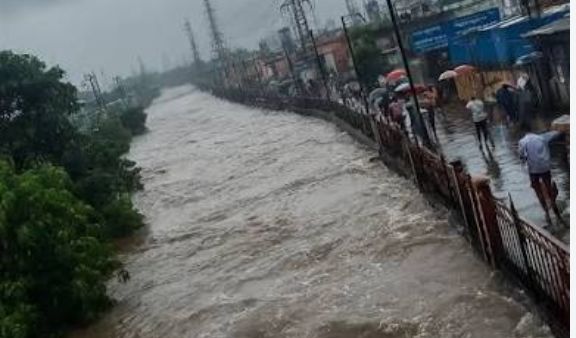
Sudden Heavy Rain Floods Rajamahendravaram Roads

A sudden evening downpour with strong winds and thunder flooded main roads in Rajamahendravaram, leaving motorists and pedestrians struggling. Heavy rain struck Rajamahendravaram on Sunday evening, flooding several main roads across the Andhra Pradesh city. The downpour arrived suddenly, accompanied by strong winds, thunder and lightning. Water quickly collected on major routes, leaving stretches of road submerged. Motorists and pedestrians were left struggling to move through the affected areas. In some localities, poor drainage worsened the situation. With no proper system to carry the runoff away, rainwater backed up and spilled onto the roads, adding to the disruption during the evening. The rain brought a sharp change to the city's evening, combining wind, thunder and lightning in a short, intense spell that caught residents off guard. Rajamahendravaram rain, Rajamahendravaram flooding, Andhra Pradesh weather, waterlogged roads, heavy rain, drainage problems, monsoon

Binance Denies Glitch in Alleged $5M AKE Wipeout

"binance buy crypto"Binance rejects claims a system error caused $5M in trader losses after AKE's perpetual contract spiked nearly 492% on September 3. Inside the dispute. A trader says a Binance malfunction cost millions when the AKE contract exploded. Binance says its machines worked fine. Here's the standoff. AKE's Sudden Sept. 3 Surge Binance is pushing back on claims that a glitch cost traders millions. The AKEUSDT perpetual contract rocketed from roughly $0.0076 to nearly $0.045 on September 3, a move that erased leveraged positions in minutes. One trader pegs the damage above $5 million and blames the exchange. Binance insists nothing broke on its end. Trader Xunlu's Timed Complaint On X, a user named xunlu says more than 30 funding-rate arbitrage positions were wiped out within minutes, clustered around 5:44 a.m. Beijing time on September 3. The trader tallies losses above 5 million USDT and argues the violent jump stemmed from coordinated activity in the AKE market - not from ordinary buying and selling. Binance Says Nothing Broke Responding through Customer Support, Binance rejected the idea that a technical fault triggered the wipeout. An internal review, the exchange says, turned up no problem in its pricing model, risk controls or liquidation engine. Its systems stayed online throughout the sharp move, leaving highly leveraged trades fully exposed once prices ran against them. No Spot Listing on Binance A key wrinkle: Binance never listed AKE for spot trading, so the perpetual can't lean on a Binance-built order book for its price. Instead, the exchange pulls data from several outside spot venues to calculate the contract's mark price. That multi-venue index, Binance maintains, functioned exactly as designed during the September 3 chaos. A Nearly 492% Spike The leap from about $0.0076 to nearly $0.045 works out to roughly 492% - almost six times the starting price. A jump that steep can drain the margin behind short positions in seconds, especially when liquidity is thin and many traders are crowded into the same bet. That fragility sits at the center of the losses. Trader Calls It a Squeeze The complainant frames the episode as a short squeeze: climbing prices force short sellers to buy back contracts, which pushes prices even higher and topples nearby shorts once they breach their maintenance margin. The affected trades were funding-rate arbitrage - a strategy meant to harvest funding payments while staying roughly neutral on price direction. Records Demanded for Scrutiny The trader wants Binance to hand over transaction records, liquidation data and internal risk-control logs so the mark-price math can be checked. Publicly aggregated spot charts showed wild swings that session, yet the highest combined spot reading landed below the contract peak the trader cited - a gap no one has fully explained. Echoes of August's $3B Wipeout For scale, an unrelated August squeeze liquidated about $2.77 billion in short positions across major exchanges, with Binance alone accounting for roughly $518 million. Forced buybacks drove prices up and set off further closures. The figures show how automated liquidations can snowball - but they don't prove manipulation touched AKE. Binance, AKE token, AKEUSDT perpetual, crypto liquidation, short squeeze, funding-rate arbitrage, perpetual futures, crypto trader losses

ED Raids Payment Firms, CAsh in Parimatch Betting Probe

The ED searched 12 sites across four states in a money laundering case tied to online betting firm Parimatch, targeting payment firms and accountants. The Enforcement Directorate carried out fresh searches across four Indian states on Wednesday, September 2, 2026, targeting payment companies, chartered accountants and company secretaries as part of a money laundering probe into the online betting firm Parimatch and several other entities, officials said. Agency teams covered 12 premises in all: five in Maharashtra, four in the Delhi-NCR region, two in Rajasthan and one in Gujarat. The updated details were confirmed from Mumbai on Wednesday morning. Investigators are examining payment firms accused of turning betting revenue into cash with the help of chartered accountants and company secretaries. According to officials, that money was then moved out of the country through illegal remittances and what the agency described as bogus Overseas Direct Investment, channelled through payment gateways for Parimatch. The investigation grew out of a police complaint. The cyber crime unit of the Mumbai Police registered a First Information Report against parimatch.com, alleging that users were cheated through its online betting operations. The latest action is not the agency's first move in the matter. Officials said the ED had already conducted searches and seized assets linked to the case earlier. The probe spans several jurisdictions, with the raided locations reaching from Maharashtra and Gujarat in the west to Rajasthan and the national capital region in the north. Enforcement Directorate, Parimatch, online betting, money laundering, ED raids, payment companies, chartered accountants, Mumbai Police