
Language Settings
Select Website Language

Latest

ED Raids Payment Firms, CAsh in Parimatch Betting Probe

The ED searched 12 sites across four states in a money laundering case tied to online betting firm Parimatch, targeting payment firms and accountants. The Enforcement Directorate carried out fresh searches across four Indian states on Wednesday, September 2, 2026, targeting payment companies, chartered accountants and company secretaries as part of a money laundering probe into the online betting firm Parimatch and several other entities, officials said. Agency teams covered 12 premises in all: five in Maharashtra, four in the Delhi-NCR region, two in Rajasthan and one in Gujarat. The updated details were confirmed from Mumbai on Wednesday morning. Investigators are examining payment firms accused of turning betting revenue into cash with the help of chartered accountants and company secretaries. According to officials, that money was then moved out of the country through illegal remittances and what the agency described as bogus Overseas Direct Investment, channelled through payment gateways for Parimatch. The investigation grew out of a police complaint. The cyber crime unit of the Mumbai Police registered a First Information Report against parimatch.com, alleging that users were cheated through its online betting operations. The latest action is not the agency's first move in the matter. Officials said the ED had already conducted searches and seized assets linked to the case earlier. The probe spans several jurisdictions, with the raided locations reaching from Maharashtra and Gujarat in the west to Rajasthan and the national capital region in the north. Enforcement Directorate, Parimatch, online betting, money laundering, ED raids, payment companies, chartered accountants, Mumbai Police

Search Marketing Hiring: 10 SEO and PPC Roles Open Now

Brands and agencies including Seer Interactive, M+C Saatchi and Ninja Trader are hiring for SEO, PPC and paid media roles, with many fully remote. Brands and agencies across the United States are actively recruiting for search marketing roles, with at least 10 open positions spanning SEO, pay-per-click advertising, paid media and demand generation. Several of the jobs are fully remote, while others follow hybrid or in-office arrangements in cities including Washington, Chicago and Irvine. The openings, sourced through SEOjobs.com and PPCjobs.com, cover a range of seniority levels, from account managers and campaign strategists to senior strategists and departmental managers. They reflect steady demand for specialists who can grow visibility across Google, AI search, social, local and other channels that shape buying decisions. Among the remote roles, Focus Digital is hiring an SEO & PPC Account Manager & Campaign Strategist, a position that blends organic and paid search responsibilities. Halstead Media is recruiting an SEO and GEO Manager, a title that pairs traditional search optimization with generative engine optimization work aimed at AI-driven search results. Seer Interactive has an opening for a Demand Generation Manager, also remote, while elk Marketing is looking for a Senior SEO Strategist. Clients Blackbox, Inc. rounds out the remote listings with a Paid Media Manager role. Agency and brand-side openings On the agency side, M+C Saatchi Group is seeking an SEO Manager in a hybrid arrangement based in Washington, DC. Creative Circle is hiring a Paid Media Manager focused on both search and social, a role based in Coppell, Texas. YPM has posted a Paid Media Manager (SEM/PPC) position in Irvine, California. Trading platform Ninja Trader is recruiting a Senior Manager, Paid Search, in a hybrid role based in Chicago, Illinois. The listing signals continued investment in paid search talent among brands outside the traditional agency world. Recruitment firm 80Twenty is hiring a Digital Marketing Manager focused on paid social and PPC, a hybrid role based in Newark, Delaware. Remote and hybrid options The spread of listings shows a mix of working models. Positions at Focus Digital, Halstead Media, Seer Interactive, elk Marketing and Clients Blackbox are advertised as remote. Roles at M+C Saatchi Group, Ninja Trader and 80Twenty are hybrid, combining office and remote days, while the YPM and Creative Circle positions are tied to specific locations in California and Texas. The paid media category dominates the current batch of openings. Several employers, including Creative Circle, YPM, Ninja Trader, 80Twenty and Clients Blackbox, are filling roles centred on paid search, paid social or a combination of both. Organic search roles appear at Focus Digital, M+C Saatchi Group, Halstead Media and elk Marketing. The emergence of a GEO Manager title at Halstead Media points to a shift in how some employers frame search work. Generative engine optimization focuses on how brands appear within AI-generated answers, a growing concern as search behaviour changes. Job seekers weighing their options will find roles suited to different career stages. Entry points such as account manager and campaign strategist sit alongside senior titles including Senior SEO Strategist and Senior Manager, Paid Search, giving candidates room to move up or specialise. The positions are drawn from a listing that is refreshed weekly, meaning open roles rotate as employers fill vacancies and post new ones. Candidates are advised to check back regularly, as postings from earlier weeks that remain unfilled are carried forward alongside the newest openings. For professionals in SEO and PPC, the current roster underscores where hiring is concentrated: paid media specialists remain in demand, remote work continues to feature prominently, and the rise of AI-focused search roles is beginning to reshape the job titles employers advertise. SEO jobs, PPC jobs, search marketing careers, paid media manager, remote SEO roles, digital marketing hiring, SEO Manager, GEO Manager

Sudden Heavy Rain Floods Rajamahendravaram Roads

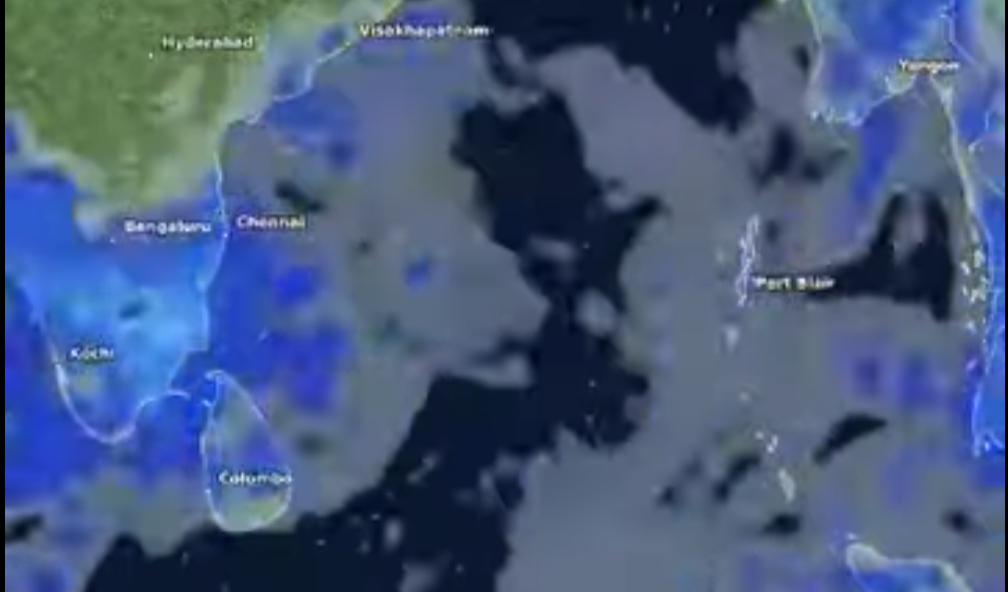
A sudden evening downpour with strong winds and thunder flooded main roads in Rajamahendravaram, leaving motorists and pedestrians struggling. Heavy rain struck Rajamahendravaram on Sunday evening, flooding several main roads across the Andhra Pradesh city. The downpour arrived suddenly, accompanied by strong winds, thunder and lightning. Water quickly collected on major routes, leaving stretches of road submerged. Motorists and pedestrians were left struggling to move through the affected areas. In some localities, poor drainage worsened the situation. With no proper system to carry the runoff away, rainwater backed up and spilled onto the roads, adding to the disruption during the evening. The rain brought a sharp change to the city's evening, combining wind, thunder and lightning in a short, intense spell that caught residents off guard. Rajamahendravaram rain, Rajamahendravaram flooding, Andhra Pradesh weather, waterlogged roads, heavy rain, drainage problems, monsoon

'GPT-6 Astra Trends in India as OpenAI Talk Spreads

The term 'GPT-6 Astra' is surging on Google Trends in India, with over 2,000 searches tied to OpenAI and its ChatGPT models. A search term tied to OpenAI is climbing fast in India. "GPT-6 Astra" has broken onto Google Trends in the country, logging more than 2,000 searches under the query "chatgpt gpt astra." The phrase is circulating alongside the description "GPT-6 Astra: A new generation of intelligence," linked to OpenAI, the company behind the ChatGPT chatbot and its GPT series of language models. The surge points to strong public curiosity in India about the next step in OpenAI's technology. Beyond the name and tagline, concrete details remain scarce. The available information does not confirm a release date, technical specifications, pricing or an official product announcement attached to the "GPT-6 Astra" label. What is clear is the scale of interest: the query has gathered enough momentum to register as a trending topic across Indian searches. Google Trends measures relative search interest, and a spot on its India charts signals that a large number of users are looking up the same phrase within a short window. In this case, that phrase couples the ChatGPT brand with a name, "Astra," and a generational claim about intelligence. Until OpenAI issues verified details, readers should treat the "GPT-6 Astra" name with caution. The trend confirms the appetite for information, not the arrival of a product. For now, the story is the search spike itself and the questions it raises about what OpenAI may release next. GPT-6 Astra, OpenAI, ChatGPT, Google Trends India, artificial intelligence, GPT-6, AI models

Hackers Leak Data of 8.7m Manchester Airport Group Customers

Cyber criminals published personal data of nearly 8.7 million people after breaching Manchester, Stansted and East Midlands airports. Criminal hackers have dumped the personal records of roughly 8.7 million people online after breaking into the systems of Manchester Airports Group (MAG), the operator of Manchester, London Stansted and East Midlands airports. The BBC reported the leak on 2 September 2026, following an intrusion the previous month. The attackers had tried to extort MAG for an unspecified sum. When the company refused to pay, the gang made good on its threat and released the full haul. Customers of all three airports are now being told to brace for follow-on fraud, because the material is freely circulating among other criminals. The stolen files came from databases tied to airport wi-fi sign-ups and car parking accounts. According to the breach analysis, the trove includes contact information, vehicle registration numbers and postcodes. The criminal group, which the BBC has chosen not to identify, is handing the entire collection to fellow scammers at no charge through its own website. "Today we are releasing the Manchester Group database," the hackers wrote in their post, describing the cache as half a terabyte of pure personally identifiable information. Specialists at the breach-tracking service HaveIBeenPwned examined the leaked files and verified their contents. They found email addresses, telephone numbers, home addresses, number plates, records of past purchases and data about the devices people used to browse. MAG said it believes it has acted effectively to shield its customers. "MAG is confident that we have taken effective measures to protect our customers and we have contacted all those affected, including reaching out to all those with upcoming bookings to advise them of additional support," the company said. It added that it is cooperating with the authorities and outside advisers, and stressed that travellers' physical safety inside the airports was never in danger. Warning for wealthy and high-profile travellers Cyber-security researcher Kevin Beaumont urged anyone caught up in the leak to stay watchful for further scams and intrusions, singling out well-known and affluent individuals as being at particular risk. He noted that the records reveal not only where people have been but where they plan to go. "The data includes both historical locations and planned future travel, so individuals sensitive to their movements being known may need to take precautions," Beaumont said. He warned that fraudsters could recycle details such as phone numbers and car registrations to make their approaches appear convincing. One feature of this leak sets it apart from most. The site hosting the MAG files sits on the ordinary internet rather than the dark web, where such "leak sites" usually operate. That openness makes the data simpler to reach, raising the danger for MAG's customers and for the other firms the same crew has hit in recent months. Alongside dumping the files, the gang bragged about its technique. It said it had broken into each victim the same way, taking advantage of flaws in how organisations safeguard the digital keys that secure their internal networks. Advice for those affected UK law enforcement, including the National Crime Agency, has consistently told targets of extortion to refuse ransom demands, arguing that payments only sustain the criminal economy behind such attacks. The Information Commissioner's Office publishes guidance for people whose information has been exposed. It advises reporting stolen documents such as passports, credit cards or driving licences to whoever issued them, and checking bank statements and credit reports for anything out of the ordinary. It also recommends staying wary of unexpected emails, texts and calls, and protecting online accounts with strong passwords and multi-factor authentication. Manchester Airports Group, airport data breach, MAG hack, Stansted airport, East Midlands airport, cyber attack UK, personal data leak, ransom extortion

How to Build a Defensible SEO Budget for 2027

With two-thirds of Google searches ending without a click in early 2026, marketers face a new challenge defending SEO spend for 2027. The case for spending money on search engine optimization used to fit on a slide or two: better rankings, more organic traffic, done. That argument is now much harder to make. In the first four months of 2026, more than two-thirds of U.S. Google searches ended without anyone clicking through to a website, and the arrival of AI-generated summaries is pulling clicks away from traditional results. According to the Pew Research Center, users clicked a standard search result on just 8% of Google visits when an AI summary appeared on the page. When no summary was shown, that figure rose to 15%. The gap points to a shift in how people find information, and it creates a direct problem for anyone trying to defend an SEO line item heading into 2027. The core difficulty is timing. Search behavior is changing fast enough that the assumptions behind an annual budget can break long before the year is over. A forecast built on last year's traffic patterns may no longer hold by spring. That instability pushes marketers to frame SEO in the terms a chief financial officer already tracks: business risk, customer acquisition costs, and sales pipeline. Treat the budget as a portfolio The recommended approach for 2027 is to stop treating SEO as a single channel with one lump-sum budget and instead manage it like a portfolio. The spending splits into two distinct categories, each judged by different rules. The first is the maintenance floor. A significant share of SEO money should go toward protecting assets the business already depends on. A mature website carries pages, local listings, technical infrastructure, and third-party references that generate qualified demand. Those assets do not sustain themselves. Search changes, and published information goes stale. Rather than relying on a growth forecast, marketers are advised to calculate the actual cost of keeping these existing assets in working order. That figure represents the price of protecting the value SEO already delivers. Fund growth where the evidence is Everything spent above that floor is a bet on future value. Funding a project last year does not entitle it to funding next year. The guidance is to translate each line item into the specific business problem it is meant to solve, and to fund growth only where there is evidence of a real problem or opportunity tied to a plausible business outcome. That means being honest about the difference between what can be proven and what the data only hints at. Some results connect cleanly to the business: qualified leads, revenue, and pipeline. Others merely suggest that search played a role. Appearing as a blue link or a mention in responses to high-value questions, a rise in branded search, and citations inside AI answers all signal that SEO is contributing, but none of them close the loop on their own. Google has started making some of these signals easier to observe. Its rollout of dedicated Search Console reports for generative AI features gives marketers more visibility into how their content surfaces in AI-driven results. Even so, those reports do not trace every step a customer takes from first encountering a brand to buying from it. Perfect attribution remains out of reach, and budgets have to be built with that limitation in mind. The practical upshot is a budget that leads with what the investment protects, justifies growth spending against measurable outcomes, and treats speculative bets as tests rather than commitments. In a search landscape where most queries never produce a click, that structure gives leadership a clearer view of what their SEO money is actually buying. SEO budget 2027, zero-click searches, AI search, Google Search Console, customer acquisition cost, organic traffic, Pew Research SEO, search marketing

iPhone Handoff One Number Across Two iPhones in iOS 27

Apple's iOS 27 adds iPhone Handoff, letting you share one phone number between two iPhones. A demo clip reveals setup via Xcode 27's Device Hub. Apple is quietly building a way to run one phone number on two iPhones at once. Here's what the iOS 27 feature called iPhone Handoff actually does. One Number, Two iPhones iPhone Handoff arrives with iOS 27 later this month, letting you switch between two iPhones that share the same number. Apple named it briefly at June's WWDC keynote but revealed no details until now. Setup Leaks Through Xcode 27 A newly surfaced demo clip shows the feature running inside Xcode 27's Device Hub. It pairs two iPhones, designating one as your main device and the second as its "companion." Built For The Foldable Ultra Apple's timing lines up with the expected foldable iPhone Ultra. Rather than always carrying a chunky, expensive handset, users could temporarily switch to a cheaper, smaller iPhone - even an old cracked iPhone 13. Carrier Support Is Required The feature won't work without carrier backing. References to T-Mobile US and Telekom.de were spotted in the code, but whether any other carriers will support iPhone Handoff remains unknown. iPhone Handoff, iOS 27, Apple, foldable iPhone Ultra, Xcode 27 Device Hub, T-Mobile, companion iPhone, WWDC

Tata Launches Nexon-Based Osprey SUV in South Africa at ZAR 249,900

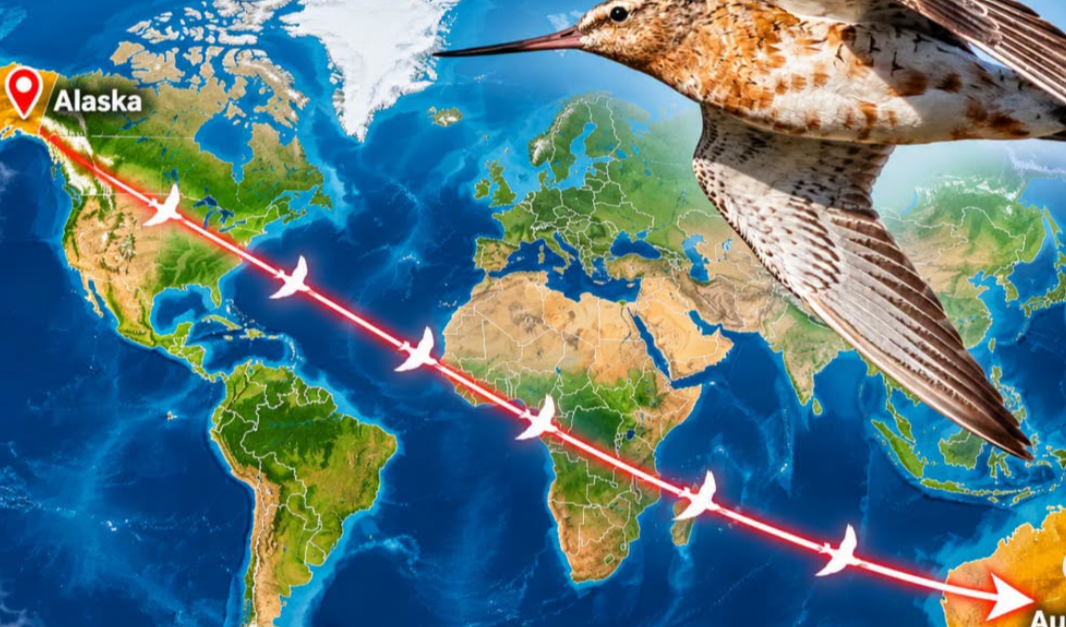
Tata has launched the Osprey SUV in South Africa at ZAR 249,900 (Rs 14.8 lakh), a rebadged Nexon, alongside its new TATA.CARS global retail brand. Tata has launched the Osprey SUV in South Africa at a starting price of ZAR 249,900, equal to about Rs 14.80 lakh. The Osprey is the local name for the Tata Nexon, the compact SUV already sold in India. Tata has named the vehicle after the osprey, a migratory bird of prey known for its endurance and agility. The launch came alongside a second announcement: Tata unveiled TATA.CARS, a new global customer-facing retail brand. In South Africa, Tata sells through its distributor Motus Holdings, and the company says TATA.CARS will help strengthen its position in the market. The Osprey marks another step in Tata's return to South Africa. The company exited the market in 2019 and re-entered last year. Since coming back, it has built a line-up that includes the Harrier, Curvv, Punch, Tiago and the recently launched Nexon. The Osprey is brought into South Africa via the CBU (completely built unit) route. Most of its exterior features match the Nexon sold in India. The colour options are largely the same as well, though Tata has given them different names for the South African market. The shade sold as Pristine White in India, for example, is called First Light in South Africa. Single engine, three trims Unlike the Nexon in India, which offers several engine choices, the Osprey comes with only one: a 1.2-litre turbo petrol unit. It produces 120 PS and 170 Nm of torque. Buyers can choose a 5-speed manual gearbox or a 7-speed dual-clutch transmission (DCA) with paddle shifters. The 1.5-litre diesel and the CNG option available on the Indian Nexon are not part of the South African line-up. The Osprey is offered in three trims: Smart+, Creative and Creative+ PS. The entry Smart+ variant comes with a 7-inch Harman touchscreen, a full digital instrument cluster, two speakers, electrically operated door mirrors, power windows on all doors, steering-mounted controls, a Type-A USB charging port and follow-me-home headlamps. Its safety kit includes six airbags, electronic stability program and ISOFIX child-seat mounts. Features by variant The Creative variant adds rear air-conditioning vents, auto-folding door mirrors, a height-adjustable driver's seat, four speakers with two tweeters, an HD rear-view camera and wireless Android Auto and Apple CarPlay. It also gets a larger 10.25-inch Harman touchscreen, fully automatic climate control and cruise control. On the safety side, the Creative brings a 360-degree surround-view system with a blind-view monitor. Other touches include a cooled glovebox, a hidden rear wiper and washer, both Type-A and Type-C USB charging ports and a touch-based control panel. The top Creative+ PS variant adds a voice-activated panoramic sunroof and a wireless charger. It also carries bi-function LED headlamps, front fog lamps with cornering function, a rear defogger and a rear seat armrest with cup holders. Its safety equipment includes a tyre pressure monitoring system, front parking sensors, rain-sensing wipers and automatic headlamps. One notable omission is ADAS. The advanced driver assistance features offered on the Nexon in India are not available on any Osprey variant in South Africa. Tata says the model's 5-star NCAP safety rating will still apply. The TATA.CARS retail brand launched with the Osprey covers Tata's full range of passenger cars, including hatchbacks, SUVs and sedans, across both internal combustion and electric segments. Tata Osprey, Tata Nexon South Africa, TATA.CARS, Osprey price, Tata South Africa, 1.2 turbo petrol, Motus Holdings, Tata SUV

Centre's Rs 35/kg Onion Sale Fails to Cool Retail Prices

Despite selling 4,000 tonnes of buffer onions across 17 cities at Rs 35/kg, the all-India average has climbed to Rs 50.79/kg. Kharif relief awaited by mid-October. The Centre has drawn down its onion reserves to steady household budgets, yet the national retail average has climbed rather than fallen since the programme began. The all-India price now stands at Rs 50.79 per kg, up from Rs 48.5 per kg when the government started releasing stock on August 28, figures from the department of consumer affairs show. Over the first 10 days, agencies moved roughly 4,000 tonnes of buffer onions into 17 cities and sold them at Rs 35 per kg in price-sensitive locations. Consumer affairs secretary Nidhi Khare confirmed the volume to PTI on Sunday, saying the subsidised supply had eased pressure at the margins. City-level rates on September 5 underlined how uneven the market remains. Delhi shoppers paid Rs 58 per kg, Mumbai Rs 53, and Chennai Rs 63, while Ranchi sat lower at Rs 40. The wholesale average across the country was Rs 42.79 per kg. The releases are drawn from a 2026 buffer of 1.21 lakh tonnes, distributed through the National Cooperative Consumers' Federation (NCCF) and Nafed. Supplies are hauled from growing regions to demand centres by road and by a purpose-run rail service branded the "Kanda Express". Bulk loads have already reached Delhi and Chennai by rail, and Khare said a third rake was being packed for Guwahati within days. "The distribution of buffer onions has brought some relief to consumers. Prices have fallen slightly," Khare said. She added that the government stock matched what private traders were offering in both grade and volume. NCCF's Rs 35 counter NCCF has handled 1,500 tonnes of the total on its own, managing director Anice Joseph Chandra said. "So far, we have sold 1,500 tonnes of buffer onions in different cities across the country. The focus is on retail and selling at Rs 35 per kg," she said. The federation's counters are active across Delhi-NCR, Tamil Nadu, Uttar Pradesh, Kerala, Rajasthan, Punjab, Odisha and several other states, with more state governments seeking to join. NCCF is routing the discounted stock through its own outlets, mobile vans, cooperative societies and platforms picked out by local administrations. Chandra estimated the effort had trimmed prices by Rs 2 to Rs 3 per kg. The Central Warehousing Corporation, named as the nodal agency, is sorting, grading, packing and transporting the stock to the states. Waiting on the kharif harvest Part of the strain traces back to the rabi crop, which is typically held in storage for release later in the year. Khare said untimely rains had damaged some of that harvest as it was being lifted from the fields, hurting its keeping quality. Attention has now turned to the incoming kharif crop, which officials described as promising. Fresh arrivals are expected to reach markets from mid-October, a supply boost that could loosen the current tightness and bring firmer relief on prices. onion prices, buffer stock, NCCF, Nafed, Kanda Express, kharif onion crop, consumer affairs, India food inflation

At least 10 dead in central Mexico festival fireworks blast

A burning straw bull effigy set off stored fireworks during a village festival in Temascalcingo, central Mexico, killing at least 10 and wounding 60. At least 10 people died and around 60 were hurt when a cache of fireworks blew up during a village celebration in central Mexico on Saturday, local authorities said. The blast tore through Santa Maria Canchesda, a community in the Temascalcingo municipality. According to accounts gathered by AFP, the disaster began with a traditional part of the festivities. Footage from the scene captured people parading a bull built from straw, with fireworks shooting out of the figure as they carried it. The flaming effigy is believed to have set off a much larger supply of fireworks kept inside the village church. The resulting explosion was powerful enough to bring down walls and start a blaze in the town square. Local reports described several victims pinned beneath debris that collapsed in the blast. The celebration was described as a customary ritual for the village. Such festivals across Mexico often feature pyrotechnics, and communities frequently store the materials nearby for the events. Two priests among the injured The Catholic diocese covering the neighbouring municipality of Atlacomulco confirmed that two of its priests were hurt in the incident. Both are expected to recover, the diocese said. In a message posted on social media, the diocese offered prayers for the dead and their relatives, along with the wounded and everyone left grieving or fearful in the aftermath. "We join together in prayer for those who have lost their lives, their families and loved ones, as well as those who were injured and all those who are experiencing moments of pain and worry today," it wrote. Mexico's Attorney General's Office said it had not yet established what triggered the explosion. Investigators have opened a formal inquiry into the events. A recurring danger The tragedy is the latest in a series of deadly fireworks accidents in the country. In July 2018, a blast at a pyrotechnics plant in Tultepec, a city north of Mexico City, claimed 24 lives. Two years before that, an explosion ripped through a fireworks market in the same city, killing 42 people. Authorities have not said whether any arrests will follow the latest incident, and the toll could change as rescue efforts continue and the injured are treated. Mexico fireworks explosion, Temascalcingo blast, Santa Maria Canchesda, burning bull effigy, festival explosion Mexico, Atlacomulco diocese, Mexico village festival

2026 Maruti Baleno Launched at Rs 6.10 Lakh With Level 2 ADAS

Maruti Suzuki has launched the 2026 Baleno from Rs 6.10 lakh, adding Level 2 ADAS, a new Z12E engine and up to 24.77 kmpl mileage. Bookings open at Rs 11,000. Maruti Suzuki has rolled out the updated 2026 Baleno in India, with ex-showroom prices beginning at Rs 6.10 lakh. Buyers can reserve the premium hatchback for a token payment of Rs 11,000. The refreshed model arrives with a reworked exterior, a wider equipment list, Level 2 driver-assistance technology and a new Z12E petrol engine tuned for better economy. Maruti has kept the car's broad shape unchanged but reworked much of what it carries. Ventilated front seats, a tyre pressure monitoring system, wireless phone charging and a fresh audio setup are among the fresh inclusions. Level 2 ADAS Arrives on the Baleno The standout change is the arrival of Level 2 advanced driver assistance, which pairs radar and camera inputs. The suite covers Advanced Emergency Braking, Forward Collision Warning, Adaptive Cruise Control, Lane Keep Assist, Lane Departure Warning, Lane Departure Prevention, High Beam Assist and Vehicle Sway Warning. On the passive safety side, every Baleno now ships with six airbags, ESP, ABS with EBD and Hill Hold Control. The list also runs to reverse parking sensors, an Emergency Stop Signal, three-point seatbelts, seatbelt reminders and the newly fitted tyre pressure monitor. NEXWave Grille and a Redesigned Nose Most of the visual updates sit at the front. The car adopts a broader take on the NEXWave grille, marked by 3D detailing and horizontal chrome strips, while the front bumper and lower grille have been reshaped. A chrome fender garnish and a shark-fin antenna join the mix, and the existing LED daytime running lamps carry over. Seven paint options are on offer, among them a new shade called Enigmatic Teal. The dimensions stay compact. The Baleno measures 3,990 mm in length, 1,745 mm in width and 1,530 mm in height, riding on a 2,520 mm wheelbase. Inside, the cabin gets a dual-tone treatment with piano-black trim and leatherette seats. Alongside the ventilated front seats, the interior adds a Clarion premium sound system and a Qi-certified wireless charger with active cooling. Top variants continue to include a Head-Up Display and a 360-degree camera. A 9-inch SmartPlay Pro+ touchscreen handles infotainment, with wireless Android Auto and Apple CarPlay. Suzuki Connect brings more than 40 connected-car functions. Wheel sizes shift by trim: the Sigma and Delta run 185/65 R15 steel wheels, while the Zeta, Alpha and Alpha (O) get 195/55 R16 alloys. New Z12E Engine Lifts Economy The most significant mechanical update is the switch to Maruti's Z12E unit. The 1,197cc petrol engine puts out 61 kW, or 82.93 PS, at 5,700 rpm and 112.4 Nm at 4,500 rpm, and comes with Idle Start-Stop and Dual VVT. Drivers can pick a 5-speed manual or the AGS automatic. Maruti claims 23.80 km/l with the manual and 24.77 km/l with the AGS, gains of 6.4% and 7.9% over the outgoing model. The petrol tank holds 37 litres. The S-CNG variant sticks with the same 1,197cc Z12E engine and a 5-speed manual. Running on CNG, output falls to 69.75 PS and 101.8 Nm, while the claimed figure reaches 33.61 km/kg, up 9.8% on the earlier version. The CNG model adds a 55-litre water-equivalent gas tank. With Level 2 ADAS, ventilated seats and the more efficient Z12E engine, the update moves past a simple styling tweak. Priced from Rs 6.10 lakh, the Baleno stays aimed at buyers seeking a premium hatchback loaded with technology and convenience features. 2026 Maruti Baleno, Baleno Level 2 ADAS, Baleno Z12E engine, Baleno mileage, Maruti Suzuki hatchback, Baleno price, Baleno CNG, Baleno features

Full Moon and New Moon Energy ,Lunar Phases Shape Your Week

Discover how full moon and new moon energy may shape your week, with friendly, practical astrology tips for setting intentions, releasing and resetting. There is a reason people have watched the sky for thousands of years. The Moon changes shape night after night, moving from a slim crescent to a glowing full circle and back again, and many traditions believe that rhythm quietly mirrors the rhythm of our own lives. Whether you follow astrology closely or simply enjoy the idea, tuning into lunar phases can be a gentle, grounding way to organise your week. Astrology is a belief system and a tradition, not a science, and no one can promise the Moon controls your mood or your luck. But the lunar cycle makes a wonderful natural calendar. Roughly every 29.5 days the Moon completes its journey, and the two most talked-about moments - the new moon and the full moon - sit at opposite ends of that story. Think of one as a fresh page and the other as a highlight reel. Here is how you can work with both. The new moon: your invitation to begin The new moon arrives when the Moon sits between the Earth and the Sun, leaving the night sky dark. Because there is no visible Moon, this phase has long been linked in astrology with beginnings, planting seeds and quiet planning. It is the astrological equivalent of a blank notebook. This is a lovely time to slow down and ask yourself what you actually want. Many people use the new moon to set intentions - writing down a few goals for the weeks ahead, starting a new habit, or simply naming something they would like more of, whether that is calm, confidence or connection. You do not need candles or crystals for it to feel meaningful, though plenty of people enjoy them. A cup of tea and five honest minutes with a journal work just as well. Practically, treat the new moon as a soft launch rather than a sprint. Energy in the early cycle is thought to be inward and tender, so it suits brainstorming, first drafts and gentle first steps more than big public moves. The waxing days: building momentum In the roughly two weeks between the new moon and the full moon, the Moon grows brighter each night. This stretch is called the waxing phase, and in astrological tradition it is associated with growth, action and forward motion. If you set intentions at the new moon, these are the days to act on them. Send the email, take the class, have the conversation, put in the practice. Because the visible Moon is expanding, many people find it a naturally motivating backdrop for building momentum and saying yes to opportunities. Use this window for the tasks that need follow-through, and let each small step stack on the last. The full moon: light, release and honesty About two weeks after the new moon, the Sun fully illuminates the Moon and we get the full moon - bright, dramatic and impossible to ignore. In astrology it is a moment of culmination and clarity, when things that were hidden come into the light. Emotions can feel bigger and truths can feel harder to avoid. Rather than starting something new, the full moon is traditionally a time to notice what has come to a head and to release what is no longer serving you. That might mean finishing a project, having an overdue heart-to-heart, forgiving a grudge, or letting go of a habit that has quietly worn you down. A simple full moon practice is to write down what you want to release and then, safely, tear up or bin the paper as a symbolic goodbye. Full moons also have a reputation for restlessness and vivid dreams. Whether or not that holds true for you, it is a sensible cue to protect your sleep, keep your calendar a little lighter, and be patient with yourself and others if feelings run high. The waning days rest and reset After the full moon, the light shrinks again over the following fortnight in the waning phase. This closing stretch is linked with winding down, decluttering and reflection. It is a natural time to tidy your space, review what worked, close loose ends and recharge before the next new moon resets the cycle. Putting it into practice You do not need to memorise any of this. Many calendars and free apps show the current Moon phase, so you can glance at where you are and match your energy accordingly: dream and plan at the new moon, act during the waxing days, reflect and release at the full moon, then rest as it wanes. Ultimately, lunar living is less about prediction and more about rhythm. The Moon gives you a built-in reminder to begin, to push, to let go and to rest - a cycle that repeats every month, ready whenever you are. Take what feels helpful, leave the rest, and let the sky keep you gently on schedule. full moon energy, new moon energy, lunar phases, moon astrology, new moon intentions, full moon rituals, moon phases meaning, lunar cycle self-care